
French Protesters Turn Police Infiltration Attempt into Viral Anti-Racism Slogan
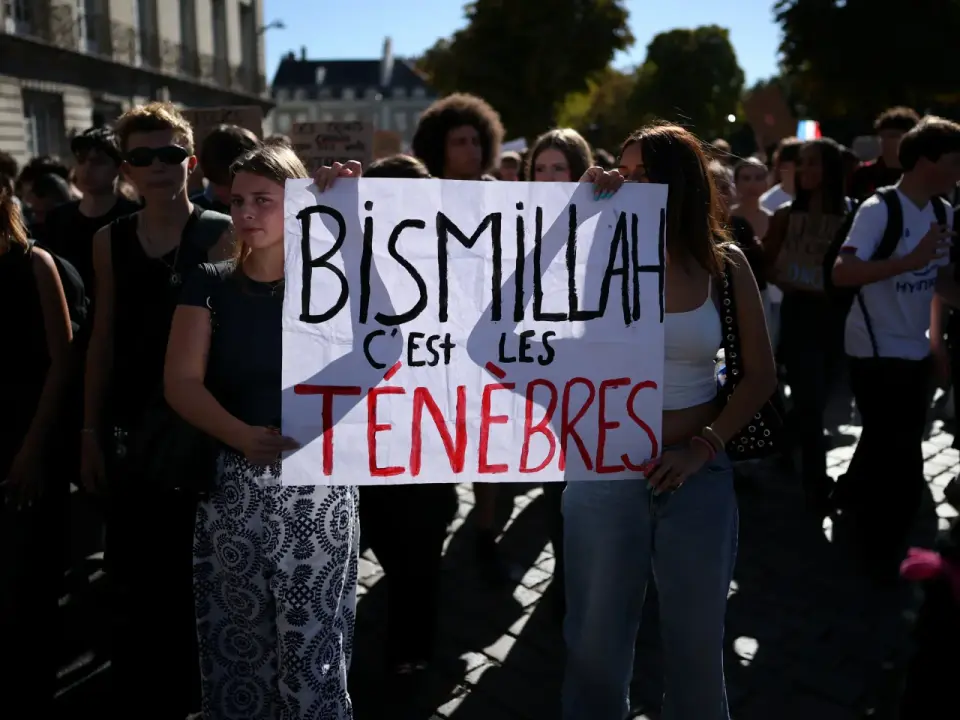
French student protesters have adopted the nonsensical phrase 'Bismillah, c’est les ténèbres' as a rallying cry, mocking what they perceive as racist police infiltration of their social media channels. The slogan emerged from a Snapchat message sent by an undercover officer attempting to join protest coordination groups. It has become a symbol of generational and racial disconnect, spreading across Europe as demonstrations over education funding and cost of living escalate into violent unrest.
Key points
- The slogan 'Bismillah, c’est les ténèbres' translates to 'In the name of God, it’s the darkness' but serves as a satirical critique of police stereotyping.
- The phrase originated from a Snapchat message sent by a user named Mamadou, which students identified as an attempt by undercover police to infiltrate their organizing networks.
- Hundreds of thousands of protesters have used the slogan on placards, with the movement spreading to Italy and Belgium.
- France’s police inspectorate (IGPN) has opened dozens of investigations into alleged police violence during the ongoing protests.
- The protests, initially focused on education, have expanded to include cost-of-living grievances, resulting in widespread riots and over 2,400 arrests.
Background
The current unrest follows a month of escalating tensions in France, beginning with student demands for better educational conditions. Previous coverage noted that on October 17, 2026, approximately 550,000 people protested across the country, leading to riots, looting, and the destruction of historic buildings in cities like Limoges and Paris. While earlier protests were largely peaceful, recent weekend demonstrations saw a significant escalation in violence, with authorities reporting over 2,400 arrests and injuries to both protesters and law enforcement.
How outlets are covering it
Al Jazeera emphasizes the slogan’s role in highlighting racial stereotyping and the disconnect between state agencies and youth subcultures, citing sociologist Youssef El Chazli. The New York Times frames the slogan as a symbol of a broader generational rift, noting its spread across Europe. New Lines Magazine provides specific details on the origin of the slogan, linking the Snapchat message to a police station in Aix-en-Provence and comparing the meme to the 'Steve Buscemi' viral trend. All sources agree on the slogan’s viral nature but differ in emphasis: Al Jazeera focuses on Islamophobia and police conduct, while New Lines Magazine highlights the specific mechanics of the police infiltration attempt.
Why it matters
The adoption of this slogan illustrates how digital subcultures and satirical memes are becoming central tools for political expression among young protesters. It also underscores growing tensions between French authorities and youth, particularly those of Arab and African descent, amid rising Islamophobia and allegations of discriminatory policing. The slogan’s spread signals a shift in protest dynamics, where online coordination and cultural critique are as significant as physical demonstrations.
What to watch
Authorities are expected to continue investigating police conduct as the IGPN reviews dozens of allegations of violence. The protest movement may further expand across Europe, with similar grievances in Italy and Belgium. Political debates over Islamophobia and police stereotyping are likely to intensify, especially as the far right attempts to link the unrest to immigration issues.
- Why are French protesters chanting ‘Bismillah, c’est les ténèbres’? Al Jazeera
- Student Protesters in France Have a Strange New Slogan. What Does It Mean? The New York Times
- ‘Bismillah, c’est les ténèbres’: What does this viral message from French protests mean The Times of India
- French police are revelling in the chaos of these protests New Statesman
- French Students Sniff Out Police Infiltration on Snapchat and Launch a Brand New Meme New Lines Magazine
Want the full story? Read the original reporting
Read on Al Jazeera