
Mob Kills Foreign National in Durban Amid Escalating Anti-Migrant Unrest
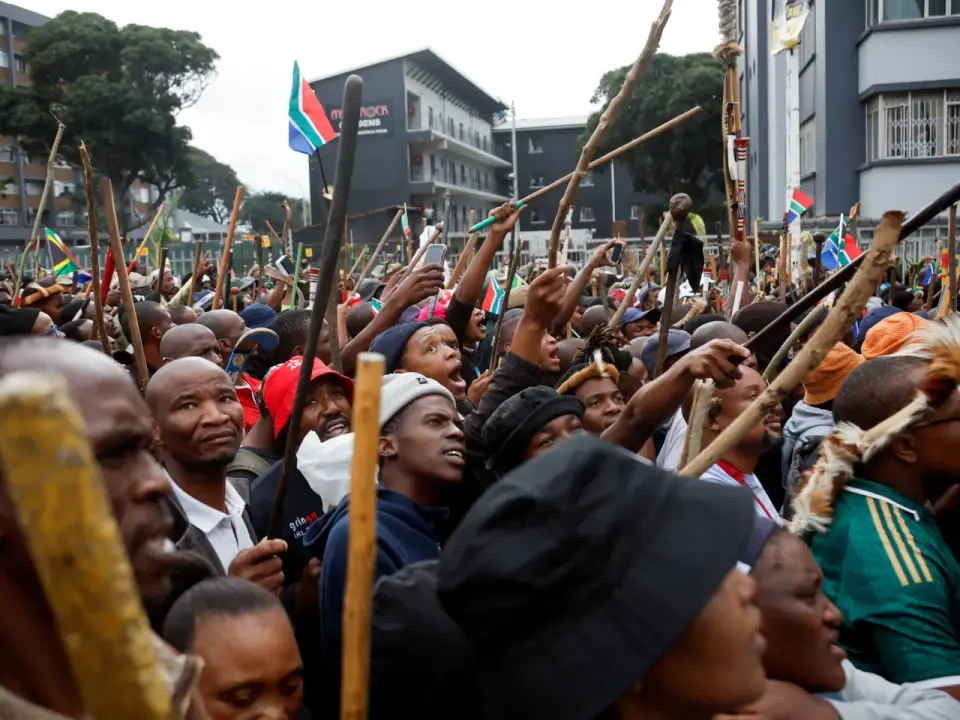
A foreign national in his 30s or 40s was beaten to death by a mob of approximately 50 people in Durban, South Africa, on October 22, 2026. The victim was approached while standing by a roadside in the central business district and died at the scene. Police have not disclosed the victim's nationality or the specific motives of the attackers, though the incident occurs during a sustained wave of anti-immigrant protests. While authorities are investigating the murder, they have not yet identified suspects. This lethal attack follows months of escalating violence, including looting and arson, triggered by public anger over a July Constitutional Court ruling that eased asylum application procedures. Although President Cyril Ramaphosa has condemned the violence, he acknowledged that weak border controls have allowed undocumented migrants to remain in the country. Tens of thousands of migrants have fled South Africa in recent months to avoid the unrest, while neighboring nations like Nigeria and Mozambique have reported citizen casualties, a claim South African authorities have partially disputed by attributing some deaths to criminal activity rather than xenophobia.
Key points
- A mob of about 50 people beat a foreign national to death in Durban's central business district on October 22, 2026.
- The victim, a man in his 30s or early 40s, was declared dead at the scene after being approached by the group.
- Police have not released the victim's nationality or identified suspects, citing ongoing investigations.
- The killing is part of a broader wave of anti-migrant protests that began in June and escalated into violence two weeks prior.
- The unrest is linked to a July Constitutional Court ruling that allowed irregular migrants to apply for asylum, which the government claims has been misrepresented.
- President Cyril Ramaphosa has denounced the violence but admitted that weak border control systems have facilitated the stay of undocumented migrants.
Background
This incident follows a significant escalation in xenophobic tensions in South Africa earlier in October 2026. In early October, violent protests erupted in Durban and Soweto, resulting in looted shops, torched vehicles, and police deployment of rubber bullets. These riots were triggered by public anger over a July Constitutional Court ruling that removed procedural barriers for asylum applications, leading to overcrowded immigration centers. While the government blamed disinformation for the escalation, populist groups demanded the closure of refugee centers. The current murder in Durban represents a further intensification of this ongoing crisis, which has already prompted a mass exodus of migrants and diplomatic tensions with neighboring countries.
Why it matters
The fatal attack in Durban highlights the severe humanitarian and security crisis in South Africa, where anti-migrant violence has moved from property destruction to lethal physical harm. It underscores the failure of current immigration and border control policies, as acknowledged by President Ramaphosa, and the potential for domestic unrest to destabilize regional diplomatic relations. The incident also signals a potential tipping point in public sentiment, where economic anxieties regarding jobs and public services are being channeled into violent xenophobia, threatening the safety of millions of foreign nationals and the stability of Africa's largest economy.
What to watch
Police are actively investigating the murder and attempting to identify the suspects involved in the attack. Authorities are expected to continue monitoring anti-migrant marches and protests across the country, particularly in Durban, which has been the epicenter of recent unrest. The government may face increased pressure to address the root causes of the violence, including the backlog at immigration centers and the enforcement of border controls, while also managing diplomatic fallout with nations whose citizens have been affected by the attacks.
Want the full story? Read the original reporting
Read on Al Jazeera