
Southern Italy Truck Blockades Force Meloni to Balance Security Decrees with Economic Relief
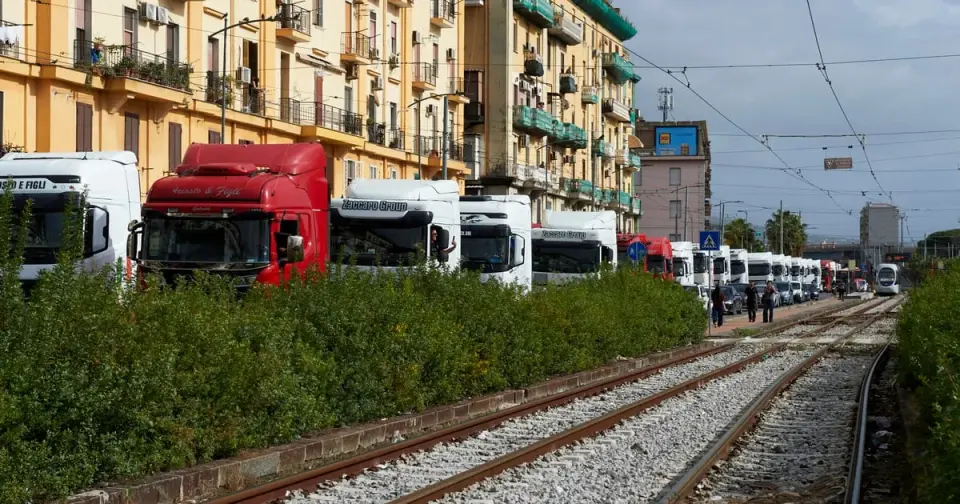
Truckers in southern Italy have blocked highways, ports, and distribution centers, causing severe food and fuel shortages. Prime Minister Giorgia Meloni vowed to clear blockades via security decree but also pledged financial aid to farmers and fishermen. The crisis, driven by a 33% diesel price hike, threatens to shift the political debate ahead of spring elections.
Key points
- Diesel prices in Italy have risen by approximately one-third since U.S. and Israeli strikes on Iran began, squeezing trucker profits.
- Protests started in Puglia and Sicily, spreading to Campania; organizers in Sicily and Calabria suspended strikes after government assurances of consultation.
- Supermarket shelves are emptying, and airports face fuel shortages, with retailers estimating damages in the tens of millions of euros.
- Meloni’s government faces constraints from EU deficit proceedings, limiting its ability to offer substantial new financial relief.
- U.S. Naval Support Activity Naples authorized remote work and reported supply delays, though it maintained mission capability.
Background
This unrest follows earlier cost-of-living riots in northern Italy, including Milan, where 500 troops were deployed to quell violent protests involving looting and arson. Those northern disturbances were characterized by youth-led violence and gang activity, whereas the current southern protests are primarily economic in nature, driven by operational costs for transport and agriculture sectors.
How outlets are covering it
Politico emphasizes the political vulnerability of Prime Minister Meloni, noting that the southern protests demand concrete economic solutions rather than the security-focused response used in the north. Opposition figures, including 5Star Movement lawmaker Gaetano Amato, criticized the government for prioritizing security decrees over addressing economic grievances. Stars and Stripes highlighted the operational impact on U.S. military assets, specifically the remote work measures at Naval Support Activity Naples and the logistical challenges faced by the U.S. 6th Fleet due to regional transport disruptions. While both sources agree on the severity of the supply chain breakdown, Politico focuses on the domestic political fallout and electoral implications, whereas Stars and Stripes details the specific contingency measures adopted by U.S. personnel in the region.
Why it matters
The protests expose the limits of Meloni’s hardline approach and risk shifting the electoral debate from immigration to the affordability of basic goods. With elections expected in spring 2026, sustained economic discontent could weaken the government’s appeal or force a delay in voting until autumn 2027. The crisis also highlights Italy’s vulnerability to external shocks, such as the Iran conflict, and the tension between EU fiscal constraints and domestic economic needs.
What to watch
Meloni is expected to implement a security decree to clear remaining blockades while releasing funds for the transport and agricultural sectors. The government will decide on Friday whether to extend emergency measures at U.S. bases. Political analysts suggest that if economic grievances dominate, Meloni may delay elections to avoid campaigning on a field she cannot control, hoping for improved fiscal flexibility and reduced international instability.
- Trucker blockades in southern Italy ramp up pressure on Meloni POLITICO.eu
- Millions in cheese revenue lost as protest torpedoes Italy’s buffalo mozzarella output AP News
- Italy Experiences Food and Fuel Shortages After Truckers on Strike Block Roads The New York Times
- Southern Italy truckers ease protests as government approves aid Reuters
- Navy base in Italy authorizes work from home amid trucking strikes, gas and food shortages Stars and Stripes
Want the full story? Read the original reporting
Read on POLITICO.eu