
Tunisia Unrest Escalates as Police Clash with Protesters Amid Deepening Crisis
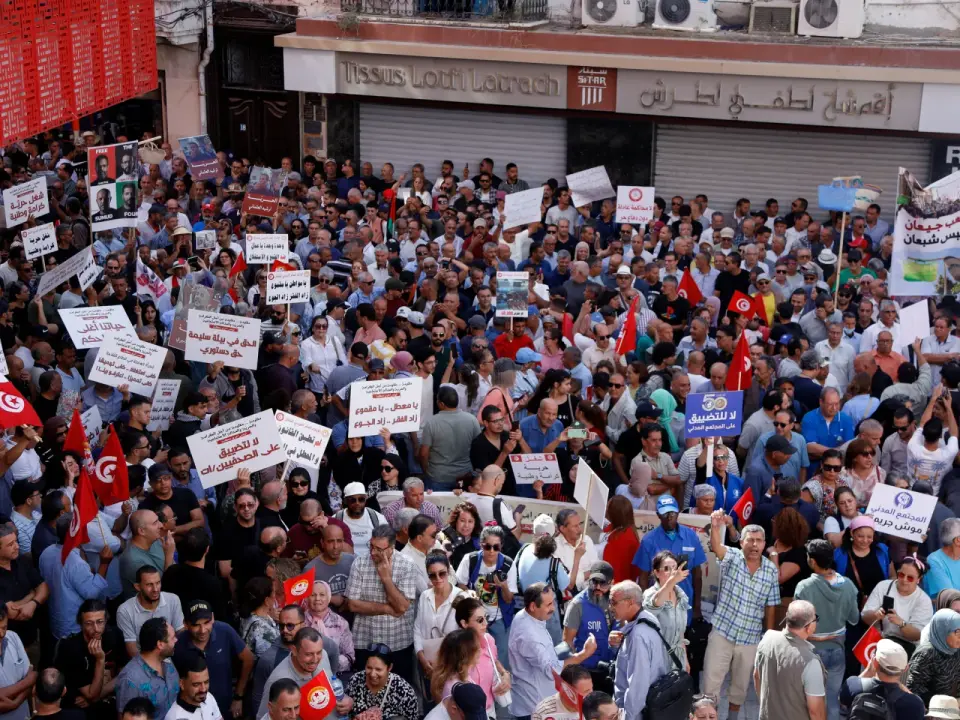
Police clashed with protesters in Tunis and Sfax over recent deaths, coinciding with a massive October 17 rally against President Kais Saied. The unrest highlights a deepening economic and political crisis, with youth unemployment reaching 35.4% and growing demands for democratic restoration.
Key points
- Police used tear gas in Tunis's Ettadhamen suburb and Jebiniana after protesters blocked roads and threw stones following the deaths of two men, with conflicting accounts of police abuse versus drug-related causes.
- In Sfax, students protested a female student's death due to delayed ambulance services, calling for a strike at Sfax University.
- The October 17 rally in Tunis was the largest in years, led by the General Labour Union (UGTT) and demanding the release of political prisoners and economic solutions.
- Youth unemployment (ages 15-24) has reached 35.4%, while 67% of Tunisians prefer democracy but 78% prioritize economic results, according to a recent poll.
- Opposition politician Olfa Hamdi was sentenced to four years in prison for plotting against state security, reflecting ongoing judicial repression.
Background
Tunisia, the birthplace of the Arab Spring in 2011, saw President Kais Saied consolidate power in 2021 by suspending parliament and ruling by decree. While initially popular for addressing corruption, his administration has faced criticism for undermining democratic institutions and failing to improve economic indicators. Recent protests in August 2026 and the October 17 rally mark a significant escalation in public dissent.
How outlets are covering it
Al Jazeera and Reuters emphasize the immediate police clashes and conflicting narratives over the deaths of protesters, highlighting local grievances. The Human Rights Research Center (HRRC) focuses on the broader political repression, judicial independence, and the unity of diverse groups in the October 17 protest. The Christian Science Monitor frames the unrest as a potential shift toward recognizing democracy's long-term economic benefits, contrasting Saied's authoritarianism with the need for civic participation. While Al Jazeera notes the immediate violence, HRRC and the Monitor stress the underlying democratic and economic failures driving the unrest.
Why it matters
The unrest signals a critical juncture for Tunisia, where economic despair and political repression are fueling widespread dissent. The failure of Saied's authoritarian model to deliver economic stability, combined with rising youth unemployment and judicial crackdowns, risks further destabilization. The October 17 rally and subsequent clashes indicate a growing public rejection of the current regime, potentially influencing regional democratic movements.
What to watch
Expect continued protests and potential strikes, particularly in Sfax, as grievances over public services and economic conditions persist. The government may face increased pressure to address judicial independence and release political prisoners, while international observers will monitor the balance between security and human rights. The outcome of these tensions could determine whether Tunisia moves toward democratic restoration or further authoritarian consolidation.
- Rare unrest flares in Tunisian capital as police clash with protesters Al Jazeera
- Tunisian police clash with protesters in capital on day of heightened tensions Reuters
- Thousands March in Tunisia Against President Kaïs Saïed Democracy Now!
- Tunisia Sees Major Protests over Political Repression and Economic Crisis Human Rights Research Center | HRRC
- In the home of the Arab Spring, democracy’s looking better The Christian Science Monitor
Want the full story? Read the original reporting
Read on Al Jazeera