
Europe's First Total Eclipse Since 1999 Draws Millions to Spain and Iceland
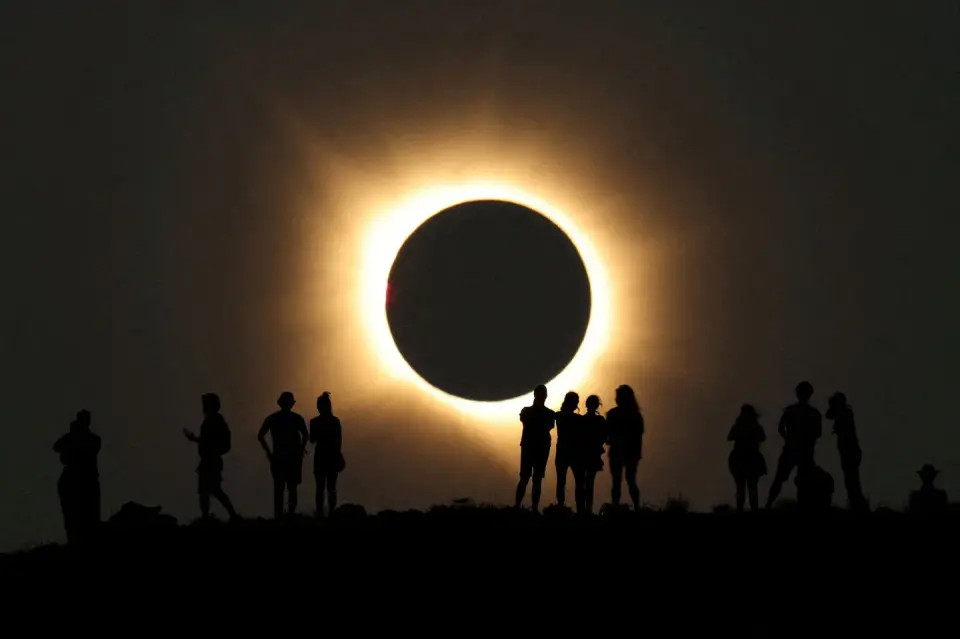
On August 12, 2026, a total solar eclipse crossed parts of Europe, marking the first such event visible from the Spanish mainland since 1905. Millions of spectators gathered in Spain, Iceland, and Portugal to witness the sun's corona, while partial eclipses were observed across the UK, France, and Germany. The event spurred significant economic activity, with hotel rates exceeding $1,000 per night in some areas.
Key points
- The path of totality passed through Greenland, Iceland, northern Spain, and Portugal, with the sun setting during the eclipse in Spain.
- It was the first total solar eclipse visible from Spain's mainland since 1905, and the first in Europe since 1999.
- A partial eclipse was visible across much of Europe, including the UK, France, and Germany, as well as parts of the northern United States.
- The event caused a surge in tourism and retail, with some hotels charging over $1,000 a night and long queues for eclipse glasses.
- The next total solar eclipse visible in the contiguous United States is scheduled for August 23, 2044.
Background
The 2026 eclipse follows a trend of increased public interest in astronomical events, as seen in earlier coverage of eclipse hunters traveling across continents to witness totality. This event also coincides with other significant weather and climate stories, such as the impact of El Niño on future temperatures and severe flooding in Hawaii from Tropical Storm Lala.
How outlets are covering it
The Washington Post's Matthew Cappucci emphasized the personal, awe-inspiring experience of the eclipse, describing the 'ghostly shroud' of darkness and the unique atmosphere of the event near sunset. CNBC focused on the economic impact, highlighting the surge in hotel prices and retail demand for eclipse glasses. NPR and the European Space Agency provided broader context, noting the rarity of the event for Spain and the widespread partial visibility across Europe and the northern US. Cloudflare reported on the technical side, noting traffic impacts in affected regions, though specific details were not provided in the source text.
Why it matters
The 2026 total solar eclipse is a rare astronomical event that captivated millions across Europe, demonstrating the enduring human fascination with celestial phenomena. It also had a measurable economic impact, boosting tourism and retail in affected regions. The event serves as a reminder of the next total solar eclipse in the contiguous US, which will not occur until 2044, making this 2026 event a once-in-a-generation opportunity for many.
What to watch
The next partial solar eclipse visible in the US is expected on August 2, 2027. The next total solar eclipse visible in the contiguous US is scheduled for August 23, 2044. In the meantime, continued monitoring of El Niño's impact on global temperatures and weather patterns will be crucial.
- Column | As the total solar eclipse neared, things got weird. Then came the magic. The Washington Post
- See the 2026 European Solar Eclipse, in Photos and Videos The New York Times
- In pictures: Europe's best solar eclipse since 1999 CNBC
- Total eclipse of the Internet: traffic impacts in Iceland, Spain, and Portugal Cloudflare Blog
- Photos: See the best photos from this year's total solar eclipse : The Picture Show NPR
Want the full story? Read the original reporting
Read on The Washington Post