Tag

Astronomy

All articles tagged with #astronomy

House-sized asteroid to skim Earth tonight, no danger expected
space1 day ago

House-sized asteroid to skim Earth tonight, no danger expected

A 16-meter asteroid named 2026 GD will pass Earth tonight at about 0.65 lunar distances (roughly 156,000 miles) and then come within about 101,000 miles of the Moon later that evening, posing no threat to Earth or the Moon; it is on the ESA Risk List but carries an extremely small cumulative impact probability, and it won’t affect the Artemis 2 mission; the asteroid will continue on a long orbit with a next close approach expected around July 2031 near Venus.

Comet PanSTARRS Could Shine Bright Enough to See Naked Eye This Month
space2 days ago

Comet PanSTARRS Could Shine Bright Enough to See Naked Eye This Month

Comet C/2025 R3 (PanSTARRS) is brightening in April and could become visible to the naked eye in the predawn sky this month, potentially reaching around magnitude 4 as it nears perihelion on April 20 and Earth on April 27. For Northern Hemisphere viewers, it will pass near the Great Square of Pegasus and drift toward Pisces from mid‑April, with a new Moon on April 17 helping dark skies; however visibility is uncertain and depends on the comet’s activity, so binoculars may be needed for a good glimpse.

Seven-Hour Gamma-Ray Burst Captured by Webb Defies Known Physics
science11 days ago

Seven-Hour Gamma-Ray Burst Captured by Webb Defies Known Physics

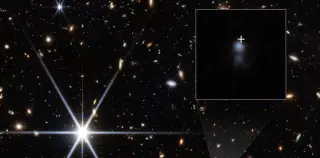
Using the James Webb Space Telescope and a global network of observatories, scientists detected GRB 250702B, a gamma-ray burst that lasted about seven hours—the longest on record and far longer than typical bursts. The event, occurring in a dusty galaxy about 8 billion light-years away, could arise from an extreme gamma-ray burst, a tidal disruption event, or a black-hole–star merger, but a definitive explanation remains elusive. The multi-wavelength observations highlight extreme physics in stellar death and black-hole interactions and offer a rare window into such phenomena.

Saturn’s atmosphere revealed: Webb and Hubble unveil hidden motions under the clouds
science11 days ago

Saturn’s atmosphere revealed: Webb and Hubble unveil hidden motions under the clouds

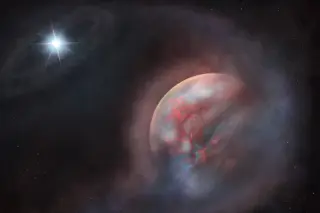
Two space telescopes, Webb and Hubble, captured Saturn in complementary wavelengths— Webb's infrared reveals deep atmospheric structures like the 'ribbon wave' and remnants of the Great Springtime Storm, while Hubble shows visible bands and seasonal shifts. Together they let scientists slice Saturn's atmosphere layer by layer, study fast-moving winds and energy transport, and observe the enduring hexagon at the north pole as Saturn heads into winter.

April 2026 Skywatch: Mercury's Best View, Green Comet Glow, and Lyrid Meteors
science11 days ago

April 2026 Skywatch: Mercury's Best View, Green Comet Glow, and Lyrid Meteors

April 2026 offers a rare string of skywatching events: Mercury reaches its greatest elongation on April 3 for one of the year’s clearest views; Comet C/2025 R3 brightens in mid-April with a green glow and peaks around April 17, followed by its closest approach to Earth on April 27; the Lyrid meteor shower peaks April 21–22 with about 15–20 meteors per hour, providing multiple rewarding nights of stargazing in the Northern Hemisphere.

Astronomers Directly Measure M82's Extreme Galactic Wind
space13 days ago

Astronomers Directly Measure M82's Extreme Galactic Wind

Scientists using the XRISM X-ray telescope directly measured the hot wind from the starburst galaxy M82, finding speeds over 3 million km/h and temperatures near 25 million °C. The hot wind can drive about four solar masses of gas per year outward, contributing to a 40,000‑light‑year plume, while a total of seven solar masses per year are moving outward—with about three solar masses unaccounted for—raising questions about where that gas goes and how galactic winds affect galaxy evolution. Cosmic rays may contribute but aren’t the primary engine according to current data.

Hubble Spotlights Star Birth and a Giant Black Hole in IC 486
science13 days ago

Hubble Spotlights Star Birth and a Giant Black Hole in IC 486

A new Hubble image of the barred spiral galaxy IC 486, about 380 million light-years away, shows vivid regions of new star formation around the central bar and the bright active galactic nucleus powered by a supermassive black hole, highlighting how barred structures influence galactic growth; citizen scientists via Galaxy Zoo contributed to the study under ESA/Hubble.

April 2026 Stargazing Gear Guide: Cameras, Binoculars, and Telescopes for Lyrids and Comets
space13 days ago

April 2026 Stargazing Gear Guide: Cameras, Binoculars, and Telescopes for Lyrids and Comets

Live Science’s April 2026 stargazing gear guide suggests the best cameras, binoculars, and telescopes to enjoy this month’s sky events, including the Full Pink Moon, the Lyrid meteor shower, and two bright comets (C/2026 A1 MAPS and C/2025 R3 PanSTARRS). It highlights a dark-sky window around the new moon on April 17 for deep-sky observing and astro-photography, and offers practical gear picks and tips for lunar, planetary, and galaxy observing.

Earth Faces a Spike in Daytime Fireballs in 2026
space14 days ago

Earth Faces a Spike in Daytime Fireballs in 2026

Earth is experiencing an unusual surge of large daytime fireballs in early 2026, with 2,046 fireball events in Q1 and several bright, high‑energy events visible from multiple continents, including a 3,229‑report Western Europe daytime bolide and a 7‑ton asteroid over Ohio/Pennsylvania. Trajectories cluster around the Anthelion direction and high‑declination radiants, suggesting debris from multiple inner‑solar‑system sources rather than a single shower or alien activity. Recovered meteorites are eucrites/diogenites (achondrites) from differentiated asteroids, implying a possible recent breakup of a large parent body. Scientists emphasize gaps in current monitoring and call for expanded automated all‑sky cameras and cross‑referencing with radar and infrasound to improve near‑Earth defense.

Jupiter’s Lightning: Up to a Million Times More Powerful Than Earth’s
astronomy14 days ago

Jupiter’s Lightning: Up to a Million Times More Powerful Than Earth’s

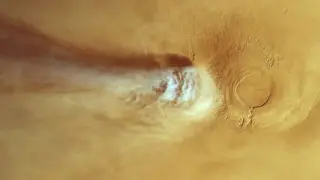
New NASA Juno data suggest Jupiter’s lightning could be up to a million times more powerful than Earth’s, inferred from radio-emission measurements. The study highlights how Jupiter’s hydrogen-rich atmosphere and towering, long-lasting storms—including months-long 'stealth' storms—may amplify lightning energy, offering new insights into the gas giant’s weather and atmospheric dynamics.

Green fireball lights up Northwest Ohio skies in latest meteor sighting
science15 days ago

Green fireball lights up Northwest Ohio skies in latest meteor sighting

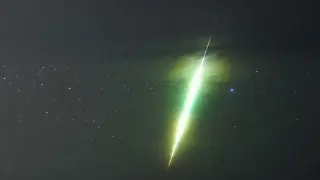
A green fireball was reported over northwest Ohio at about 4:52 a.m. Thursday, with video and sightings from Fostoria, Maumee, Swanton and Perrysburg, plus reports across southern Michigan and western Pennsylvania. This marks the third meteor-related sighting in the region in a little over two weeks, following a March 17 Medina County event described by NASA as a seven-ton small asteroid and a March 24 fireball over the Great Lakes. UToledo astronomer Michael Cushing notes that tiny space rocks constantly enter Earth’s atmosphere and burn up; when larger they can produce a sonic boom, though no boom was reported this time. No immediate National Weather Service update was available.)

Jupiter and a Waxing Moon Put on a Sunset Sky Show
space16 days ago

Jupiter and a Waxing Moon Put on a Sunset Sky Show

Look east at sunset on March 26 to see Jupiter near a waxing Moon; the Moon–Jupiter close approach occurs at 9:19 PM EDT (1319 GMT), with Jupiter about 5 degrees to the lower-right of the Moon. The pairing is best viewed from the northern hemisphere and remains visible through the evening, with Jupiter staying prominent in the spring sky until solar conjunction in July. A small telescope or binoculars will reveal the Moon’s craters and lunar seas and Jupiter’s cloud bands and moons; for exact rise/set times, check Time and Date for your location.