A Pew Research Center survey across 36 countries finds China viewed more favorably than the United States in 25 of them—the first time China leads in a majority of countries in two decades—reflecting Beijing's expanding soft power and growing economic/security ties across Africa, the Americas and beyond.
A Pew Research Center poll of more than 42,000 people in 36 countries finds China viewed more favorably than the U.S. in 25 nations—the first time China leads Pew’s two-decade tracking—with Xi Jinping rated higher than Donald Trump in 22 countries. The shift follows perceptions of U.S. global leadership and the pandemic’s fading impact, while China is seen as a more stable, reliable partner; the U.S. still leads on personal freedoms, though the gap is narrowing, and opinions remain mixed across many allies.
A Pew Research Center poll of 42,151 people across 36 countries finds China viewed more favorably than the United States in most surveyed nations, signaling a rise in China's international standing as the U.S. image slips amid domestic and foreign policy tensions. Confidence in Xi Jinping now exceeds confidence in Trump in many countries, though opinions of both leaders remain mixed and the U.S. still leads in personal freedoms in several allies.
A Pew Research Center poll across 35 countries plus the West Bank and East Jerusalem finds China now viewed more favorably than the United States in 25 of 36 places, the first time China leads Pew’s two-decade tracking. Xi Jinping is preferred over Donald Trump in 22 of those countries. The shift reflects post-pandemic attitudes, criticisms of US leadership, and perceptions of China as a more reliable partner contributing to global stability. Canada and major European powers show notable swings toward China, while the US still leads on perceptions of personal freedoms, though the gap is narrowing. The survey polled more than 42,000 people with margins of error 2.3–5.5 percentage points.
A Pew Research Center survey of over 42,000 people in 36 countries finds China is viewed more favorably than the United States in 25 countries—the first time Pew has recorded this—driven by rising positive views of China and declining views of the US. Confidence in Xi Jinping remains higher than in Donald Trump across many places, though both leaders score low. Six countries still favour the US (Poland, the Philippines, South Korea, India, Japan, Israel); the US is seen as more respectful of personal freedoms, but the gap is narrowing. China’s rising image is strongest in many middle-income countries and in places like Italy, Spain, Colombia, Mexico, Indonesia, Malaysia, Nigeria and Turkey, while Japan remains strongly anti-China. On foreign policy, about 75% say the US interferes abroad versus 45% for China.
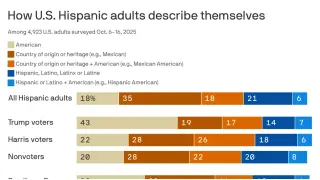
A Pew study shows Latino voters aren’t a monolith: Trump supporters largely identify as American and feel Latino issues affect their lives less, while Harris supporters favor origin-based labels and feel a stronger connection to discrimination and shared fate. Despite Trump’s strong showing among Latinos in 2024, the findings highlight deep internal divides and a broad preference for the term 'Hispanic' over 'Latino' or 'Latinx/Latine,' complicating campaign outreach ahead of the midterms.
Pew’s 2026 data show Indians’ view of the US has soured: 45% view the US favourably, 31% unfavourable (a 25-year high), and only 39% have confidence in Donald Trump to do the right thing internationally—the lowest on record. Indians largely oppose Trump’s tariffs and handling of Venezuela and Iran, and Washington’s immigration policies (32% back immigration policy, 17% approve of Venezuela policy, 28% back Iran policy). The findings mark a sharp shift from earlier years when US leadership enjoyed stronger Indian support.
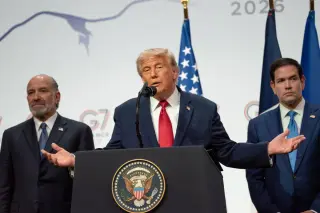
A Pew Research Center survey of over 42,000 people in 36 countries finds 76% have no confidence in Donald Trump’s leadership on world affairs and only 23% express confidence; trust in the US as a partner has sharply declined in major allies—UK reliability falls from 82% in 2022 to 49%, and Canada from 83% to 35%—as criticisms mount over Gaza handling, tariffs and the Russia-Ukraine war, though Trump supporters say he is restoring America’s standing.
A Pew Research Center survey of 36 countries finds less than a quarter of global adults express confidence in Trump’s leadership on global affairs, with the United States at 37% favorability and Canada dropping from 83% to 35% since 2022; 56% say the U.S. government doesn’t respect personal freedoms and a median of 63% say the U.S. contributes little or nothing to global peace, with only seven nations granting a majority positive view (Israel at 81%). The findings contrast with Trump’s rhetoric of universal American strength amid ongoing tensions over Iran.
A Pew Research Center survey of 42,151 people across 36 countries (Feb. 8–May 13, 2026) finds widespread negative views of Donald Trump and dimmer perceptions of the U.S. as a reliable partner. A median 23% express confidence in Trump, 37% have a favorable view of the U.S., and 57% view the U.S. unfavorably, with large declines in trust since 2022. The share that sees the U.S. as contributing to peace and stability, and as considering other countries’ interests, has fallen in many nations. Israel remains a relative bright spot for Trump’s reception, but across most regions, especially Europe and the Asia-Pacific, views are negative and opinions of Trump’s foreign-policy handling are largely disapproved. Overall, global sentiment toward U.S. democracy and leadership has weakened compared with previous years.
Pew Research Center finds 22% of Republicans have invested in or used crypto, vs 17% of Democrats, with GOP adoption rising since 2021 and aligned with Trump's crypto embrace. Gender and age shape who trades crypto—about 74% of crypto traders are men, especially young men. Morning Consult data show the partisan gap peaked in 2025 (27.9% Republicans vs 17.3% Democrats) and later narrowed to about five points (23.6% vs 17.7%).
A Pew Research poll finds half of U.S. adults have used AI chatbots (25% daily), led by OpenAI’s ChatGPT at 44% usage; however, only 16% believe AI will positively impact society. Use is higher among younger and higher-income groups, and most people report using AI for information search (42%) and work tasks (38%). While 51% don’t use chatbots at all, 24% use them daily. Younger adults are more likely to use AI but also more likely to express skepticism about its societal benefits. Concerns about privacy and data security are widespread, with 71% worried AI could make their personal information less secure. The survey of 5,119 American adults was conducted Feb. 17–23.
Pew Research Center’s 2026 political typology classifies 10,357 U.S. adults into nine groups based on 30 questions about government, economy, immigration and culture, revealing a spectrum of values beyond traditional party lines; a few right- and left-leaning groups are highly ideological, but the majority fall into five mixed, less-engaged groups, highlighting the challenge for both parties to build broad coalitions and showing how demographics and policy views shape political alignments.
Pew Research Center’s Spring 2026 Global Attitudes Survey across 36 countries shows a median 67% of adults view Israel unfavorably and 25% favorably, with little confidence in Prime Minister Benjamin Netanyahu in most places; Kenya and the Philippines are notable exceptions where a majority express confidence. Views are especially negative in Muslim‑majority countries and Europe, while younger people and those on the political left tend to be more negative, widening the left–right gap in the U.S. Unfavorable opinions have risen since 2025 in 13 of 24 trend countries, and Netanyahu’s overall confidence has declined in many nations, led by a sharp drop in South Korea.
President Trump organized a nine-hour 'Rededicate 250' prayer event on the National Mall to mark the 250th anniversary, featuring Christian speakers and video messages from Trump and allies. Supporters call it a religious renewal, while critics say it blurs church-state boundaries and violates the First Amendment; Pew data show most Americans still support church-state separation, though a rising minority favors an official Christian role.