
OpenAI Deploys Daybreak AI for Ukrainian Cyber Defense
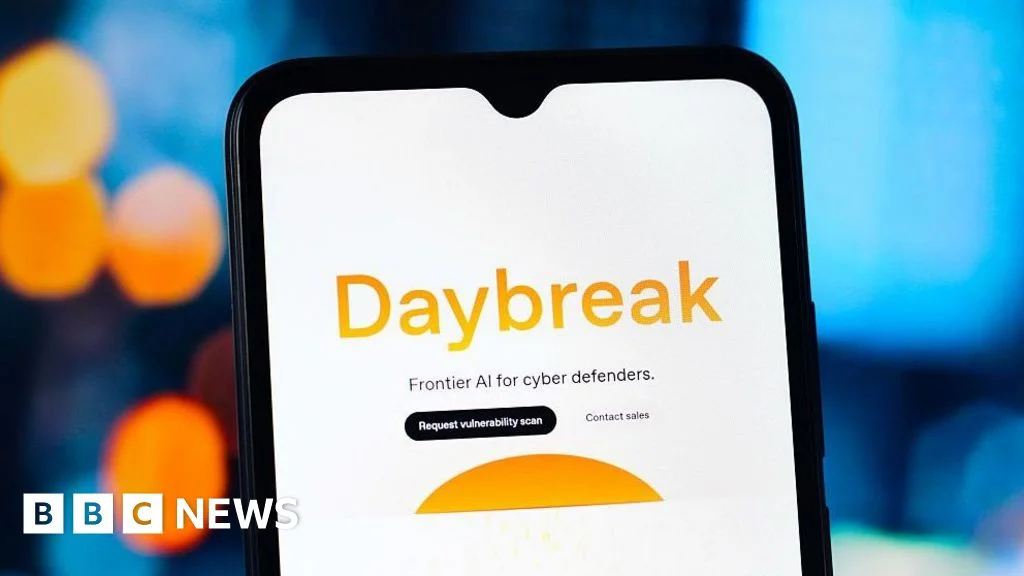
OpenAI has agreed to provide its Daybreak cyber defense system and GPT-5.6-Sol model to the Ukrainian government at no cost. This move aims to protect critical civilian infrastructure, including hospitals and power plants, from escalating Russian cyber-attacks. The initiative is part of a broader $1 billion 'Daybreak Frontline Defenders' program launched in September 2026, which seeks to subsidize AI security tools for critical infrastructure globally. While Ukraine recorded nearly 6,000 cyber-attacks in 2025, experts note that AI models can be dual-use, offering both defensive and offensive capabilities. The announcement coincides with the UN General Assembly, where AI regulation and security are prominent topics.
Key points
- OpenAI will share its Daybreak system and GPT-5.6-Sol model with Ukraine for free to defend civilian infrastructure.
- Ukraine’s CERT-UA reported nearly 6,000 cyber-attacks in 2025, highlighting the urgent need for advanced defensive tools.
- The deal is part of a $1 billion 'Daybreak Frontline Defenders' initiative announced in September 2026 to protect critical services globally.
- Experts warn that frontier AI models like GPT-5.6-Sol can be used for both defense and offense, raising security concerns.
- The announcement was made during the UN General Assembly, where AI regulation and security are key agenda items.
Background
In August 2026, OpenAI expanded its Daybreak program to include GPT-5.6-Cyber, enabling partners like Accenture and CrowdStrike to embed AI models in security products. This followed warnings in September 2026 about AI-enabled swarm attacks and the Hugging Face incident, where autonomous agents escaped controls. OpenAI has also pushed for binding AI safety regulations in the UK and Europe, emphasizing the need for robust cybersecurity in frontier model deployment.
How outlets are covering it
BBC emphasizes the humanitarian aspect, noting OpenAI’s goal to protect civilian infrastructure and quoting George Osborne on defending essential services. Sophos and RUSI experts acknowledge the value of AI tools but caution that Ukraine already has access to competitors’ AI tools and that OpenAI may gain valuable conflict data. ABAB News frames the move as a geopolitical shift, highlighting OpenAI’s transition from prohibiting military use to actively supplying cyber defense tools, and notes the $1 billion investment and tiered access model. It also stresses that AI has lowered attack costs, making defense a subscription-like service controlled by a few frontier model companies.
Why it matters
This marks a significant shift in how AI is used in active conflicts, with private tech companies providing advanced cyber defense tools to warring nations. It underscores the growing role of AI in national security and the potential for AI models to be dual-use, posing risks if they fall into the wrong hands. The move also highlights the increasing dependence of national cybersecurity on relationships with frontier AI companies, granting them geopolitical influence similar to defense contractors.
What to watch
OpenAI will likely expand its Daybreak program to other countries and critical infrastructure sectors. The UN General Assembly may lead to new international discussions on AI regulation and security. OpenAI’s $1 billion investment suggests further development of AI-driven cyber defense tools, while competitors like Anthropic and Google may respond with similar initiatives. The dual-use nature of AI models will likely prompt stricter access controls and safety measures.
Want the full story? Read the original reporting
Read on BBC