
Manicouagan Crater: A 214-Million-Year-Old Impact Site Now a Hydroelectric Reservoir
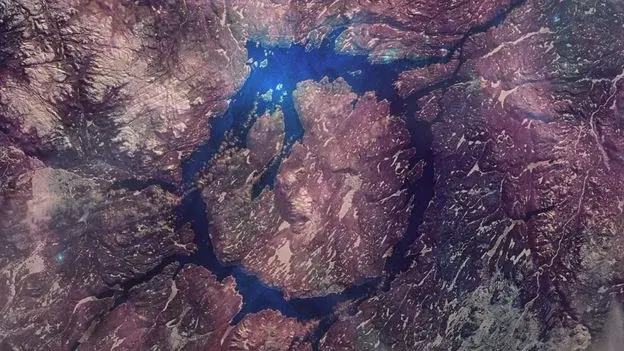
A 5km-wide meteorite impact 214 million years ago created the Manicouagan crater in Quebec, now a 72km-wide reservoir formed by 1960s hydroelectric dams. The site, visible from space, is a key stop on the Trans-Labrador Highway and part of a UNESCO biosphere reserve, though its creation displaced Innu communities and submerged ancestral lands.
Key points
- The Manicouagan crater, 72km wide, was formed by a 5km meteorite impact 214 million years ago, with debris reaching as far as Japan.
- The crater was only recognized from space in 1983, though the area was roadless until the 1960s when Hydro-Québec built dams to create the reservoir.
- The reservoir is part of the 1,700km Expedition 51 road trip, accessible via Quebec Route 389 from Baie-Comeau.
- The Innu community of Pessamit states the dams transformed their territory, disrupting traditional hunting and fishing, and submerging ancestral camps.
- The site is now a UNESCO biosphere reserve, with Innu-run lodges like Station Uapishka offering cultural and foraged food experiences.
Background
The Manicouagan impact structure is Earth's sixth-largest confirmed crater by rim-to-rim diameter, originally 100km wide but reduced to 72km by erosion. The impact occurred in the Late Triassic, 214±1 million years ago, and may be linked to a mid-Norian marine extinction. The reservoir was created by Hydro-Québec's Manic-Outardes project in the 1960s, flooding earlier lakes. The Trans-Labrador Highway, fully paved in 2022, connects to Quebec Route 389, which runs 567km north from Baie-Comeau.
Why it matters
The Manicouagan crater illustrates the intersection of geological history, modern infrastructure, and Indigenous rights. Its transformation into a hydroelectric reservoir highlights the environmental and cultural impacts of large-scale engineering projects on Indigenous communities, while its status as a UNESCO reserve and tourist destination underscores the value of preserving and sharing natural and cultural heritage.
What to watch
Visitors can explore the Manicouagan Reservoir via boat or paddleboard, hike trails to Mont-Harfang, or visit the Innu-run Station Uapishka lodge. The Manic-2 and Manic-5 dams offer free guided tours from mid-June to the end of August. The Trans-Labrador Highway continues north to Labrador City, offering a 1,700km road trip across Quebec and Labrador.
Want the full story? Read the original reporting
Read on BBC