
Royal Holloway secretly referred pro-Israel student to counter-terrorism police after 1,465-page surveillance dossier
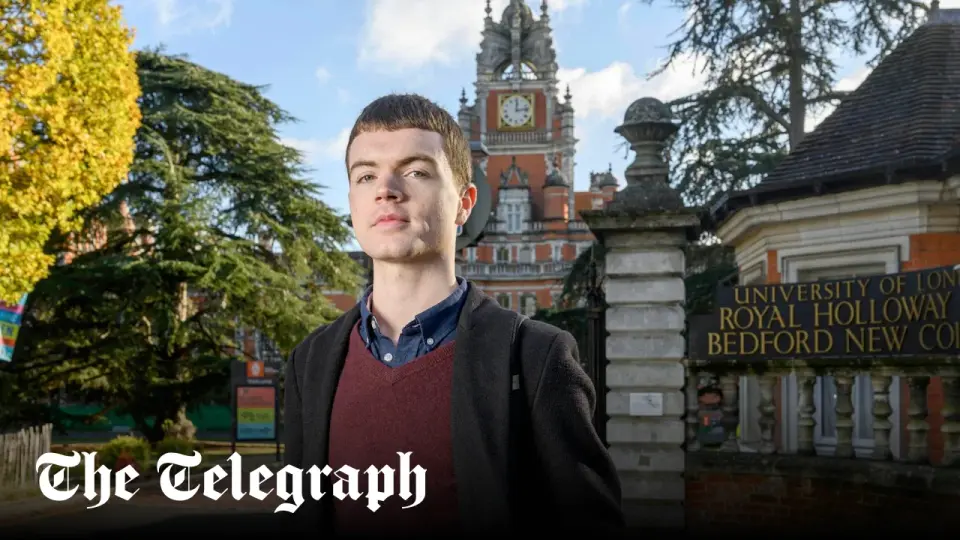
A 20-year-old politics and law student at Royal Holloway, University of London, has revealed that the university secretly monitored his movements, social media, and political activities, leading to a covert referral to the UK government's counter-terrorism Prevent programme. Brodie Mitchell, who is not Jewish but supports Israel, obtained 1,465 pages of internal documents via a subject access request, showing that staff tracked his attendance at a Remembrance Sunday service and his visit to Golders Green to support the Jewish community after a terrorist attack. Although counter-terrorism police ultimately rejected the referral, citing a lack of evidence of extremism, Mitchell faced a nine-week suspension and ongoing death threats. He reached an out-of-court settlement with the university in April 2026, receiving compensation and an admission of regret over the prolonged suspension.
Key points
- Brodie Mitchell, a 20-year-old politics and law student at Royal Holloway, obtained 1,465 pages of internal university documents through a subject access request, revealing extensive surveillance of his political activities and movements.
- The documents show that Royal Holloway secretly referred Mitchell to the UK government's counter-terrorism Prevent programme in April 2026, citing concerns that his pro-Israel views and social media posts could constitute hate speech, despite acknowledging no evidence of extremist group engagement.
- The surveillance began in September 2025 after a confrontation with Huda El-Jamal, president of the university's Friends of Palestine society, who alleged Mitchell mocked her head covering; Mitchell claims she called him a 'wannabe Jew', a claim she denies.
- Mitchell was suspended for nine weeks and subjected to a Campus Exclusion Restriction Order that limited his access to campus facilities, with staff documenting his sightings and circulating CCTV images of him entering cafeterias.
- Counter-terrorism police from Thames Valley Police rejected the Prevent referral in June 2026, stating there was no evidence Mitchell was developing an extremist mindset or being radicalized, and Surrey Police dropped all investigations against him in October 2026 due to insufficient evidence.
- Mitchell reached an out-of-court settlement with Royal Holloway in April 2026, receiving compensation as a 'gesture of goodwill' and an admission that the university 'regrets the length of time for which he was suspended and the distress this caused him'.
Background
This case is part of a broader pattern of tensions on UK university campuses regarding pro-Israel and pro-Palestine political activities. In November 2026, Northwestern University froze its Spoon University chapter after a Title IX complaint over a food festival that included Wildcats for Israel, and actor Nathaniel Buzolic accused an unnamed co-star of blacklisting him for pro-Israel views. These incidents highlight growing polarization and institutional responses to political expression in academic and public spheres.
How outlets are covering it
The Telegraph and GB News emphasize the extent of Royal Holloway's surveillance and the chilling nature of the Prevent referral, framing Mitchell as a victim of institutional overreach and political bias. Israel National News focuses on the legal and procedural aspects, highlighting the university's admission of regret and the police's rejection of the referral. Huda El-Jamal, president of the Friends of Palestine society, denies calling Mitchell a 'wannabe Jew' and accuses him of mocking her head covering, while Royal Holloway declined to comment on the specific allegations, citing confidentiality and policy. The sources agree on the core facts but differ in emphasis: The Telegraph and GB News highlight the 'Orwellian' nature of the surveillance, while Israel National News focuses on the legal resolution and police findings.
Why it matters
This case raises significant questions about the boundaries of free speech and political expression on UK university campuses, particularly regarding pro-Israel views. It highlights the potential for universities to misuse counter-terrorism programmes like Prevent to monitor and suppress political dissent, and the need for clearer guidelines to protect students' rights while maintaining campus safety. The case also underscores the ongoing tensions between pro-Israel and pro-Palestine groups in the UK and the impact of these disputes on academic institutions.
What to watch
Mitchell has stated that all investigations against him have been dropped, and the case is expected to close. However, the incident may lead to further scrutiny of university policies regarding political expression and the use of the Prevent programme. It is also possible that Mitchell or other students may pursue further legal action or advocacy for free speech protections on campus.
- University spied on student over pro-Israel views The Telegraph
- UK University Compiled 1,465-page Surveillance File On Pro-Israel Student - Report i24NEWS
- University ‘spied on pro-Israel student and made extremism referral’ The Times
- Documents reveal: British university referred pro-Israel student to counter-terror police Israel National News
- Royal Holloway: British University spied and compiled secret 1,465-page dossier on pro-Israel student GB News
Want the full story? Read the original reporting
Read on The Telegraph