
UK completes £9.5m removal of masts from WWII munitions shipwreck in Thames
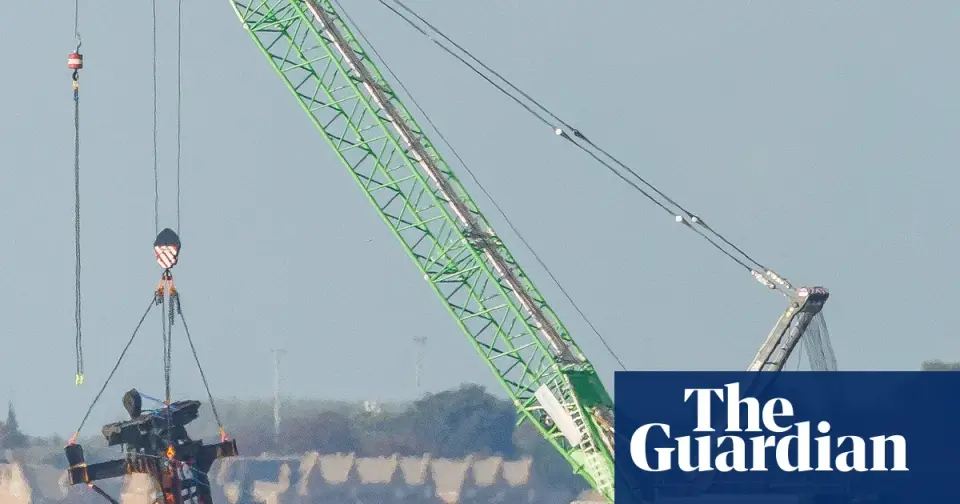
Engineers have successfully removed the three masts from the SS Richard Montgomery, a sunken WWII cargo ship in the Thames Estuary, to prevent them from collapsing onto its unexploded ordnance. The operation, completed by Resolve Marine, cost £9.5m and was finished ahead of schedule. The masts are now being conserved at the Historic Dockyard Chatham, while the wreck remains under a strict exclusion zone.
Key points
- The SS Richard Montgomery sank in 1944 near Sheerness, Kent, carrying approximately 1,400 tonnes of unexploded munitions, including blockbuster and cluster bombs.
- The masts were removed to eliminate the risk of them falling onto the deteriorating hull, which could have triggered a catastrophic explosion.
- The project was completed between September 15 and September 30, 2026, using a specialized crane barge and a team of seven dive engineers.
- The removed masts and a 'danger' sign have been delivered to the Historic Dockyard Chatham for conservation and future public display.
- The wreck remains subject to a shipping exclusion zone and a no-fly zone, with continuous monitoring to ensure safety.
Background
The SS Richard Montgomery, often referred to as 'the Monty', has been a known hazard in the Thames Estuary since it ran aground in August 1944 while transporting munitions for Allied forces in Europe. For decades, the wreck has been guarded by a shipping exclusion zone, and a no-fly zone was introduced in 2025. Previous concerns included the potential for a tidal wave and debris projection if the ship were to explode, though experts have debated the likelihood of such an event. Recent incidents, such as a paddleboarder leaning on the masts, highlighted the ongoing risks and led to the decision to remove the structures.
How outlets are covering it
The Guardian and Kent Online emphasize the successful completion of the operation and the cultural significance of the masts, with local MP Kevin McKenna advocating for their return to Sheppey. Israel Defense highlights the technical complexity and the involvement of Resolve Marine, noting the firm's experience in similar salvage operations. All sources agree on the cost and the primary goal of risk reduction, but differ in their focus on the future display of the masts and the broader implications for maritime safety.
Why it matters
The removal of the masts reduces the immediate risk of a catastrophic explosion from the SS Richard Montgomery, which could have affected nearby communities and infrastructure. The operation demonstrates the UK government's commitment to managing legacy hazards from World War II and highlights the ongoing challenges of preserving historical artifacts while ensuring public safety.
What to watch
The masts will undergo conservation at the Historic Dockyard Chatham, with plans for public display, though the final location is yet to be determined. The wreck will continue to be monitored under the established exclusion zone, and the 'danger' sign will also be preserved and displayed.
- Masts removed from bomb-laden WWII ship in Thames in bid to avoid explosion The Guardian
- Masts from SS Richard Montgomery taken to Chatham dockyard BBC
- UK Launches $12M Operation to Secure Wreck of WWII Munitions Ship SS Richard Montgomery Israel Defense
- SS Richard Montgomery mast removal project GOV.UK
- Pictures show complex operation behind masts’ removal from bombship Kent Online
Want the full story? Read the original reporting
Read on The Guardian