
Israel’s October 27 Election: Arab and Ultra-Orthodox Parties as Decisive Kingmakers Amid Far-Right Surge
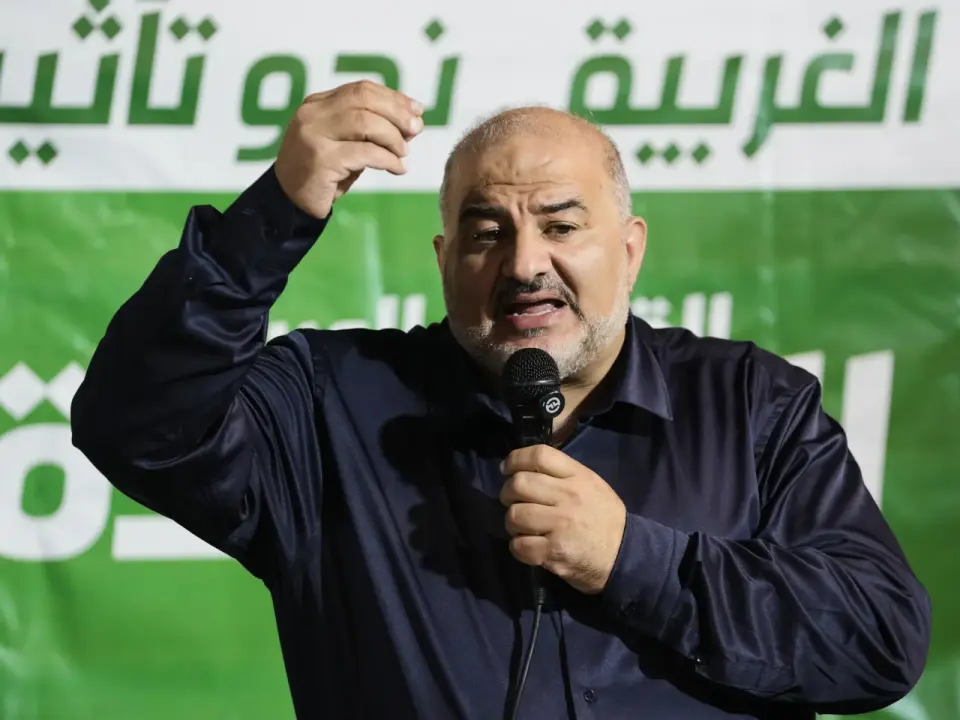
Israelis vote on October 27 in a deadlocked race where neither the Netanyahu-led coalition nor the opposition bloc can secure the 61 seats needed for a majority. Arab-led parties, projected to win 13 seats, and ultra-Orthodox factions are positioned as critical kingmakers. Despite public rhetoric excluding these groups, both major camps may rely on their support to form governments. The election follows a significant rightward shift among young voters, driven by fear and the aftermath of the October 7, 2023 attacks, while center-left parties face physical harassment and declining support.
Key points
- Polls show neither Netanyahu’s Likud-led coalition nor the opposition bloc can reach the 61-seat majority threshold, making Arab-led and ultra-Orthodox parties decisive.
- Arab-led parties (Ra’am and Joint List) are projected to win 13 seats; the Joint List may offer a 'safety net' via confidence votes rather than full coalition participation.
- Ultra-Orthodox parties (Shas and UTJ) each poll around 7-8 seats but fractured from Likud last year over draft exemption failures, complicating coalition math.
- Young Jewish voters are overwhelmingly right-wing, with 75% identifying as right or center-right, fueling the rise of far-right figures like Itamar Ben-Gvir.
- Center-left parties face physical harassment and verbal attacks, with Democrats campaigners assaulted at a Jerusalem market in October 2026.
Background
This election follows the October 7, 2023 Hamas-led attack and subsequent war in Gaza, which accelerated a rightward political shift. In 2021, Ra’am entered a coalition that briefly removed Netanyahu from power, but both current camps have publicly ruled out similar alliances. The Supreme Court overturned disqualifications of Arab parties in October 2026, allowing them to run despite petitions from Likud and Otzma Yehudi.
How outlets are covering it
Al Jazeera emphasizes the strategic necessity of Arab-led parties as kingmakers, noting that both Netanyahu and opposition leaders may rely on them despite public rhetoric. The Guardian highlights the generational rightward shift, citing polls showing 75% of first-time Jewish voters identify as right or center-right, and details physical harassment of center-left campaigners. Yahoo’s source was inaccessible due to technical errors, so no perspective could be extracted. All sources agree on the deadlocked nature of the election and the pivotal role of minority parties.
Why it matters
The outcome will determine whether Israel’s government moves further right, potentially deepening the occupation and marginalizing democratic norms, or if a fragile coalition emerges that includes Arab-led support. The election also tests the viability of center-left parties amid rising far-right extremism and voter polarization.
What to watch
Voting occurs on October 27, 2026. Coalition negotiations will likely involve backdoor deals with Arab-led and ultra-Orthodox parties, despite public exclusions. The Supreme Court’s recent rulings on party disqualifications may face further legal challenges if results are contested.
- The kingmakers who could determine Israel’s election Al Jazeera
- Arab voter turnout could make or break Netanyahu in Israeli election Reuters
- In shadow of war, Israelis to decide if hard-right turn is permanent Yahoo
- ‘There’s a lot of racism, a lot of hatred’: Far right gains predicted as Israel heads to the polls The Guardian
- 2026 Israeli elections: What you need to know The Times of Israel
Want the full story? Read the original reporting
Read on Al Jazeera