
Russian Maps Ignore Reality as Ukraine’s Operation Vivaldi Reverses Frontline Momentum
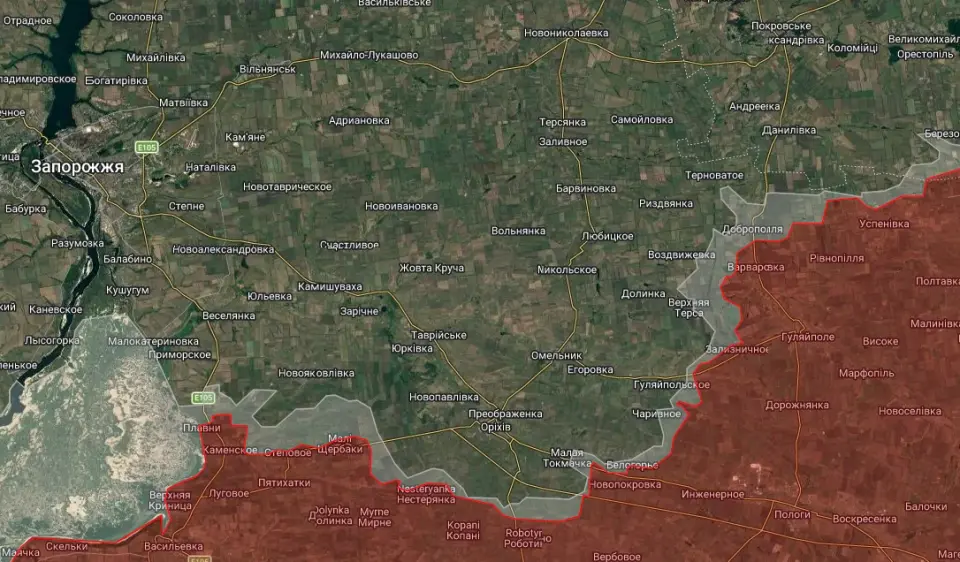
Ukraine’s Operation Vivaldi has reversed Russian territorial gains, yet Russian state media continue to depict occupied zones that no longer exist. While Moscow denies these losses, Ukrainian forces have liberated over 147 square kilometers near Lyman. Simultaneously, Russian strikes on Kyiv’s energy and bridge infrastructure intensify, prompting Ukraine to debut its new FP-7 tactical ballistic missile.
Key points
- Russian state maps falsely claim control of Lyman, Sviatohirsk, and Kupiansk, ignoring Ukrainian advances in Operation Vivaldi.
- Ukraine liberated at least 147 square kilometers in the Lyman area, disrupting Russian plans to encircle the Fortress Belt.
- Russian forces suffered over 46,000 casualties in September 2026, their highest monthly loss rate of the year.
- Russian strikes on Kyiv’s Southern Bridge and energy grid killed at least five people and injured 14.
- Ukraine conducted its first combat use of the FP-7 tactical ballistic missile, which has a range of 250 kilometers.
Background
This development follows months of slow Russian gains and Ukrainian counteroffensives. In August 2026, Ukraine marked its Independence Day amid intensified Russian strikes, while earlier reports indicated Russian manpower strains and high casualty rates. The current shift represents a significant reversal in momentum, moving from a stalemate to Ukrainian territorial recovery in key eastern sectors.
How outlets are covering it
EUobserver highlights the stark contrast between Russian state maps and reality, noting that Russian soldiers are often 20 km away from claimed positions. ISW provides quantitative data, confirming Russia’s net territorial loss of 80.81 square kilometers in September 2026. SPARTANAT emphasizes the political fallout, noting that the Russian Ministry of Defense’s denial of Ukrainian successes is fueling criticism from ultranationalist milbloggers. While EUobserver focuses on the deception in mapping, ISW and SPARTANAT agree that the operational reality on the ground contradicts Moscow’s official narrative.
Why it matters
The divergence between Russian propaganda and battlefield reality signals a potential shift in the war’s trajectory. Ukraine’s ability to reclaim territory and sustain high Russian casualty rates without corresponding gains suggests Moscow’s strategic plans are failing. The debut of the FP-7 missile and continued strikes on Russian infrastructure indicate Ukraine is expanding its offensive reach, while Russia’s reliance on decoy drones and false maps reflects deepening operational and informational crises.
What to watch
Ukraine may leverage its new positions in the Slovyansk direction for larger-scale operations. Russia is likely to continue denying territorial losses while increasing defense spending for 2027. Ukraine’s FP-7 missile will move into production, potentially enhancing its long-range strike capabilities against Russian logistics and military assets.
- Where Russian maps place the occupiers, and where they really are — an overview of parts of the front (Ukraine Battlefield update, Day 1,679) EUobserver
- Russian Offensive Campaign Assessment, October 1, 2026 Institute for the Study of War
- The Russia-Ukraine War Report Card, Sept. 30, 2026 Russia Matters
- Russian Offensive Campaign Assessment, September 28, 2026 Critical Threats
- The situation 1652 – September 29, 2026 SPARTANAT.com
Want the full story? Read the original reporting
Read on EUobserver