
Operation Veles: Ukraine’s Underground Pipeline Offensive Halts Russian Advance in Kupiansk
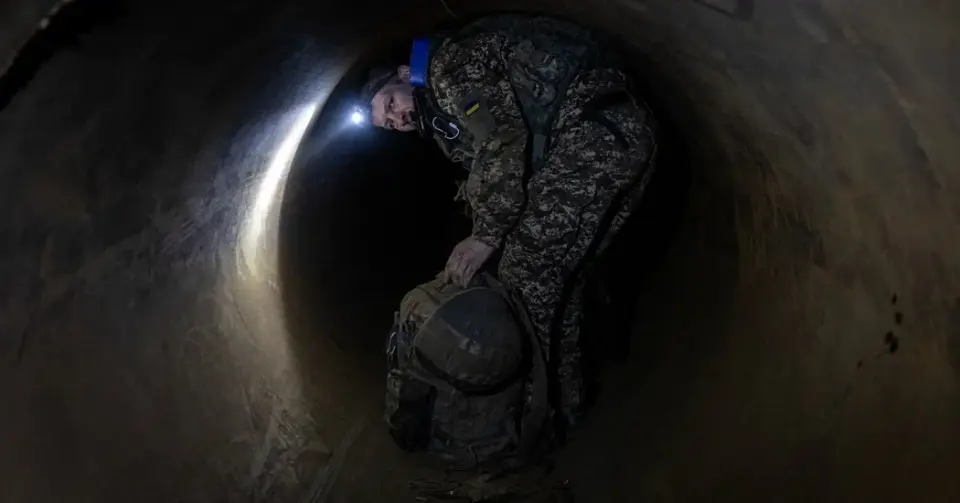
Ukrainian forces have successfully repelled Russian advances near Kupiansk using a new underground strategy called Operation Veles. By infiltrating disused natural gas pipelines, Ukrainian troops neutralized Russian infiltration routes, killed dozens of enemy soldiers, and advanced five kilometers north of the city. President Zelensky described the operation as a major tactical success, marking the third significant territorial gain for Kyiv this year. While the underground approach offers protection from drones, it poses severe psychological and physical risks to soldiers. The operation has disrupted Russian logistics across the Oskil River, forcing Moscow to redeploy resources from other fronts.
Key points
- Ukrainian troops utilized approximately 80 miles of disused gas pipelines near Kupiansk to bypass Russian defenses and attack from behind.
- Operation Veles resulted in the elimination of 100 Russian troops and the capture of over 30 prisoners, according to Ukrainian officials.
- The 2nd Khartiia Corps coordinated the operation, using retired gas specialists to map the network and install ventilation systems.
- Russian forces had previously used these same pipelines to infiltrate Kupiansk, prompting Ukraine to reverse the tactic.
- The operation advanced Ukrainian positions five kilometers north of Kupiansk, preventing a planned Russian assault on the city.
Background
This development follows a period of intense Russian pressure on northeastern Ukraine, particularly around Kupiansk, which was recaptured by Kyiv in late 2022. Recent weeks have seen escalating Russian strikes on civilian infrastructure, including a deadly drone attack on a Dnipro train station on October 29. The underground strategy represents a shift in Ukrainian military doctrine, moving beyond traditional trench warfare to exploit subterranean infrastructure for logistical and tactical advantages.
How outlets are covering it
The New York Times provides a visceral, first-person account of the conditions inside the pipes, highlighting the physical toll on soldiers and the tactical ingenuity of the Khartiia Corps. The Independent emphasizes the political significance, with Zelensky framing Operation Veles as a landmark victory alongside other recent offensives. Gwara Media focuses on the immediate military outcome, noting that no new Russian incursions have been recorded since the operation, though some Russian troops remain in northern Kupiansk. The Guardian contextualizes the operation within broader diplomatic efforts, noting that Nordic leaders are urging Putin to end the war while Kyiv asserts its strongest battlefield position in months. While all sources agree on the tactical success, they differ in emphasis: The NYT focuses on the human cost, the Independent on the political narrative, and Gwara Media on the operational halt of Russian advances.
Why it matters
Operation Veles demonstrates Ukraine’s ability to adapt to Russian tactics and exploit existing infrastructure for military advantage. By neutralizing Russian infiltration routes and advancing territory, Ukraine has disrupted Russian logistics and forced a redeployment of forces from other fronts. This success may influence future peace negotiations, as Zelensky seeks to leverage battlefield gains in upcoming trilateral talks in Abu Dhabi. The operation also highlights the evolving nature of modern warfare, where underground spaces are becoming critical for both offense and defense against drone threats.
What to watch
Ukrainian forces are evaluating the costs of building a broader network of tunnels to connect observation posts with rear support. Diplomatic efforts continue, with Zelensky hoping for a trilateral meeting in Abu Dhabi between November 6 and 10. Russian forces are likely to adjust their tactics in response to the disruption of their logistics across the Oskil River. The psychological impact on soldiers will remain a key concern as rotations continue.
- Ukrainians Are Fighting Russians Inside Underground Gas Pipes. I Went in One. The New York Times
- Ukraine war briefing: Kyiv retaking territory, Zelenskyy says, as Nordic leaders urge Putin to end the conflict The Guardian
- Ukraine doesn’t record new Russian infiltrations in Kupiansk after underground counteroffensive Gwara Media
- Fighters From Freedom of Russia Helped Drive Out Invaders From Underground Utility Tunnels in Kharkiv Region Мілітарний
- Inside Ukraine’s underground mission trekking through miles of gas pipes to ambush Russian troops The Independent
Want the full story? Read the original reporting
Read on The New York Times