
Ukraine Executes First Drone Airlift of Wounded Soldier After 491-Day Frontline Stand
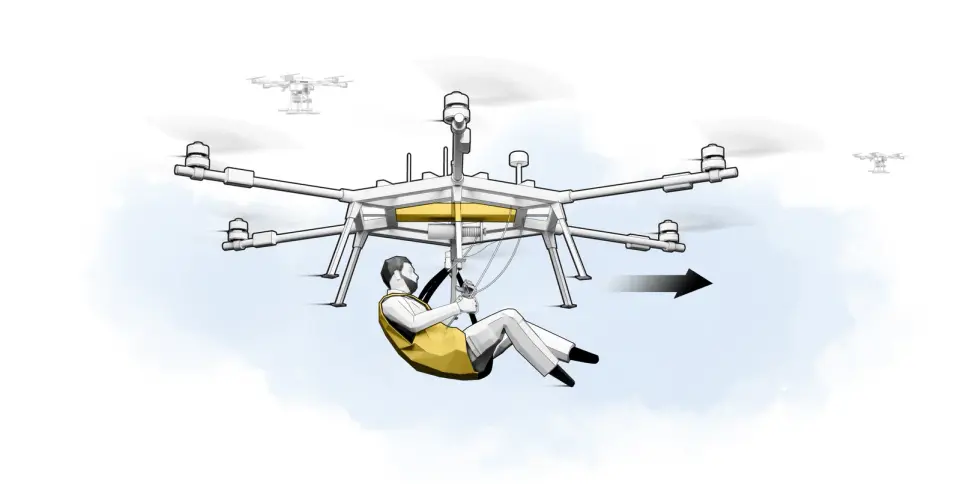
A Ukrainian soldier trapped for eight months in a bombed-out school boilerhouse was rescued on October 4 via a heavy-lift drone, marking the first known aerial evacuation of a wounded combatant. The 49-year-old, who had amputated his own foot to survive, was flown 15 km to safety by a six-rotor hexacopter after conventional ground rescue attempts failed due to Russian drone activity and landmines.
Key points
- Kostiantyn Vlasenko, a 49-year-old infantryman, spent 491 days on the frontlines, including eight months hidden in a boilerhouse after losing both feet to Russian drone strikes.
- Vlasenko self-amputated his right foot in May 2026 to prevent infection and mobility issues, as his left foot had already been destroyed by a blast.
- The rescue on October 4 utilized the Ayudag-6, a heavy-lift hexacopter manufactured by Gurzuf Defence, which can carry up to 90 kg over 25 km.
- Three smaller 'Vampire' drones escorted the rescue craft to distract Russian attack drones, while artillery and FPV drones suppressed enemy positions for two hours.
- The operation was the first of its kind, as ground vehicles and unmanned ground robots were destroyed by Russian drones during previous rescue attempts.
Background
This incident highlights the escalating technological arms race in the five-year conflict between Ukraine and Russia. While drones have primarily been used for lethality and surveillance, their application in medical logistics and casualty evacuation represents a new frontier. This follows recent Ukrainian government approvals for experimental drone medical logistics and precedes the deployment of specialized casualty evacuation drones like the SkyFall StarGate, which are currently undergoing frontline testing.
How outlets are covering it
Reuters provides the most detailed narrative, focusing on Vlasenko’s personal ordeal, his self-amputation, and the specific mechanics of the rescue, including the use of a harness and winch. NBC News emphasizes the geopolitical context, noting the rescue occurred amidst strained US-Ukraine relations and restrictions on Starlink services, while framing the event as a historic first. Ars Technica offers a technical analysis, comparing the Ayudag-6 to other emerging evacuation drones and noting the risks involved, with cofounder Pavlo Feldblium advising that such methods should be a last resort. BBC confirms the authenticity of the footage but offers a briefer overview, focusing on the impossibility of ground rescue due to landmines and enemy drone activity.
Why it matters
The successful drone evacuation demonstrates how battlefield necessity is driving rapid innovation in military technology, potentially redefining casualty extraction in high-threat environments. It signals a shift from traditional ground-based medical evacuations to aerial solutions, which may become standard as drone warfare intensifies and ground movement becomes increasingly lethal. This development also underscores the critical role of private Ukrainian manufacturers in adapting technology for immediate combat needs.
What to watch
Ukrainian military officials indicate that systematic work is beginning to make drone evacuations a regular operation rather than a one-off event. The 92nd Assault Brigade plans to integrate these heavy-lift drones into standard rescue protocols, while other manufacturers continue testing specialized casualty evacuation drones. The success of this mission may influence future military doctrines regarding medical logistics and casualty extraction in contested zones.
- A Ukrainian soldier severed his own foot to survive. Then came a dramatic rescue. Reuters
- Ukraine claims world’s first drone evacuation of wounded soldier NBC News
- Ukraine’s drone rescue of wounded soldier puts much touted idea into practice Ars Technica
- Ukraine says it carried out first drone airlift of wounded soldier from front line BBC
- Military shows how engineering drones install defensive barriers on frontline Ukrinform
Want the full story? Read the original reporting
Read on Reuters