
Ukraine's Operation Vivaldi: Robots and Drone Dominance Break Russian Pincer
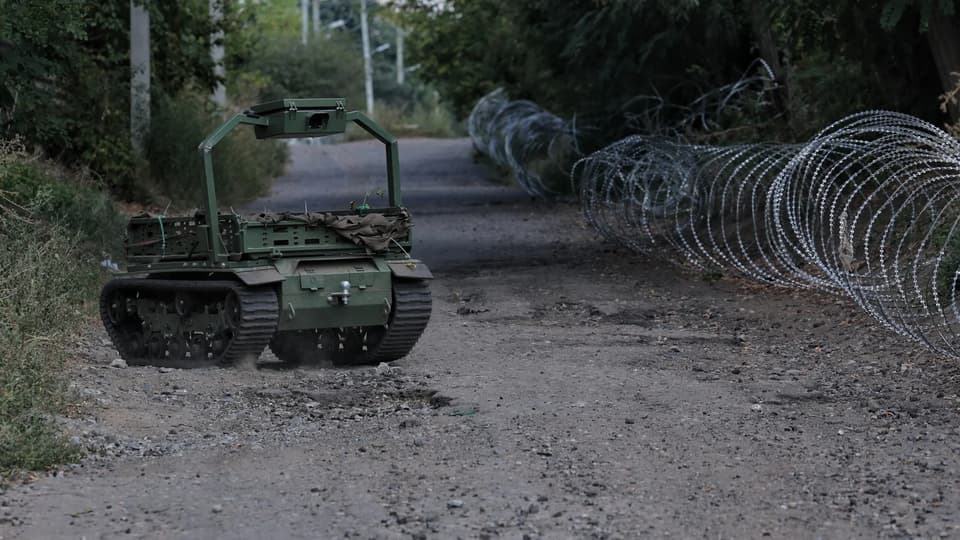
Ukraine's Third Army Corps has achieved a major breakthrough in Operation Vivaldi, liberating up to 250 square kilometers of territory in the Donetsk region by leveraging advanced robotic systems and drone dominance. The operation successfully collapsed a Russian pincer movement aimed at encircling the 'Fortress Belt' cities. Key tactics included airborne robot drops behind enemy lines and the use of ground robots to clear 30 kilometers of minefields in just two nights, a task that would have taken human sappers a week. This success has neutralized Russia's elite Rubicon drone unit and disrupted Russian logistics, marking a shift from attritional warfare to operational-level breakthroughs.
Key points
- Ukraine's Third Army Corps has reclaimed up to 250 square kilometers of territory since Operation Vivaldi began in May 2026, defeating a Russian pincer movement in the Donetsk region.
- On September 21, 2026, Ukrainian forces executed a 'world-first' airborne assault, dropping explosive ground robots more than 10 kilometers behind Russian lines using heavy bomber drones.
- Ground robots cleared 30 kilometers of mine routes in the Shandryholove sector in two nights, a task that would have required two sapper companies and a week of human labor.
- Ukrainian forces neutralized approximately 60% of anti-personnel mines in the Third Army Corps' area of operations using robotic systems, eliminating sapper casualties.
- The operation has degraded Russian logistics and drone capabilities, leading to the withdrawal of Russia's elite Rubicon drone unit from the Lyman axis.
- Ukraine's intermediate-range drone strikes have reduced Russian fuel supplies, crippling electronic warfare systems and enabling Ukrainian mechanized advances toward Lyman.
Background
Operation Vivaldi represents a strategic shift in Ukraine's military approach, moving from the attritional tactics of former commander Oleksandr Syrskyi to an operational-level breakthrough strategy. This follows a broader campaign by Ukraine's defense minister Mykhailo Fedorov to establish drone dominance at depth, targeting Russian logistics and command structures. The operation builds on earlier Ukrainian successes in the Kharkiv and Kursk counteroffensives, aiming to create a decisive battlefield victory that could alter Russia's strategic calculus. The use of robots reflects Ukraine's ongoing effort to compensate for manpower disadvantages against Russia, which has expanded its drone and missile production capabilities.
How outlets are covering it
Ars Technica emphasizes the technological novelty of the airborne robot assault and the efficiency of robotic mine-clearing, highlighting how these innovations have enabled Ukraine to reclaim 96 square miles of territory. United24 Media focuses on the operational details, noting that the Third Army Corps has reclaimed 125 square kilometers and that robotic systems now handle 60% of mine neutralization without human risk. The Modern War Institute provides a broader strategic analysis, framing Operation Vivaldi as a potential 'overture to victory' that could force Russia to reevaluate its war strategy, while also warning that Ukraine must scale this success to achieve a decisive operational breakthrough. Kyiv Post reports on the broader frontline situation, noting Ukrainian advances in multiple sectors but also acknowledging limited Russian gains near Dobropillya and Kostyantynivka, indicating a complex and evolving battlefield.
Why it matters
Operation Vivaldi demonstrates Ukraine's ability to achieve significant territorial gains through technological innovation and strategic adaptation, potentially shifting the momentum of the war. The successful use of robots and drones has not only reclaimed territory but also degraded Russian military capabilities, including the neutralization of the elite Rubicon drone unit. This operation could serve as a model for future Ukrainian offensives and may influence international support for Ukraine by demonstrating a viable path to victory. However, the long-term impact depends on Ukraine's ability to scale these successes and maintain drone dominance against Russia's ongoing adaptations and resource mobilization.
What to watch
Ukraine is expected to continue expanding Operation Vivaldi, with the Third Army Corps commander indicating that the operation has 'four seasons.' Russian forces are likely to reinforce their defensive lines behind the Zherebets River and may launch new mechanized assaults toward Dobropillya in the autumn. Ukraine will need to consolidate its gains and potentially launch further offensives to achieve an operational-level breakthrough, while also addressing challenges in manpower mobilization and defense industry production. Russia may continue to adapt its drone warfare tactics and expand its missile production to counter Ukrainian advances.
- Robots make combat airdrops, clear mines as Ukraine defeats Russian pincer Ars Technica
- Operation Vivaldi: Ground Robots Cleared 30 Kilometers in Two Nights Without Losses united24media.com
- An Overture to Victory: Operation Vivaldi and Ukraine’s Path to Battlefield Decision Modern War Institute -
- Drones only need 2 nights to lay a minefield that would take troops 2 weeks: Ukrainian corps Yahoo
- Ukraine Advances in 4 Frontline Sectors as Russia Claims Gains Near Key Donetsk Cities, ISW Says kyivpost.com
Want the full story? Read the original reporting
Read on Ars Technica