
Van Jones Faces Backlash for Dismissing Gaza Famine as 'Propaganda' in Video with Noa Tishby
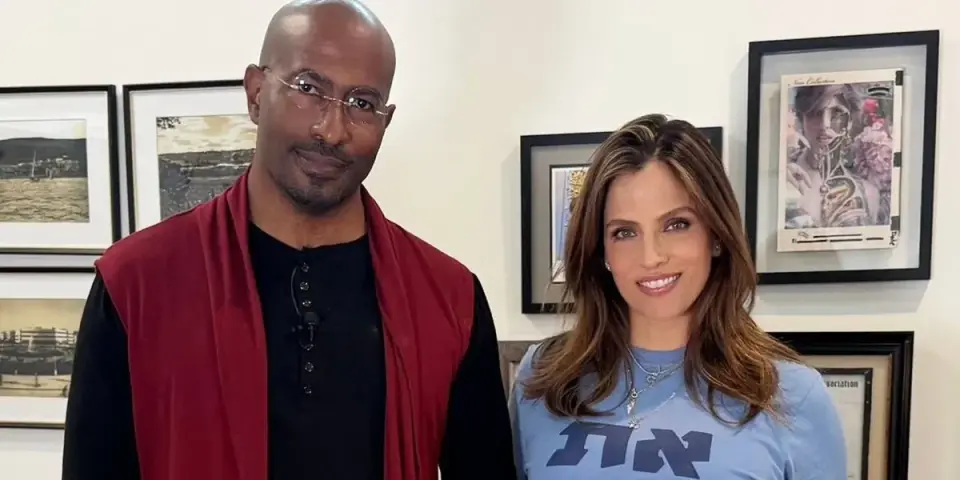
US political analyst Van Jones drew sharp criticism for appearing in a video with Israeli activist Noa Tishby, where he dismissed images of a starving child in Gaza as 'propaganda.' Jones argued that the child, 18-month-old Mohammed Zakaria al-Mutawaq, had a genetic condition and was not being starved by Israel, despite the Integrated Food Security Phase Classification (IPC) declaring a Phase 5 famine in Gaza in August 2025. Critics, including journalist Ryan Grim, noted that while the child had pre-existing health issues, starvation exacerbated the condition. The IPC recently reported that 59% of Gaza’s population faced crisis-level food insecurity from April to June 2026, and at least 461 people have died from malnutrition since the conflict began in 2023. Jones had previously apologized for similar remarks in 2025, calling them 'insensitive and hurtful.'
Key points
- Van Jones stated in a video with Noa Tishby that a widely shared image of a starving child in Gaza was not real, claiming the child had a genetic issue and was not starved by Israel.
- The child, Mohammed Zakaria al-Mutawaq, was 18 months old and had pre-existing health problems affecting his brain and muscle development, as acknowledged by a correction in a July 2025 New York Times article.
- Investigative journalist Ryan Grim countered that the baby had a genetic issue AND was being starved by Israel, with the starvation exacerbating the condition.
- The Integrated Food Security Phase Classification (IPC) declared a Phase 5 famine in Gaza in August 2025, lifting the designation in December 2025 but reporting that 59% of Gaza’s population faced crisis-level food insecurity from mid-April to June 2026.
- At least 461 people in Gaza have died from malnutrition-related causes since the conflict began in 2023, including 157 children, according to the UN Office for the Coordination of Humanitarian Affairs.
- Van Jones previously apologized in 2025 for calling 'dead Gaza baby' images a 'disinformation campaign,' stating the remarks were 'insensitive and hurtful' and that the suffering of children in Gaza is 'heartbreaking.'
Background
This controversy occurs amid ongoing international debate over Israel’s military actions in Gaza, which began in retaliation for the Hamas-led attack of October 7, 2023. The International Criminal Court has issued arrest warrants for Israeli Prime Minister Benjamin Netanyahu and former Defense Minister Yoav Gallant for alleged crimes against humanity, including forced starvation. Approximately 20 nations have joined South Africa’s genocide case against Israel at the International Court of Justice. In August 2026, Germany urged the EU to sanction Israeli minister Itamar Ben-Gvir over remarks calling for targeted killings in Gaza, reflecting broader diplomatic tensions. The IPC’s recent analysis highlights that despite a nominal ceasefire in late 2025, humanitarian access remains highly restricted, with 212,000 people in Phase 4 (emergency) food insecurity levels.
Why it matters
The dispute over the authenticity of images of starving children in Gaza underscores the broader struggle for accurate information in the Israel-Palestine conflict. Denials of famine by figures like Van Jones and Noa Tishby contradict official data from the IPC and UN agencies, potentially undermining global awareness of the humanitarian crisis. With 59% of Gaza’s population facing crisis-level food insecurity and hundreds of malnutrition-related deaths, the debate has real-world implications for humanitarian aid and international accountability. The incident also highlights the role of social media in shaping public perception, with Jones framing the issue as an 'information war' while critics argue it dismisses verified suffering.
What to watch
The backlash may lead to further scrutiny of Van Jones and Noa Tishby’s public statements on Gaza. The IPC’s ongoing monitoring of food insecurity in Gaza could prompt renewed international pressure for humanitarian access. As the conflict’s humanitarian impact persists, expect continued debates over the accuracy of media reports and the role of political figures in shaping narratives about the crisis.
Want the full story? Read the original reporting
Read on Common Dreams