
Houthi Strikes on Riyadh Airport Derail Saudi Economic Ambitions Amid US-Iran War
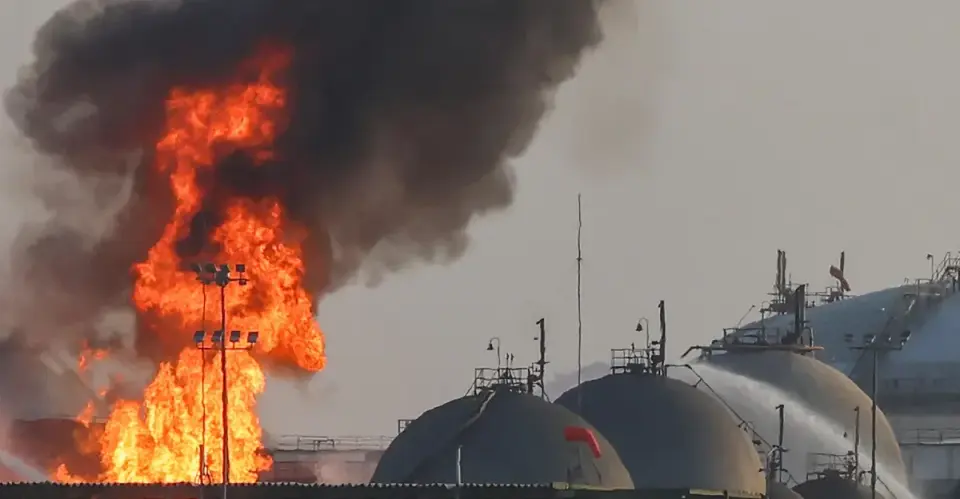
Yemen's Iran-backed Houthis have launched their most severe attack on Saudi Arabia in over a decade, striking Riyadh's airport and killing at least 13 people. This escalation, linked to the broader US-Iran conflict, has forced Saudi Arabia to postpone its flagship Future Investment Initiative and disrupt its new airline, Riyadh Air. While Crown Prince Mohammed bin Salman has requested US airstrikes, President Trump has declined direct military involvement, citing resource constraints in the Strait of Hormuz. The crisis threatens Saudi Arabia's vision as a global hub for finance, tourism, and foreign investment, exposing the fragility of its diversification strategy against persistent regional instability.
Key points
- A Houthi strike on Riyadh's airport killed at least 13 and wounded over 300, marking the worst attack on Saudi soil in a decade.
- Saudi Arabia postponed its Future Investment Initiative, often called 'Davos in the Desert,' until 2027 due to security concerns.
- The Saudi sovereign wealth fund's new airline, Riyadh Air, has relocated aircraft to other airports to protect them from further Houthi attacks.
- Crown Prince Mohammed bin Salman has repeatedly asked President Trump for US airstrikes in Yemen, but the US has refused direct military action.
- The US is currently providing only intelligence support, as its military assets are heavily committed to securing the Strait of Hormuz.
- The Houthis frame their attacks as retaliation for the long-standing Saudi-led blockade of Yemeni airspace since 2015.
Background
This escalation follows a series of Houthi attacks in 2026, including a drone incident near Mecca in September and a ballistic missile strike on a training camp in Shabwa on October 20 that killed 58 people. In September, the US deployed approximately 200 advisers to Saudi Arabia to provide intelligence support, aiming to prevent the conflict from spilling into open war. The current violence is part of a decade-plus conflict that had been paused by a 2022 ceasefire but resumed earlier this year amid the broader US-Iran war.
How outlets are covering it
Vox highlights the immediate economic and reputational damage to Saudi Arabia's diversification efforts, noting that the attacks undermine confidence in the country's safety for foreign investment and tourism. The National Interest offers a historical perspective, arguing that Saudi Arabia's decades-long policy of keeping Yemen weak and fragmented inadvertently created a unified and formidable Houthi adversary. While Vox focuses on the current disruption of specific projects like Riyadh Air and the financial district, The National Interest emphasizes that military force alone cannot resolve the underlying structural tensions and that Saudi policy toward Yemen requires a fundamental overhaul. Both sources agree that the situation is critical for Saudi leadership, but they differ on the root cause: Vox points to the current US-Iran war dynamic, while The National Interest points to long-term Saudi foreign policy failures.
Why it matters
The Houthi attacks threaten the core of Saudi Arabia's Vision 2030, which aims to transform the kingdom into a global hub for finance, tourism, and investment. The disruption of key infrastructure, including the capital's airport and financial district, signals to international investors that the region remains vulnerable to external shocks. Furthermore, the inability of the US to provide direct military support due to commitments in the Strait of Hormuz highlights the complex and constrained nature of US foreign policy in the Middle East. This situation could lead to a prolonged stalemate, with economic costs mounting for Saudi Arabia and regional instability persisting, potentially affecting global energy markets and trade routes.
What to watch
Saudi Arabia faces a difficult choice between escalating military action against the Houthis or negotiating a costly ceasefire deal involving financial concessions for reconstruction and civil servant salaries in Houthi-controlled areas. The US is likely to continue providing intelligence support but will avoid direct military involvement in Yemen due to resource constraints. The future of Saudi Arabia's economic diversification projects, including Riyadh Air and the financial district, depends on whether a lasting security solution can be found. Investors and global markets will closely watch for any further escalations or diplomatic breakthroughs that could stabilize the region.
- How the Iran war is ruining Saudi Arabia’s plans Vox
- Everything is going wrong for Muhammad bin Salman The Economist
- Saudi Arabia’s Military Limitations Are Being Exposed by Houthi Attacks WSJ
- Why the Houthis Are So Hard to Defeat Bloomberg.com
- How Saudi Arabia Created the Yemen It Fears The National Interest
Want the full story? Read the original reporting
Read on Vox