
Slovyansk’s Shrinking Population and New Drone Nets Highlight Stalemate
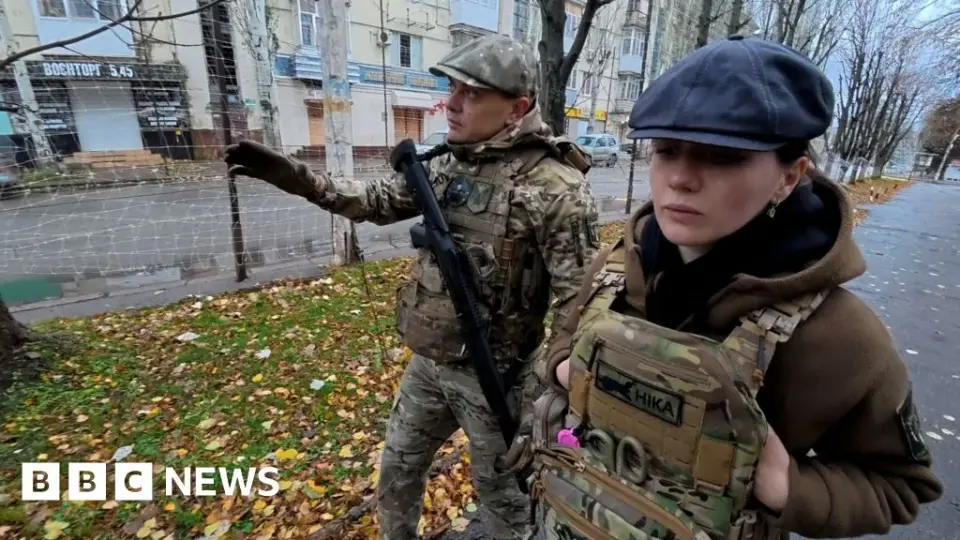
Slovyansk, a key Ukrainian fortress city, faces severe depopulation and bombardment as Russia seeks territorial concessions in stalled peace talks. Simultaneously, Ukraine is deploying new automated net launchers to counter Russian FPV drones, reflecting a defensive stalemate on the front line.
Key points
- Slovyansk’s population has dropped below 10% of its pre-war 200,000 residents due to constant Russian drone and missile attacks.
- The city is part of Ukraine’s 'fortress belt' in Donetsk, which Russia demands Kyiv cede as a condition for peace.
- Ukrainian company Phantom Defense is preparing to mass-produce 'Mangal,' an automated system that catches FPV drones with nets in 0.2 seconds.
- Ukraine has installed over 1,640 km of anti-drone nets along frontline roads since early 2026 to protect logistics.
- Trilateral peace talks in Abu Dhabi have resumed but remain stalled on territorial issues, with combat continuing despite diplomatic efforts.
Background
Previous coverage noted that trilateral talks in Abu Dhabi resumed in November 2026, focusing on security guarantees but facing deep divisions over territorial concessions. Earlier reports also highlighted disruptions to Ukrainian drone operations due to Starlink restrictions and heavy Russian strikes on energy infrastructure, contributing to the current defensive posture in the Donbas region.
How outlets are covering it
BBC emphasizes the human cost and strategic importance of Slovyansk, noting that while Russia has taken 90% of the Donbas, its advances have stalled due to Ukrainian resistance and drone saturation. UNITED24 Media and Euromaidan Press focus on the technological response, detailing Phantom Defense’s Mangal system, which uses nets to neutralize drones at close range, complementing electronic warfare. Unmanned Airspace highlights the broader infrastructure effort, noting the expansion of anti-drone nets along 1,640 km of frontline roads. While BBC reports on the humanitarian crisis and diplomatic stalemate, the other sources highlight Ukraine’s adaptive defense technology in response to persistent drone threats.
Why it matters
The situation in Slovyansk illustrates the high cost of holding territory in the Donbas, where depopulation and infrastructure destruction are used as psychological warfare tactics. The development of automated net launchers like Mangal represents a critical shift in counter-drone strategy, aiming to protect logistics and troops in a stalemate where traditional advances are hindered by dense drone saturation. These developments underscore the disconnect between diplomatic talks and the reality of ongoing combat, where technological innovation is essential for survival.
What to watch
Ukraine expects to deploy Mangal systems in combat trials, with ten units already sent to frontline units. The company is developing Mangal 2.0 based on feedback. Peace talks in Abu Dhabi will continue, but progress is unlikely without concessions on territorial issues. Russia may intensify bombardment to force evacuations, while Ukraine will expand anti-drone infrastructure to protect remaining logistics routes.
- Inside devastated frontline city that Russia wants Ukraine to give up BBC
- Ukraine’s Mangal Net Launcher Catches FPV Drones in 0.2 Seconds, Heads for Mass Production UNITED24 Media
- Fishing for drones: a Ukrainian box that fires nets at FPVs heads for serial production Euromaidan Press
- Ukraine adds 86 km of anti-drone protection nets along frontline roads Unmanned airspace
- Ukrainian Mangal Anti-Drone Active Protection System Being Prepared for Mass Production Мілітарний
Want the full story? Read the original reporting
Read on BBC