
Zelensky Announces Fourth Phase of Operation Vivaldi After Reclaiming 176 Sq Km in Donetsk
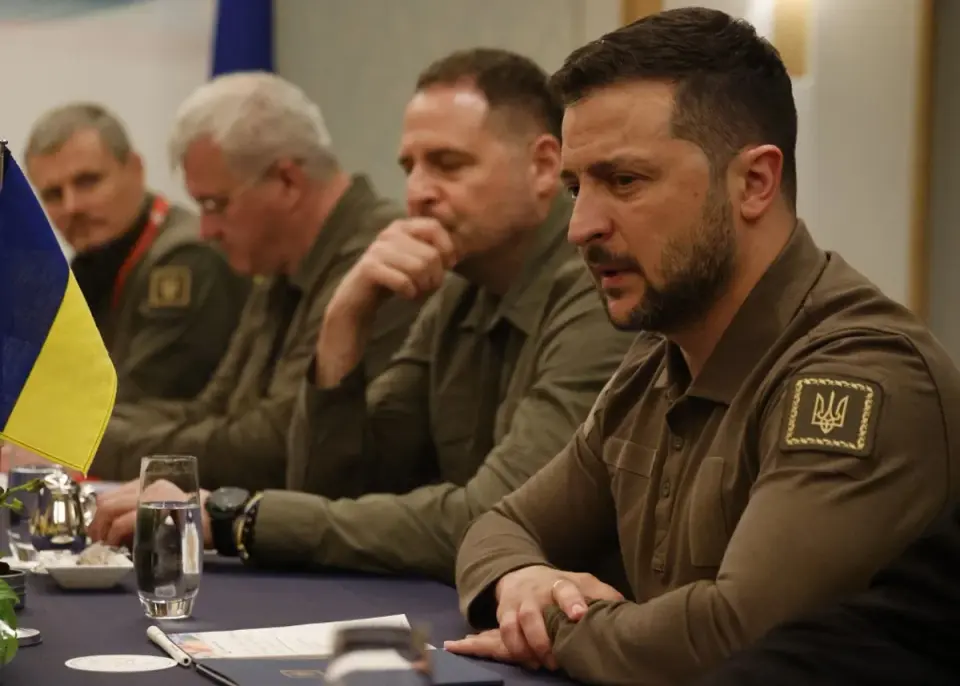
President Volodymyr Zelensky announced on September 30, 2026, that Ukraine is launching the fourth phase of Operation Vivaldi, a counteroffensive in the Lyman area of Donetsk. The operation has retaken 176 square kilometers of territory, inflicted over 5,000 Russian casualties, and captured 250 soldiers. Zelensky emphasized the critical role of ground robotic systems in reducing human casualties and disrupting Russian logistics. The offensive has halted Russian advances toward the Sloviansk-Kramatorsk fortress belt, reversing over a year of Russian gains in the region.
Key points
- Zelensky visited the 3rd Army Corps command post on Sept. 30 to discuss the fourth phase of Operation Vivaldi.
- The offensive has retaken 176 sq km of territory and caused over 5,000 Russian casualties, including 250 captured soldiers.
- Ukrainian forces have halted Russian pushes toward the rear of Sloviansk and Kramatorsk, stabilizing the front.
- Zelensky highlighted the use of ground robotic systems (GRCs) as a key factor in the operation's success.
- The 21st Kraken Separate Unmanned Systems Regiment was awarded for its role in scaling up unmanned capabilities.
Background
Operation Vivaldi began in May 2026 as a counteroffensive in the Lyman area of Donetsk. Previous phases had already reclaimed significant territory and disrupted Russian logistics. The operation is part of a broader strategy to halt Russian advances toward the Donetsk fortress belt, which includes key cities like Sloviansk and Kramatorsk. Ukraine has been increasing its use of ground robotic systems and drones to reduce human casualties and achieve tactical advantages.
How outlets are covering it
Kyiv Post focuses on the announcement of the fourth phase and the specific gains in territory and casualties, emphasizing the role of ground robotic systems. The Modern War Institute provides a deeper analysis, framing Operation Vivaldi as a potential prelude to a larger operational breakthrough, highlighting the importance of drone dominance and middle-strike campaigns. It notes that while Vivaldi has achieved tactical success, Ukraine must now scale up to achieve an operational-level victory. The Atlantic Council, cited by Kyiv Post, notes that the offensive has reversed over a year of Russian advances. There is no direct disagreement, but the emphasis differs: Kyiv Post highlights the immediate tactical gains and robotic use, while the Modern War Institute focuses on the strategic implications and the need for a larger breakthrough.
Why it matters
The success of Operation Vivaldi demonstrates Ukraine's ability to disrupt Russian logistics and halt advances in a critical area. The use of ground robotic systems and drones has proven effective in reducing human casualties and achieving tactical advantages. The operation's success could influence the broader war dynamics, potentially forcing Russia to reassess its strategy. It also highlights the importance of technological innovation in modern warfare and the need for Ukraine to scale up its unmanned capabilities for future operations.
What to watch
Ukraine will likely continue to expand the use of ground robotic systems and drones in Operation Vivaldi and other sectors. The fourth phase may aim to further disrupt Russian logistics and push back Russian forces. Ukraine may also seek to achieve an operational-level breakthrough, as suggested by the Modern War Institute, by scaling up its corps system and improving coordination. International support for Ukraine may increase if the operation continues to show significant gains.
- Ukraine Plans 4th Phase of Operation Vivaldi After Retaking 176 Square Km, Inflicting 5,000 Russian Losses Kyiv Post
- Russian Offensive Campaign Assessment, September 28, 2026 criticalthreats.org
- Zelenskiy says he visits military command post near Ukraine's eastern frontline reuters.com
- An Overture to Victory: Operation Vivaldi and Ukraine’s Path to Battlefield Decision Modern War Institute -
- Ukraine captures 250 Russians in ‘zombie car’ offensive Yahoo
Want the full story? Read the original reporting
Read on Kyiv Post