
Deadliest Civilian Strike: 30 Killed in Kramatorsk Bus Bombing
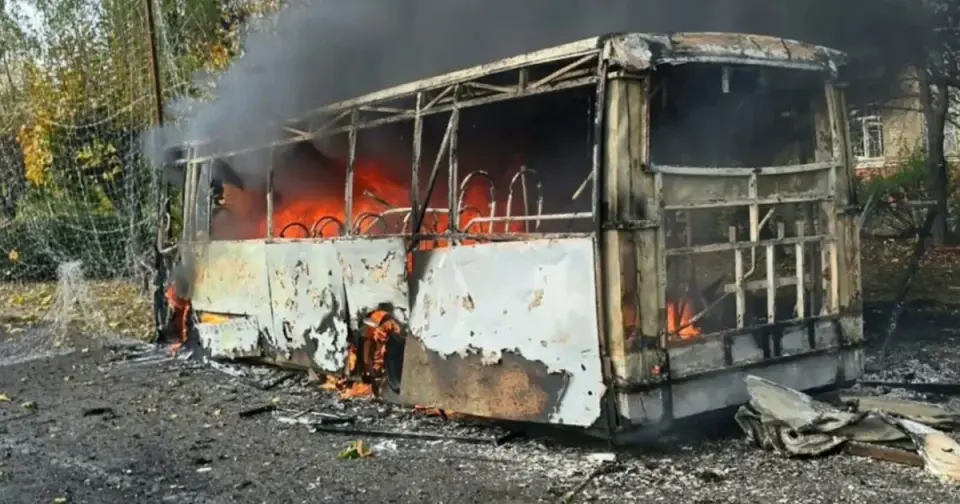
A Russian glide bomb struck two buses in Kramatorsk, killing at least 30 people and wounding 18. This is the deadliest single civilian attack of 2026. Authorities suspended public transport in the region as Ukraine urges allies for more air defense supplies.
Key points
- At least 30 people were killed and 18 wounded when a Russian bomb hit two buses in Kramatorsk on Oct. 8.
- Regional governor Vadym Filashkin suspended all public transport in Kramatorsk and neighboring Sloviansk due to security risks.
- The strike occurred near a dental clinic on Yuvileina Street, with debris and body parts scattered across the road.
- This attack follows a missile strike on a residential building in Pryluky that killed 22 people, including five children, on Oct. 7.
- Ukraine is facing a shortage of air defense munitions, prompting President Zelenskyy to urge Western allies for new defense packages.
Background
This incident is part of a broader surge in Russian attacks on Ukrainian civilian infrastructure. In the first eight months of 2026, the UN reported 15,280 civilian casualties, a 55% increase over the same period in 2025. Kramatorsk is part of the 'fortress belt' in the Donbas region, which Russia has sought to capture since 2014. Recent weeks have seen an uptick in daytime attacks, creating a round-the-clock threat to civilians.
How outlets are covering it
NBC News and The Guardian emphasize the deliberate targeting of civilians, with Filashkin stating that buses are attractive targets to maximize casualties. Al Jazeera highlights a shift in Russian tactics from targeting power grids to immobilizing transportation infrastructure, including trains and gas stations. CNN, though its text was obscured by code, is cited in the title as reporting the attack as the deadliest single incident this year. All sources agree on the death toll and the suspension of public transport, but differ in emphasis: NBC and The Guardian focus on the immediate humanitarian impact and Zelenskyy's call for aid, while Al Jazeera provides technical context on how new Russian drones and glide bombs enable these strikes.
Why it matters
The Kramatorsk strike underscores the escalating risk to Ukrainian civilians and the strain on Ukraine's air defense capabilities. It highlights the potential for further civilian casualties if Western allies do not provide additional anti-ballistic and interceptor supplies. The attack also signals a shift in Russian strategy toward targeting civilian infrastructure to coerce peace, raising concerns about the humanitarian toll of the conflict.
What to watch
Ukrainian negotiators are scheduled to visit the United States on Oct. 11 and 12 for talks. Zelenskyy has urged President Trump to increase pressure on Russia, while also requesting expanded Starlink coverage to enable strikes on Russian targets. The Kremlin has not yet confirmed Putin's attendance at the G20 summit in Miami in December.
- At least 30 people killed after Russia bombs two buses in Ukraine NBC News
- Russian attack on bus kills at least 30 people near Ukraine frontline The Guardian
- More killed in Kramatorsk as Russia targets Ukraine’s transportation system Al Jazeera
- Russian strike kills at least 33 in eastern Ukraine in deadliest single attack this year CNN
- Strike on Ukrainian public buses leaves 30 dead as blackouts worsen in Kyiv AP News
Want the full story? Read the original reporting
Read on NBC News