
Record Heat Forces Champagne Growers to Accelerate Harvest Amid Drought
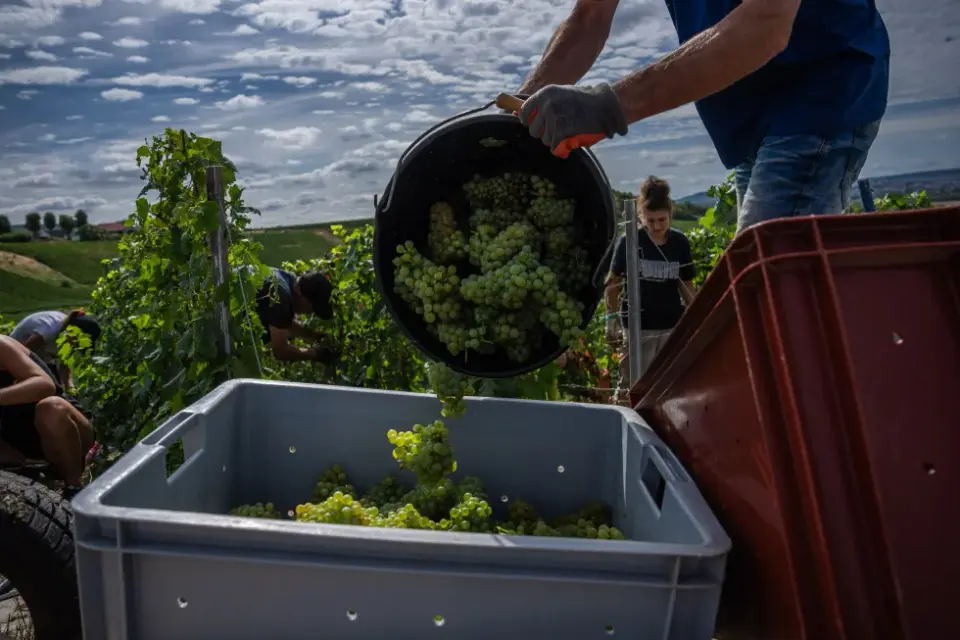
Champagne producers are racing to harvest grapes in August 2026 due to record-breaking heat and drought, which have accelerated ripening by 10-20 days compared to historical norms. While early picking preserves grape quality by preventing excessive sugar concentration, it creates logistical challenges for hand-harvesting traditions and raises concerns about the long-term sustainability of the region's viticulture practices.
Key points
- Grape ripening in Champagne has accelerated from 100 days after flowering in the 1970s to 80 days today, with 2026's record heat compressing the timeline further.
- June 2026 temperatures reached 40°C (104°F) in parts of Champagne, causing vines to draw water from grapes to survive, resulting in higher sugar concentrations and faster ripening.
- The early harvest disrupts traditional hand-harvesting methods, as workers are still on summer vacation and recruitment from France and Poland faces logistical constraints.
- Producers like Bonnet-Gobillard are concerned about maintaining Champagne's traditional delicacy and avoiding excessive alcohol content, which can result from overly ripe grapes.
- The early harvest may force producers to reconsider long-established practices as agricultural machinery becomes more sophisticated to meet new timing demands.
Background
This development follows a series of extreme weather events across Europe in 2026, including Philadelphia-sized wildfires in France and Spain in late July, record-low river levels in the Seine, Rhine, and Danube, and a broader European farming crisis affecting vegetable, cereal, and dairy production. The heat and drought conditions that are now impacting Champagne vineyards are part of a wider pattern of climate-related agricultural stress across the continent, with global ocean temperatures reaching record highs in July 2026.
Why it matters
The accelerated harvest in Champagne highlights how climate change is disrupting centuries-old agricultural traditions and forcing producers to adapt their practices. The region's reliance on hand-harvesting and specific timing for grape quality is being challenged by unpredictable weather patterns, potentially threatening the economic viability and cultural heritage of the Champagne industry. As temperatures continue to rise, the wine industry may need to fundamentally reconsider its methods to maintain product quality and sustainability.
What to watch
Producers will need to complete their harvests within the next few weeks while managing logistical challenges of early picking. The industry may increasingly adopt mechanized harvesting methods to cope with compressed timelines, potentially altering traditional Champagne production practices. Long-term, the region may need to develop new viticultural strategies to adapt to increasingly frequent early harvests and changing climate conditions.
- Champagne growers race to preserve quality in record-early harvest AP News
- Record-early champagne harvest highlights climate change impact on French vineyards Reuters
- Burgundy: Earliest Harvest in 500 Years Wine-Searcher
- In Bourgogne, they’ve been recording grape date harvests sin... Kottke.org
- In Champagne, They're Harvesting Earlier Than Ever Newser
Want the full story? Read the original reporting
Read on AP News