
Colombia shifts from rescue to recovery as Choco faces compounded crisis
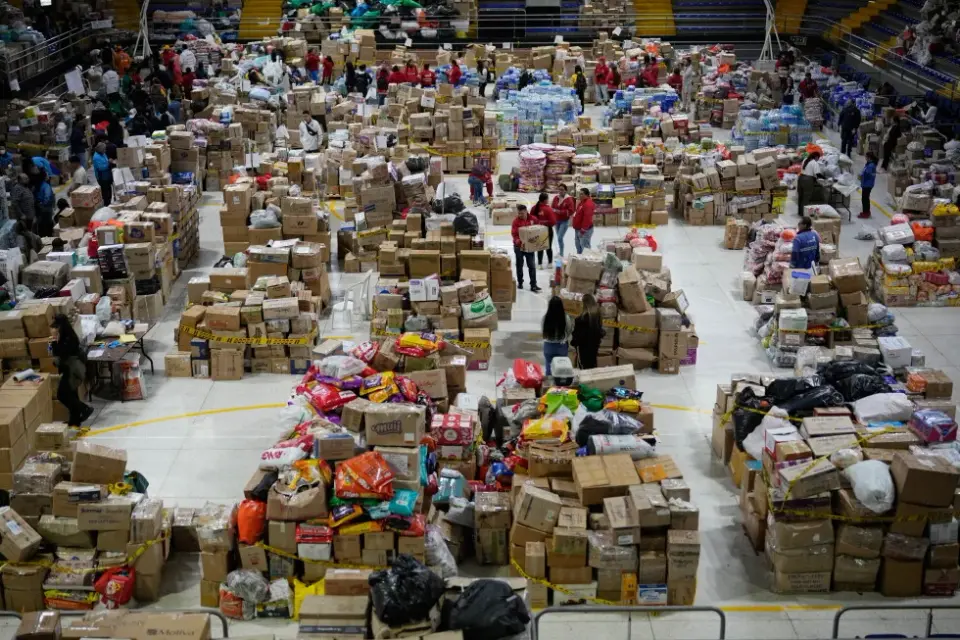
One week after a magnitude 7.4 earthquake struck western Colombia, rescue operations are winding down as authorities pivot to long-term recovery. The disaster has killed at least 289 people, injured over 4,000, and destroyed nearly 27,000 homes across 15 departments. While major cities like Cali manage temporary shelters, the poorest region, Choco, faces a compounded crisis due to pre-existing poverty, armed conflict, and limited access. International aid is flowing, but challenges remain in remote areas.
Key points
- The earthquake killed at least 289 people and injured 4,187, with 143 officially missing, though unofficial databases suggest over 3,000 are unaccounted for.
- 127,557 homes were damaged and 26,945 destroyed, alongside 285 health centers and 2,838 educational facilities.
- Rescue teams have paused operations in some areas, like the Vanessa Building in Cali, shifting focus to body recovery and reconstruction.
- Choco, Colombia's poorest department and the epicenter, faces severe challenges due to armed conflict, drug trafficking, and lack of infrastructure.
- The UN World Food Programme is seeking $23 million to feed 100,000 people, while the US pledged $15.5 million and the EU pledged 2 million euros.
- President Abelardo de la Espriella declared an economic emergency and is pursuing a $450 million World Bank credit line for reconstruction.
Background
The magnitude 7.4 earthquake struck western Colombia on August 10, 2026, just three days after President Abelardo de la Espriella was inaugurated. Initial reports from early August indicated over 100 deaths and widespread destruction in Cali, Pereira, and Choco. As of August 13, the death toll had reached 265, with rescue operations entering their final phase. The current situation reflects a transition from immediate emergency response to medium-term recovery and reconstruction.
How outlets are covering it
AP News emphasizes the disproportionate impact on Choco, highlighting it as a 'triple crisis' involving the earthquake, poverty, and neglect. Al Jazeera focuses on the logistical shift from rescue to recovery, noting the suspension of search operations in some buildings and the limited need for shelters in wealthier areas like Cali. UN News provides a broader humanitarian perspective, stressing the pre-existing food insecurity in Choco and Valle del Cauca, where one in three people were already food insecure. It also highlights the role of international agencies like WFP and UNICEF in coordinating aid and addressing risks like human trafficking. All sources agree on the scale of destruction but differ in focus: AP on social inequality, Al Jazeera on operational logistics, and UN News on humanitarian coordination and long-term needs.
Why it matters
The earthquake exposes deep structural inequalities in Colombia, with the poorest and most conflict-affected regions bearing the heaviest burden. The response tests the new government's capacity to manage a national disaster and navigate international aid. The shift to recovery highlights the long-term economic and social challenges, including the need for sustained humanitarian support and infrastructure rebuilding in remote areas.
What to watch
Authorities are focusing on sheltering the homeless and providing basic necessities. The UN World Food Programme plans to expand food assistance in the coming weeks. Reconstruction efforts will begin, with the government relying on a $450 million World Bank credit line. Humanitarian agencies will continue to monitor for risks like human trafficking and provide psychosocial support. The full scale of the devastation is still being assessed, particularly in remote areas of Choco.
- A triple crisis: Earthquake takes a heavy toll on Colombia's impoverished and neglected region apnews.com
- As rubble clears, Colombia begins focusing on recovery after the earthquake aljazeera.com
- Colombia's president pegs early quake losses at $9.6 billion Reuters
- Colombia earthquake: UN ramps up aid for 100,000 people UN News
- A 7.4-magnitude Earthquake Has Killed More Than 280 People in Colombia—Here’s How to Support Recovery Efforts Travel + Leisure
Want the full story? Read the original reporting
Read on apnews.com