
Hong Kong court convicts Tiananmen vigil organizers of subversion
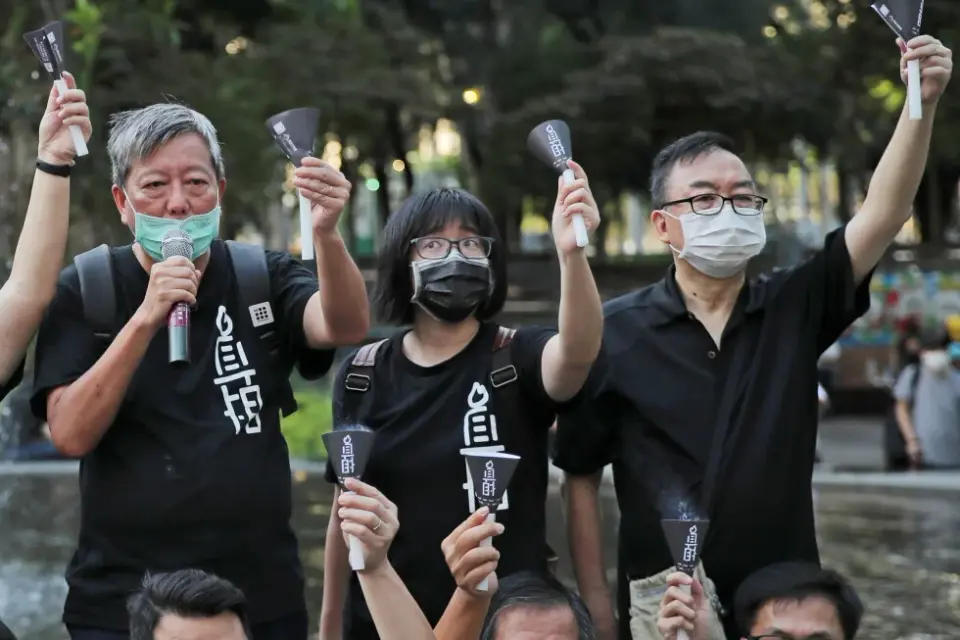
A Hong Kong court has found Lee Cheuk-yan and Chow Hang-tung guilty of inciting subversion for organizing annual vigils commemorating the 1989 Tiananmen Square crackdown. The verdict, delivered under Beijing's 2020 national security law, marks a significant escalation in the suppression of public dissent in the city. While the defendants face up to 10 years in prison, the case highlights the tension between Beijing's push for stability and international concerns over eroded freedoms in Hong Kong.
Key points
- Lee Cheuk-yan (69) and Chow Hang-tung (41) were convicted of inciting subversion at West Kowloon Court on Friday.
- The charges relate to their roles in the Hong Kong Alliance, which organized annual vigils until 2019.
- A third defendant, Albert Ho (74), had previously pleaded guilty and awaits sentencing.
- The defendants face a maximum penalty of 10 years under the national security law imposed in 2020.
- Sentencing for Lee and Chow is expected at a later date, as they have been in pre-trial custody since 2021.
Background
Hong Kong's annual candlelight vigils in Victoria Park were the only large-scale public commemorations of the 1989 Tiananmen Square crackdown permitted on Chinese soil. These events continued after the 1997 handover from Britain to China but were effectively banned following the 2019 pro-democracy protests and the subsequent imposition of the national security law in 2020. The law criminalizes acts deemed as subversion, secession, terrorism, or collusion with foreign forces, leading to a broader crackdown on civil society and opposition leaders in the city.
How outlets are covering it
AP News and CNN emphasize the verdict as part of a years-long crackdown on public commemoration, noting that the defendants were key leaders of the now-defunct Hong Kong Alliance. CNN highlights the defense argument that the campaign was about moving toward democracy, while prosecutors argued it aimed to topple the Chinese Communist Party. BBC and The Guardian focus on the legal implications, with Amnesty International criticizing the case for relying on 'vague, overly broad and arbitrary definitions of subversion.' The Guardian notes that Chow Hang-tung, who represented herself, told the court the law itself was on trial. All sources agree that the verdict underscores Beijing's control over Hong Kong's civil society, though they differ in emphasis: AP and CNN frame it as a suppression of dissent, while BBC and The Guardian highlight the legal and human rights concerns raised by international observers.
Why it matters
The conviction of prominent pro-democracy figures signals the continued use of the national security law to suppress dissent and reshape Hong Kong's political landscape. It raises concerns about the erosion of freedoms promised under the 'one country, two systems' framework and may influence international relations, particularly with the UK and US, which have criticized the law's impact on Hong Kong's autonomy.
What to watch
Sentencing for Lee Cheuk-yan and Chow Hang-tung is expected at a later date. The case may prompt further international scrutiny of Hong Kong's legal system and Beijing's enforcement of the national security law. Observers will watch for any appeals or reactions from human rights groups and foreign governments.
- 2 organizers of Hong Kong’s Tiananmen vigils convicted in national security case AP News
- Hong Kong’s Tiananmen vigil fell dark years ago. Now its organizers have been convicted CNN
- Hong Kong's Tiananmen activists convicted in national security trial BBC
- Hong Kong court convicts Tiananmen vigil group leaders of inciting subversion Reuters
- Tiananmen Square vigil organisers found guilty in Hong Kong of ‘inciting subversion’ The Guardian
Want the full story? Read the original reporting
Read on AP News