
Allegations of IRGC support fuel Houthi offensive against Saudi Arabia
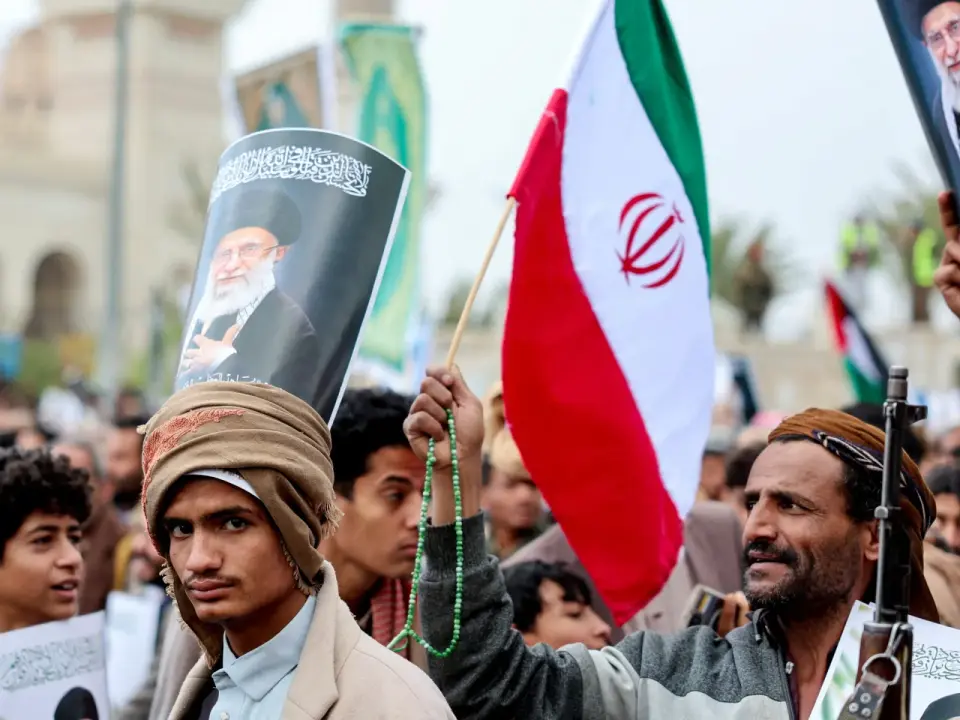
New reports allege that Iran’s Islamic Revolutionary Guard Corps (IRGC) is providing the Houthis with advanced weapons, intelligence, and tactical guidance, enabling a major offensive in Yemen. This escalation has led to sophisticated missile and drone attacks on Saudi Arabia, including strikes on Riyadh’s King Khalid International Airport that killed 13 people. While Iran officially denies direct military involvement, analysts argue that Tehran is leveraging the Houthis to create a second strategic chokepoint at the Bab al-Mandeb Strait, mirroring its leverage in the Strait of Hormuz. Saudi officials have confirmed the presence of external state support for the Houthis’ evolving arsenal, though they have not explicitly named Iran. The situation has strained the 2023 China-brokered reconciliation between Riyadh and Tehran, with Saudi Arabia now viewing the Houthi aggression as a direct violation of its security red lines.
Key points
- The Wall Street Journal reported that IRGC officers are on the front lines in Yemen, directing Houthi drone and missile attacks and providing targeting intelligence for strikes on Saudi Arabia.
- Iranian Mahan Air flights allegedly transported IRGC paramilitary officers, drone parts, and missile guidance systems to the Houthis, with some weapons smuggled via small submarines to evade naval patrols.
- Saudi coalition spokesperson Major-General Turki al-Maliki confirmed that the Houthis acquired advanced technologies, including ballistic missiles and high-speed boats, through 'regional assistance,' though he did not name the state actor.
- Iranian Foreign Ministry spokesman Esmail Baghaei denied the allegations, stating that the Houthis are 'entirely independent actors' and that the Yemen crisis cannot be resolved through force, but must be addressed through dialogue.
- Analysts suggest Iran is using the Houthis to establish a second strategic chokepoint at the Bab al-Mandeb Strait, aiming to pressure Saudi Arabia and disrupt international shipping routes in the southern Red Sea.
Background
The current escalation follows a series of Houthi attacks on Saudi infrastructure in October 2026, including strikes on Riyadh’s King Khalid International Airport that killed 13 people and injured hundreds. This comes after a September offensive by the Houthis, who seized control of Yemen’s Red Sea coastline and the Bab al-Mandeb Strait. The conflict has displaced tens of thousands of Yemenis and deepened a humanitarian crisis, with three in four families facing hunger in affected areas. The situation has also strained the 2023 China-brokered reconciliation between Saudi Arabia and Iran, which had aimed to lower tensions but failed to resolve underlying geopolitical differences, particularly regarding Yemen.
How outlets are covering it
The Wall Street Journal and Iran International emphasize the direct military and logistical support provided by Iran’s IRGC to the Houthis, citing intelligence from Saudi and Yemeni anti-Houthi alliances. They highlight the sophistication of the Houthi attacks, including the use of fiber-optic guided drones and ballistic missiles, as evidence of Iranian involvement. In contrast, the WANA News Agency, representing the Iranian government’s perspective, denies any direct military involvement, asserting that the Houthis are independent actors and that the crisis should be resolved through dialogue. Iranian officials also framed the Houthi actions as a response to a 'just cause' of breaking a Saudi-imposed siege on Yemen, while Saudi analysts view the Houthi aggression as a direct violation of the 2023 reconciliation agreement and a threat to Saudi security.
Why it matters
The alleged Iranian support for the Houthis has the potential to escalate tensions between Iran and Saudi Arabia, two key regional powers that had recently attempted to reconcile. The Houthi control of the Bab al-Mandeb Strait threatens international shipping routes and could lead to broader regional conflict if Iran and its allies unite to confront Western powers. The situation also highlights the fragility of the 2023 China-brokered reconciliation between Riyadh and Tehran, as Saudi Arabia now views the Houthi aggression as a direct violation of its security red lines. The escalation could have significant implications for global energy markets and international trade, given the strategic importance of the Red Sea and the Gulf of Aden.
What to watch
Saudi Arabia is likely to continue its military support for the internationally recognized Yemeni government, potentially including direct strikes against Houthi positions. The Houthis may continue their attacks on Saudi infrastructure, including oil facilities and airports, in an effort to pressure Riyadh. Iran may continue to provide indirect support to the Houthis, while officially denying any direct involvement. Diplomatic efforts to resolve the Yemen crisis may continue, but are unlikely to succeed in the short term given the current escalation. The situation could also lead to increased international involvement, with the US and other Western powers potentially taking action to protect shipping routes in the Red Sea.
- Iran support for Houthis probed as Yemen war re-erupts and Saudi cities hit Al Jazeera
- Iran’s FM says no response from Saudi Arabia and Houthis on its mediation initiative The Times of Israel
- Iran giving Houthis targeting intelligence for Saudi attacks - WSJ Iran International
- Iran says Saudi Arabia, Houthis have not answered mediation offer Reuters
- Baghaei: Yemen Issue Cannot Be Resolved Through Force WANA News Agency
Want the full story? Read the original reporting
Read on Al Jazeera