
Hague Verdict: Thaçi Jailed 25 Years, Sparking Riots and Political Fallout in Kosovo
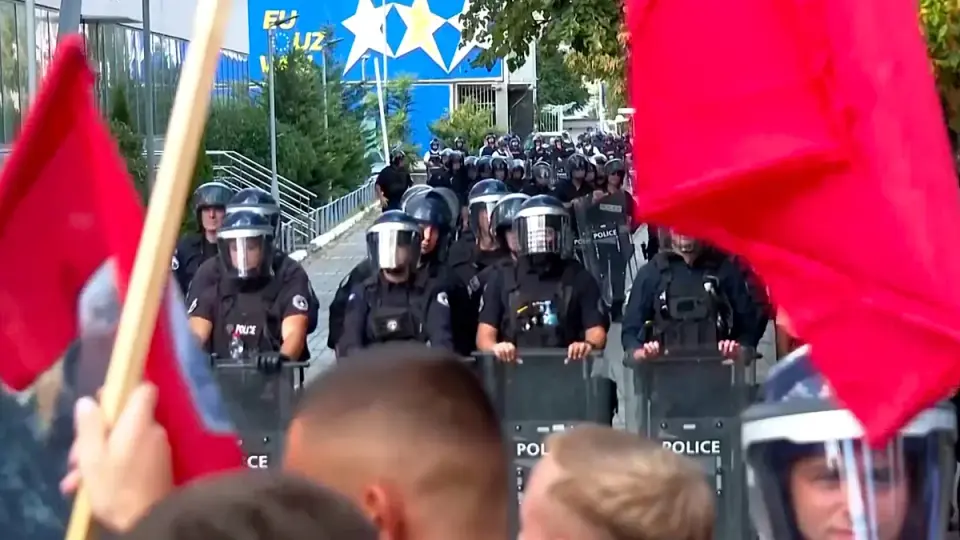
The Kosovo Specialist Chambers in The Hague sentenced former President Hashim Thaçi to 25 years in prison for war crimes committed during the 1998-1999 conflict. The verdict, which also jailed three other former Kosovo Liberation Army (KLA) leaders, triggered violent protests in Prishtina and sharp political backlash, with Kosovo’s prime minister calling the ruling a 'harmful punishment.'
Key points
- The Hague-based Kosovo Specialist Chambers convicted Hashim Thaçi, Jakup Krasniqi, Rexhep Selimi, and Kadri Veseli of war crimes, including murder, torture, and arbitrary detention, during the 1998-1999 war.
- Thaçi and Krasniqi received 25-year sentences; Veseli was sentenced to 18 years and Selimi to 13 years. All four were acquitted of crimes against humanity.
- The verdict sparked violent protests in Prishtina, where demonstrators clashed with police and targeted the EU’s Rule of Law Mission (EULEX), as well as clashes near the court in The Hague.
- Kosovo Prime Minister Albin Kurti condemned the verdict as 'unjust' and 'harmful,' urging an appeal, while Serbian President Aleksandar Vučić criticized the court for not addressing crimes against Serbs.
- Thaçi, who resigned in 2020 to face trial, has been detained in The Hague since and faces a second trial for alleged obstruction of justice.
Background
Thaçi, a central figure in Kosovo’s 2008 independence declaration, had been indicted in 2020 by the internationally backed Kosovo Specialist Chambers. The court, established under Kosovo law but staffed by international judges, has faced deep unpopularity in Kosovo due to its reliance on evidence from Belgrade and its mandate to prosecute KLA members. Previous coverage noted the trial’s three-year duration and the defendants’ consistent denial of wrongdoing.
How outlets are covering it
Euronews emphasized the violent public reaction in Kosovo, highlighting clashes at EULEX and the emotional impact on supporters who viewed Thaçi as a hero. The New York Times focused on the legal outcome and the deepening division in Kosovo over Thaçi’s legacy as a war hero versus a war criminal. The Guardian’s live coverage provided the verdict details but did not extensively cover the protests, instead focusing on broader EU affairs. Euronews and The New York Times both noted the political backlash from Kosovo’s leadership, while Euronews uniquely detailed the Serbian president’s criticism of the court’s perceived anti-Serb bias.
Why it matters
The verdict underscores the unresolved tensions in the Western Balkans, where historical grievances and political narratives continue to shape public opinion and international relations. The violent protests and political backlash highlight the difficulty of reconciling legal accountability with national identity in post-conflict societies. The case also tests the credibility of international justice mechanisms in regions where they are viewed as politically motivated.
What to watch
Thaçi and his co-defendants will appeal the verdict while remaining detained in The Hague. Thaçi also faces a second trial for alleged obstruction of justice, for which prosecutors have requested a six-year sentence. The appeals process will likely intensify political and public debate in Kosovo, while Serbia may continue to challenge the court’s legitimacy.
- Anger over Thaçi sentence spills into protests at Kosovo EU mission Euronews.com
- Kosovo’s Former Leader Is Sentenced to 25 Years in War Crimes Case The New York Times
- Former Kosovo President Sentenced to 25 Years for War Crimes in Serbia Conflict WSJ
- Shock in Kosovo as Hague convicts former President Thaci DW.com
- Former Kosovo president Thaçi sentenced to 25 years in prison by international court in The Hague – as it happened theguardian.com
Want the full story? Read the original reporting
Read on Euronews.com