
Ratko Mladić, the 'Butcher of Bosnia,' Dies in The Hague at 84
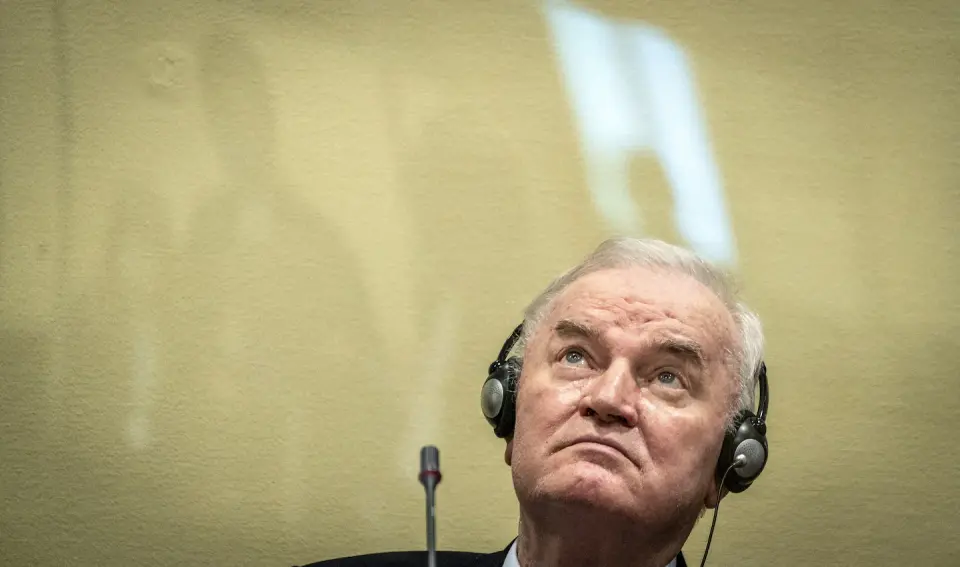
Ratko Mladić, the Bosnian Serb general convicted of genocide for the 1995 Srebrenica massacre, has died at age 84 in a UN prison hospital in The Hague. He was serving a life sentence for crimes committed during the 1992-1995 Bosnian War, which included the siege of Sarajevo and the systematic expulsion of non-Serbs. Mladić, who was arrested in 2011 after 16 years on the run, remained defiant and unrepentant until his death, with some Bosnian Serbs still viewing him as a hero despite his conviction.
Key points
- Mladić died in a hospital in The Hague while serving a life sentence for genocide and war crimes.
- He was convicted in 2017 by the UN International Criminal Tribunal for the former Yugoslavia (ICTY) for orchestrating the Srebrenica massacre, which killed at least 8,000 Bosnian Muslims.
- Mladić had been on the run for 16 years before his arrest in 2011, having previously hidden in Bosnia and Serbia.
- He was known for his defiance, shouting 'This is all lies' during his sentencing and refusing to acknowledge the court's authority.
- Reactions to his death were mixed, with victims' families condemning his crimes while some Bosnian Serbs mourned him as a patriot.
Background
Mladić's death concludes a decades-long legal pursuit that began with the ICTY's indictment in the 1990s. Previous coverage noted his conviction was upheld on appeal in 2021, and his death prompted a formal inquiry into the circumstances by the International Residual Mechanism for Criminal Tribunals. His case is often compared to other war crimes trials in the Western Balkans, such as those of Radovan Karadžić and Slobodan Milošević.
How outlets are covering it
The Washington Post highlighted Mladić's early warning to Bosnian Serb leaders that they were embarking on a 'vast criminal enterprise,' emphasizing his role in the ethnic cleansing campaign. The BBC focused on his personal demeanor, describing him as 'dangerously fanatical' and noting his contradictory claims of being a defender of brotherhood while ordering atrocities. The Guardian detailed his defiance in court, quoting his shouts of 'This is all lies' and his refusal to recognize the tribunal. NBC4 Washington provided a comprehensive overview of his life, including his time on the run, his interactions with UN peacekeepers, and the mixed reactions to his death, noting that some Bosnian Serbs still view him as a hero. All sources agreed on the basic facts of his death and conviction but differed in emphasis, with some focusing on his psychological profile and others on the legal and political implications of his death.
Why it matters
Mladić's death marks the end of a significant chapter in the pursuit of justice for the Bosnian War, one of the most devastating conflicts in post-World War II Europe. His conviction set a precedent for holding high-ranking military and political leaders accountable for genocide and war crimes. However, the continued denial of his crimes by some Bosnian Serbs and the mixed reactions to his death highlight the ongoing challenges of reconciliation and truth-telling in the region. His case also underscores the importance of international tribunals in addressing mass atrocities and the long-term impact of war crimes on societies.
What to watch
The International Residual Mechanism for Criminal Tribunals has ordered a full inquiry into the circumstances of Mladić's death. There may be further legal or political discussions regarding the handling of his remains and the legacy of his conviction. Additionally, the death may prompt renewed attention to the unresolved issues of the Bosnian War, including reparations for victims and the need for continued justice in the Western Balkans.
- Ratko Mladic, Bosnian Serb commander found guilty of genocide, dies at 84 The Washington Post
- Ratko Mladic, Murderous ‘Butcher of Bosnia,’ Dies at 83 The New York Times
- Allan Little: I met dangerously fanatical Mladić early in Bosnian war BBC
- Ratko Mladić, the ‘Butcher of Bosnia’, dies aged 84 The Guardian
- Ratko Mladic, ex-Bosnian Serb warlord who oversaw atrocities, dies in prison at 84 NBC4 Washington
Want the full story? Read the original reporting
Read on The Washington Post