
Oman Launches Legal Action Against Ukrainian Couple for Riding Nesting Sea Turtle
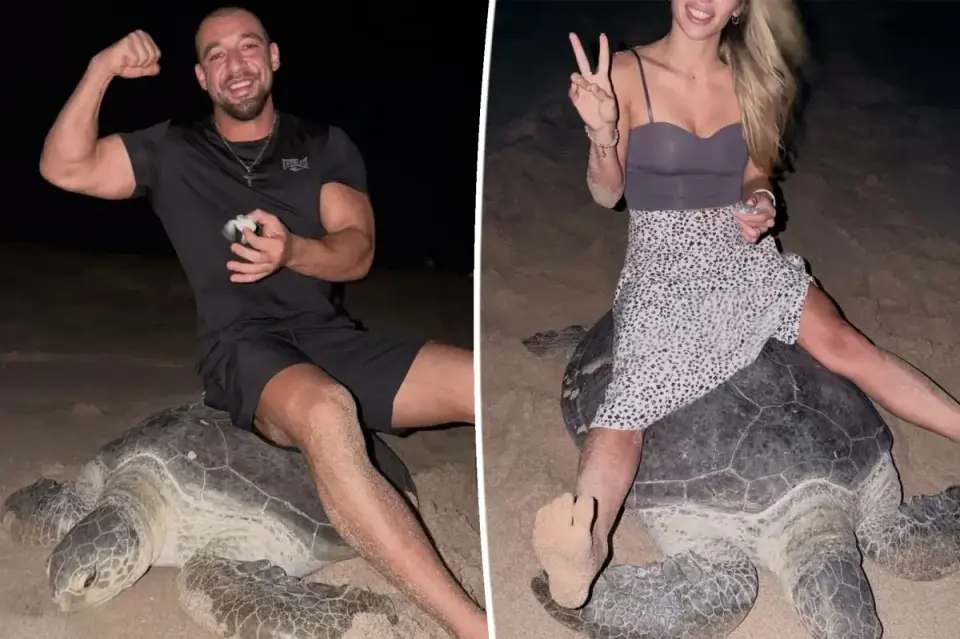
A Ukrainian couple faced international backlash and legal action in Oman after a viral video showed them sitting on a nesting sea turtle at Ras Al Hadd. The Oman Environment Authority confirmed legal proceedings, while the influencer apologized, claiming he was misled by site volunteers.
Key points
- Vadym Oleynik, a Ukrainian fitness influencer, and his partner Olena Kravchenko were filmed riding a sea turtle while it was laying eggs at Ras Al Hadd, Oman.
- The Oman Environment Authority confirmed that legal action has been initiated against the individuals for violating wildlife protection laws.
- The viral footage, which included handling hatchlings, sparked global outrage on social media, with many users calling for severe penalties.
- Oleynik issued an apology, stating he did not see the site rules and was misled by the environmental organization managing the area.
- Authorities urged all visitors to observe turtles from a safe distance and not to touch or disturb them during the nesting season.
Background
Ras Al Hadd is a protected coastal area in Oman known for its sea turtle nesting sites, attracting thousands of visitors during the summer months. The site is home to several species, including Green, Olive Ridley, Hawksbill, and Loggerhead turtles. Recent global incidents involving wildlife, such as shark predation on sea turtles in Australia, have highlighted the importance of respecting marine habitats. This incident adds to a broader conversation about the impact of tourism on fragile ecosystems and the need for strict enforcement of conservation guidelines.
How outlets are covering it
The New York Post and Jam Press emphasized the couple's disregard for the animals, describing the act as 'abhorrent' and 'disgusting.' They highlighted the couple's social media presence and the immediate backlash from followers. The Hindustan Times and Gulf News focused on the legal consequences, noting that the Oman Environment Authority had initiated legal procedures and stressed the importance of responsible visitor behavior. Khaleej Times provided context on the site's significance, noting that Ras Al Hadd attracts 6,000 to 12,000 nesting turtles annually. The Italian conservation project Biologicamente criticized the environmental organization for allowing the incident to occur, while Oleynik blamed the organization for failing to inform him of the rules. The Telegraph could not be accessed due to a security block, so its perspective is unavailable.
Why it matters
This incident underscores the tension between tourism and wildlife conservation in protected areas. It highlights the need for stricter enforcement of wildlife protection laws and better education for tourists. The legal action taken by Oman serves as a warning to other visitors and emphasizes the importance of respecting natural habitats. The global outrage also reflects a growing awareness of the impact of human behavior on endangered species.
What to watch
The legal proceedings against Oleynik and Kravchenko are expected to continue, with potential fines or other penalties. The Oman Environment Authority may increase monitoring and enforcement at Ras Al Hadd to prevent similar incidents. The incident may also lead to stricter regulations for tourists visiting protected wildlife areas in Oman and other countries. The couple's apology and the organization's response may prompt a review of visitor education and site management practices.
- ‘Scum of the earth’ tourists ignite international backlash after filming themselves riding egg-laying sea turtle New York Post
- Influencers sit on sea turtle while it lays eggs The Telegraph
- Ukrainian tourists sit on sea turtle in Oman, viral video prompts legal action Hindustan Times
- Legal action taken in Oman against tourist who disturbed sea turtles in viral video Khaleej Times
- In Oman, tourists sat on a sea turtle that was trying to crawl to the water — the reaction was swift Українські Національні Новини (УНН)
Want the full story? Read the original reporting
Read on New York Post