
Salvadoran and Haitian forces retake Port-au-Prince stadium, deploy armed robot dogs in gang crackdown
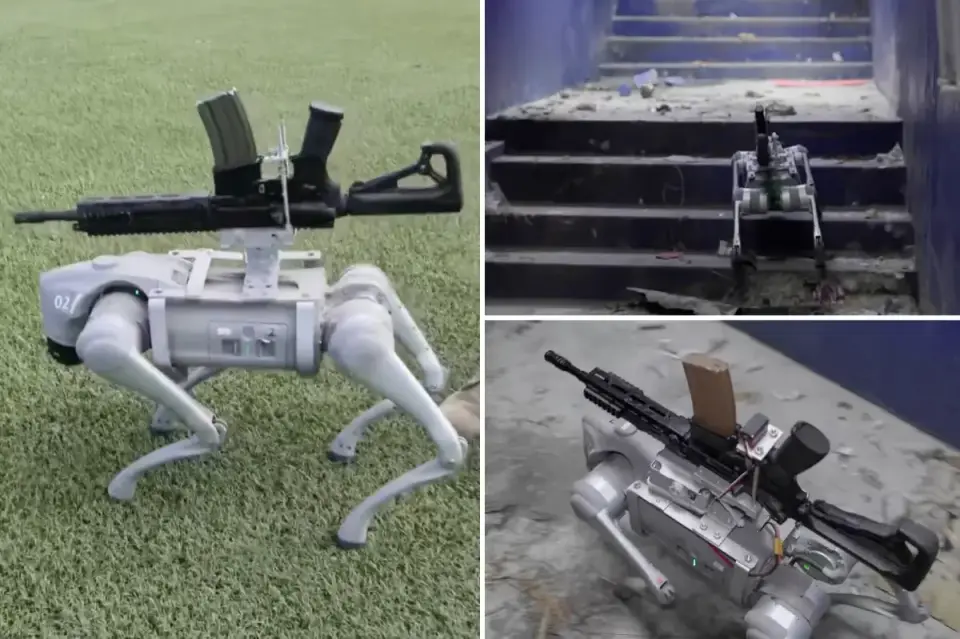
El Salvador and Haiti jointly retake the Sylvio Cator Stadium in Port-au-Prince after two years of gang control. President Nayib Bukele released footage of armed robotic dogs used in the operation, which reportedly uncovered several human skulls. Salvadoran troops now secure the venue as part of a broader 2,000-strong deployment to combat organized crime.
Key points
- Haitian National Police and Salvadoran Special Forces secured the Sylvio Cator Stadium on November 12, 2026, ending two years of gang occupation.
- El Salvador President Nayib Bukele shared video showing robotic dogs equipped with rifles moving through the stadium during the operation.
- Bukele stated that several human skulls were found inside the stadium during the clearance.
- The operation is part of a deployment of approximately 2,000 Salvadoran soldiers to Haiti, initially ordered to rescue four missing troops after an October 18 ambush.
- Salvadoran forces now hold security responsibility for the stadium, which will serve as an operational base for further anti-gang advances.
Background
Haiti has faced severe gang violence, with the Sylvio Cator Stadium falling under gang control in 2024. This forced the Haitian national football team to play World Cup qualifiers abroad. El Salvador has been involved in a UN-backed Gang Suppression Force in Haiti, though Amnesty International has urged transparency regarding the terms of the Salvadoran troop deployment. Previous archive coverage noted concerns over the legality of the deployment and humanitarian impacts.
How outlets are covering it
Fox News and the New York Post emphasize the use of armed robotic dogs and the discovery of human skulls, highlighting the aggressive tactics of the joint operation. France 24 focuses on the diplomatic and military structure, noting that Haitian police initially took control before handing the site to Salvadoran troops, and contextualizes the deployment within the broader UN-backed mission. While all sources agree on the retaking of the stadium, they differ in emphasis: US outlets highlight the technological and violent aspects, while France 24 provides context on the two-year duration of gang control and the subsequent handover of security duties.
Why it matters
The operation signals a significant escalation in the anti-gang campaign in Haiti, involving advanced military technology and international cooperation. It raises questions about the legality and humanitarian implications of foreign military deployments in the region, as well as the effectiveness of such tactics in restoring state control.
What to watch
Salvadoran forces will use the stadium as an operational base to advance deeper into gang-controlled territory. The Haitian government and El Salvador will likely continue joint operations, though human rights organizations may scrutinize the legality and conduct of the deployment further.
- Rifle-toting robot dogs sniff out ‘several human skulls’ in gang-controlled Haiti stadium New York Post
- El Salvador has built up a military presence in Haiti. What's in it for the Central American country? DW.com
- Robot dogs mounted with rifles deployed in anti-gang stadium operation in Haiti Fox News
- El Salvador's President sends troops to fight Haiti's street gangs NPR
- Haitian police retake national stadium after two years of gang control France 24
Want the full story? Read the original reporting
Read on New York Post