
Serbia honors Mladić with state funeral as UN probes death
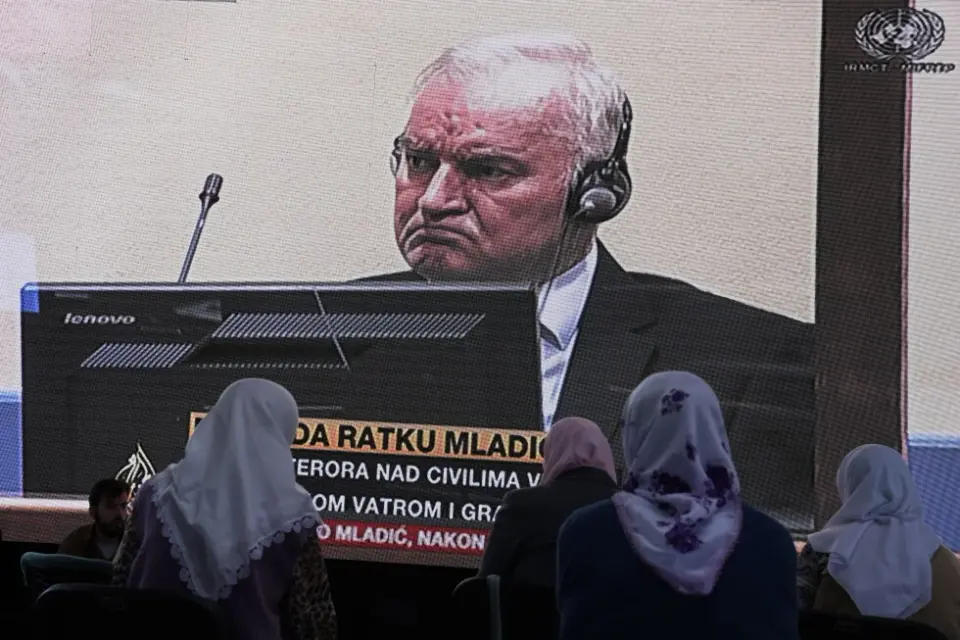
Serbia plans to bury convicted war criminal Ratko Mladić with full state honors after he died in The Hague. President Vučić criticized the UN for not releasing him, while victims' groups condemned the glorification. The UN is investigating his death.
Key points
- Ratko Mladić, the Bosnian-Serb general convicted of genocide, died at the UN Detention Unit in The Hague after serving 15 years of a life sentence.
- Serbian President Aleksandar Vučić criticized the UN court for failing to release Mladić before his death and promised a dignified burial in Serbia if the family requests it.
- Serbia’s Justice Minister announced that Mladić will be buried with the highest military and state honors, a move that sparked condemnation from Bosnia’s Bosniak and Croat communities.
- The International Residual Mechanism for Criminal Tribunals launched an inquiry into the circumstances of Mladić’s death, while Russia expressed condolences and criticized the tribunal’s conditions.
- Survivors of the Srebrenica massacre and Sarajevo siege emphasized that Mladić’s death does not erase the historical facts of the 1992-1995 Bosnian war or the suffering of victims.
Background
Mladić was sentenced to life in prison in 2017 by the International Criminal Tribunal for the former Yugoslavia for his role in the Srebrenica massacre and the siege of Sarajevo. Previous coverage noted that Belgrade had repeatedly campaigned for his release to a hospital in Serbia due to deteriorating health. The current announcement of a state funeral follows his death in custody, reigniting tensions between Serbia and the international community regarding the handling of war crimes legacy.
How outlets are covering it
AP News highlights President Vučić’s direct criticism of the UN court for not releasing Mladić before his death. The Guardian focuses on the emotional impact on victims, describing Mladić as the 'Butcher of Bosnia' and noting that while he is dead, his ideology persists among some Serbs. CNN details the logistical and political fallout, including the Russian government’s condemnation of the tribunal and the Serbian opposition’s backlash against the state honors. Al Jazeera offers a broader geopolitical critique, arguing that Mladić’s ideas have 'won' by normalizing fascism and genocide denial in the region, despite resistance from local civil society groups.
Why it matters
The decision to honor a convicted war criminal with a state funeral signals a continued divergence between Serbia’s nationalist policies and international norms regarding accountability for the 1990s Balkan wars. It risks deepening regional divisions and undermining the credibility of international justice mechanisms, while also highlighting the ongoing struggle between historical memory and political expediency in the Western Balkans.
What to watch
The UN tribunal will complete its inquiry into Mladić’s death. The Mladić family will decide the burial location, potentially triggering further diplomatic friction. Regional leaders will likely continue to debate the appropriate response to the state honors, with Bosnian authorities likely condemning the ceremony as a glorification of war crimes.
- Serbia’s president criticizes UN court for not releasing war criminal Mladic to die at home AP News
- ‘The butcher may be gone, but to many he is a hero’: victims condemn glorification of Mladić The Guardian
- Serbia says convicted war criminal Mladić to be buried with ‘highest honors’ CNN
- Mladic died a happy man. He won Al Jazeera
- The House Ratko Mladić Could Not Destroy New Lines Magazine
Want the full story? Read the original reporting
Read on AP News