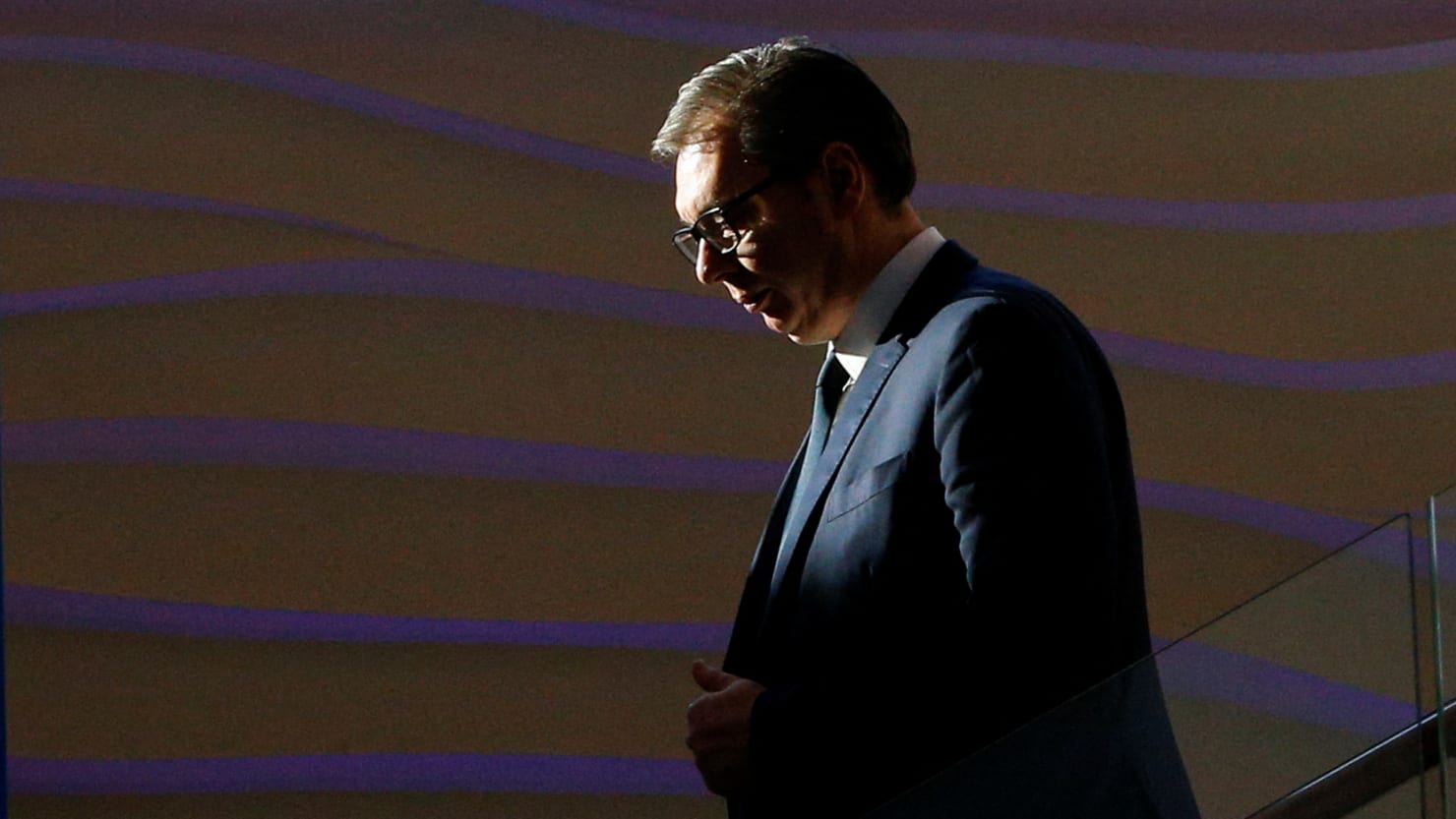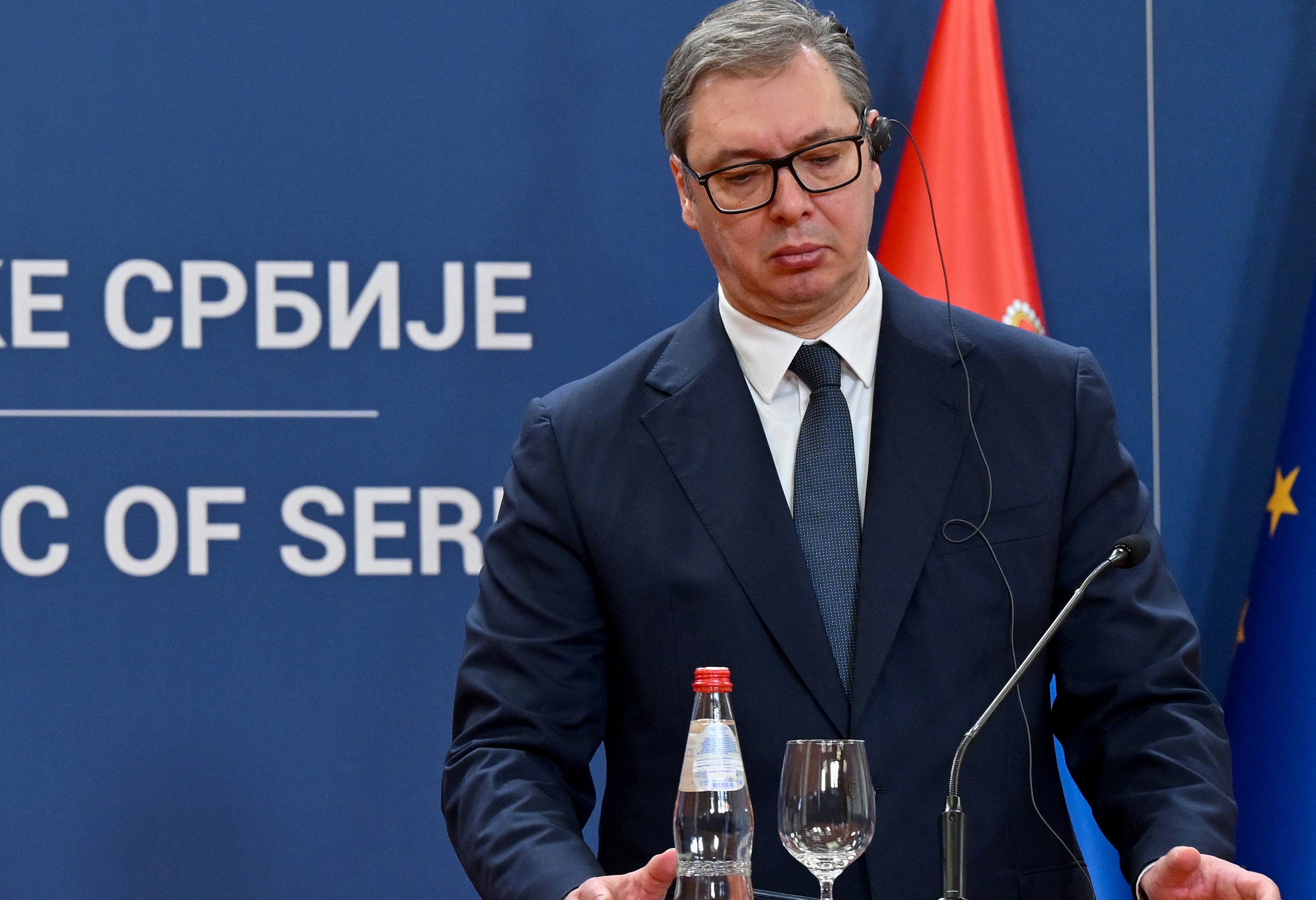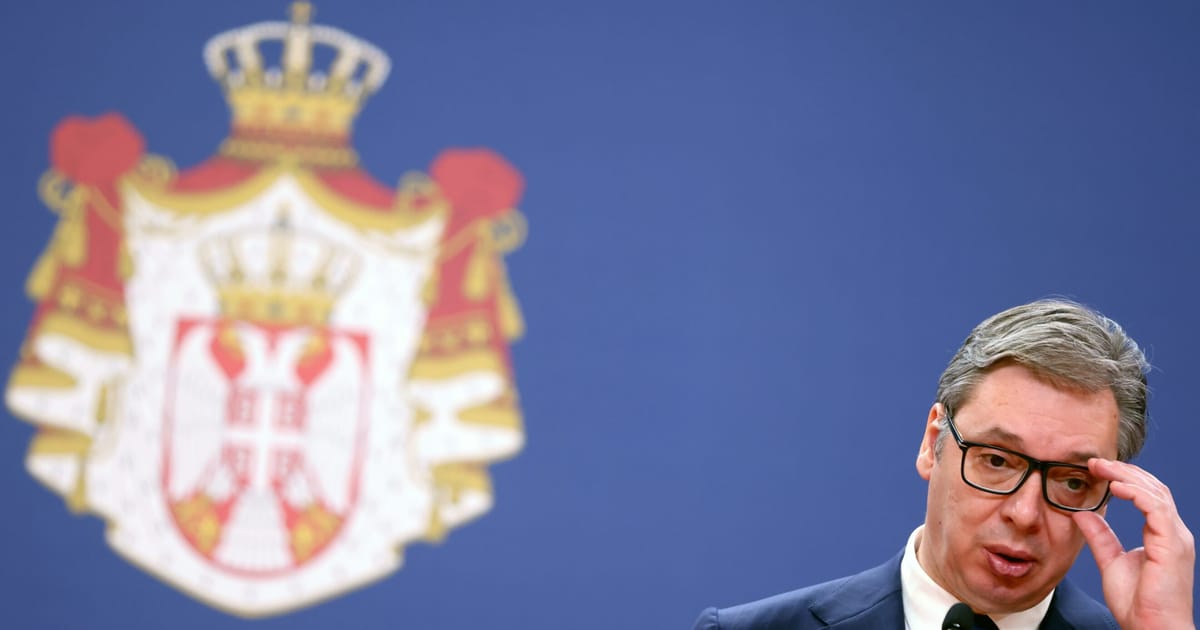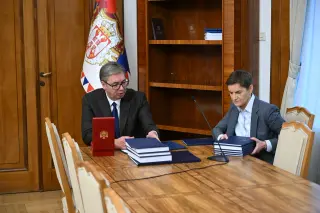
Serbia’s president Aleksandar Vučić says he will step down as president after autumn snap elections and may return as prime minister, a Putin-style move analysts say could preserve his grip on power amid protests and corruption concerns; experts note the timing could help lock in control for his ruling party while navigating political pressures.
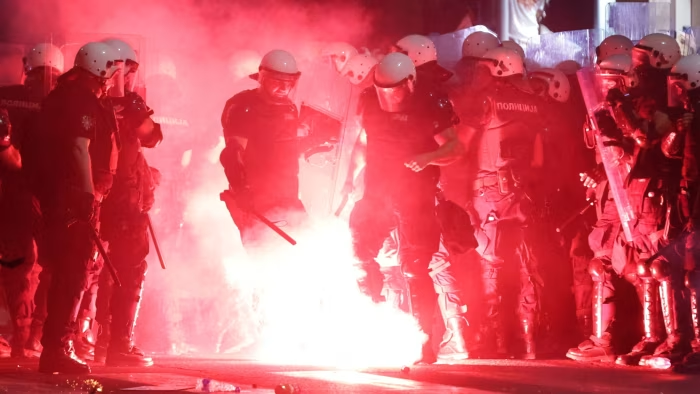
Serbian President Aleksandar Vučić has vowed no pardons for anti-government protesters involved in recent violence, following the arrest of dozens during clashes that marked a shift from largely peaceful demonstrations sparked by a tragic railway accident. The protests, which have grown to include various societal groups, are demanding early elections, but Vučić has rejected these calls and warned of further crackdowns, potentially escalating tensions and protests in Serbia.
Serbian President Aleksandar Vucic's cryptic social media warning about an unspecified threat to his country has sparked concerns about a potential escalation of conflict in the Balkans. The warning comes amid tensions with Kosovo and Republika Srpska, and follows a recent announcement of changes to the electoral process in Bosnia and Herzegovina. Vucic's statement, which alludes to difficult days ahead and a looming challenge, has raised alarm about a possible geopolitical conflict, with the U.S. warning against any military actions.
Serbian President Aleksandar Vučić's cryptic social media post about an unspecified threat to his country has sparked speculation and fears of a new war, with some social media users expressing concern and others showing support. The post's ambiguity, coupled with the lack of official clarification, has led to uncertainty and speculation. Political analysts believe that Vučić may be referring to Western pressure on Serbia and changes imposed by an international official in Bosnia and Herzegovina, but they do not anticipate a military threat or large-scale destabilization in the region at this time.
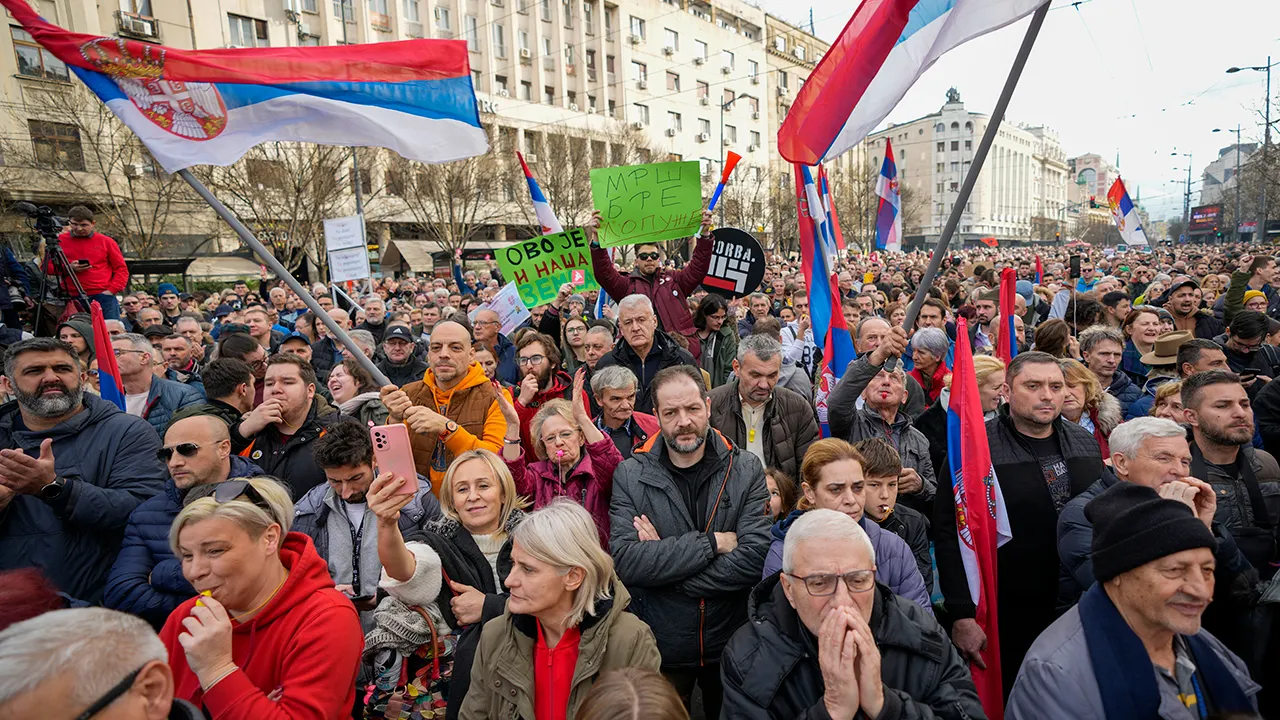
Thousands of protesters have gathered in Belgrade, Serbia, accusing President Aleksandar Vucic's ruling Serbian Progressive Party of election fraud following the Dec. 17 general election. International observers noted vote irregularities, and the opposition, led by Serbia Against Violence, is demanding a rerun of the election. Opposition politician Marinika Tepic, who has been on a hunger strike, addressed the rally, and the crowd marched to the state electoral commission and Constitutional Court. The ruling party denies the allegations, while the opposition calls for international investigation into the vote.
Serbian opposition parties and independent election observers have accused President Aleksandar Vučić of electoral fraud in Sunday's elections, particularly in Belgrade. Protesters have declared a hunger strike and set up camp inside the central election commission building, demanding that the stolen elections be recognized. The ruling Serbian Progressive Party (SNS) claimed victory with about 47% support nationally, but the opposition gained significant support in Belgrade. The OSCE and local independent election monitor CRTA have expressed grave concerns about irregularities, including violence, vote-buying, and misuse of public resources. Protesters are demanding the overturning of the election results.
Aleksandar Vučić has emerged victorious in the Serbian election as the opposition crumbles. Despite facing criticism for his authoritarian style of governance, Vučić's party secured a majority in parliament, further consolidating his power. The opposition, fragmented and lacking a unified strategy, failed to pose a significant challenge to Vučić's dominance.
Serbian President Aleksandar Vucic's ruling party, the Serbian Progressive Party (SNS), is projected to win almost 47% of the vote in snap parliamentary elections, heading for an absolute majority. Opposition parties under the Serbia Against Violence (SPN) banner are claiming electoral fraud and calling for a recount. Initial results show the SNS winning over half of the seats in the National Assembly. The SPN had hoped to win control of Belgrade in local elections but the SNS is slightly ahead. The protests against Vucic and his party grew after two mass shootings in May.
Serbia's ruling Serbian Progressive Party (SNS), led by President Aleksandar Vucic, has won a sweeping victory in the parliamentary election, according to projections by pollsters Ipsos and CeSID. The SNS is projected to have won 46.2% of the votes, with the opposition Serbia Against Violence (SPN) alliance coming in second with 23.2%. The election was marred by allegations of irregularities and election fraud, with the SPN accusing the ruling party of stealing the election. The SNS is expected to seek coalition partners to solidify its dominance in parliament.
Serbian President Aleksandar Vučić's ruling party is predicted to win a sweeping victory in the country's election, allowing him to tighten his grip on power. However, the election has been marred by accusations of major irregularities, including election fraud and intimidation. Observers have raised concerns about bused-in voters engaging in "carousel voting" and an inflated electoral roll with "phantom voters." Prime Minister Ana Brnabić dismissed the fraud accusations as lies, while the opposition group Serbians Against Violence received less than half the support of Vučić's party.
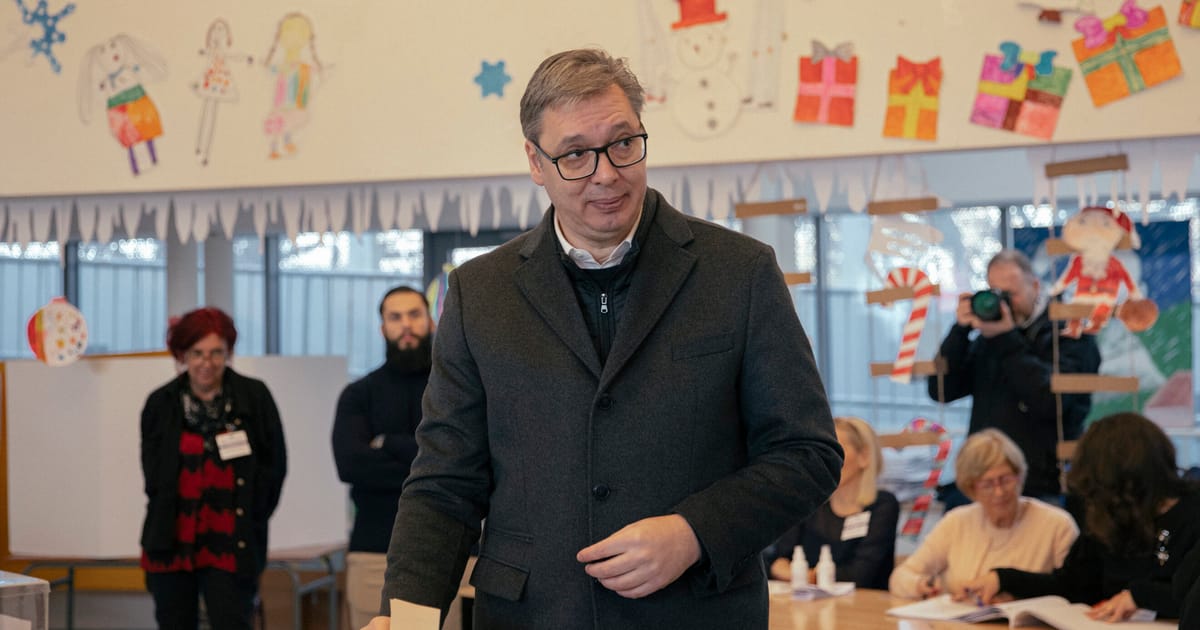
Serbians voted in a snap election, with President Aleksandar Vucic and his Serbian Progressive Party (SNS) seeking another term. The election comes after two mass shootings and protests that challenged the ruling party's popularity. Opposition parties and rights watchdogs accuse Vucic and the SNS of voter bribery, media suppression, violence against opponents, corruption, and ties to organized crime. The SNS is leading in the polls, followed by the Serbia Against Violence alliance. Serbia must address issues such as normalizing relations with Kosovo, combating corruption, and aligning its foreign policies with the EU.
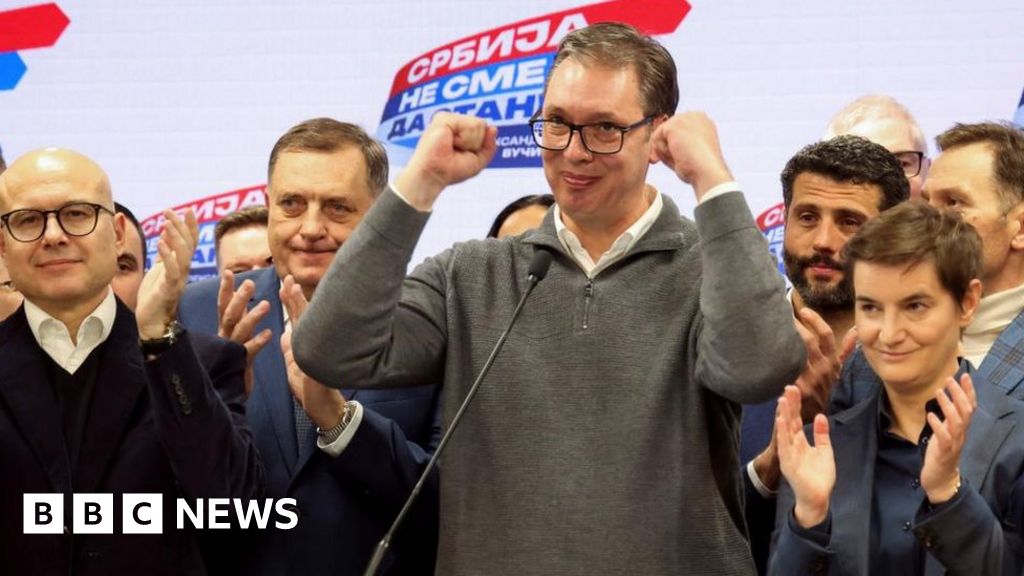
Serbia's ruling Serbian Progressive Party (SNS) declared victory in a snap parliamentary vote, with President Aleksandar Vucic claiming a convincing win. The SNS reportedly won 47.1% of the votes, followed by the Serbia Against Violence coalition with 23%. However, opposition figures and observer groups reported irregularities at voting sites, including physical attacks on observers and the busing in of voters from neighboring Bosnia-Herzegovina. The final results are expected to be reported within 24 hours.
Serbian President Aleksandar Vucic, an authoritarian leader, is relying on social handouts to secure victory in Sunday's parliamentary elections. However, opposition parties view the elections as a move to consolidate Vucic's control over Serbia's weakening democracy, and the potential for domestic and regional violence could impact his popularity.
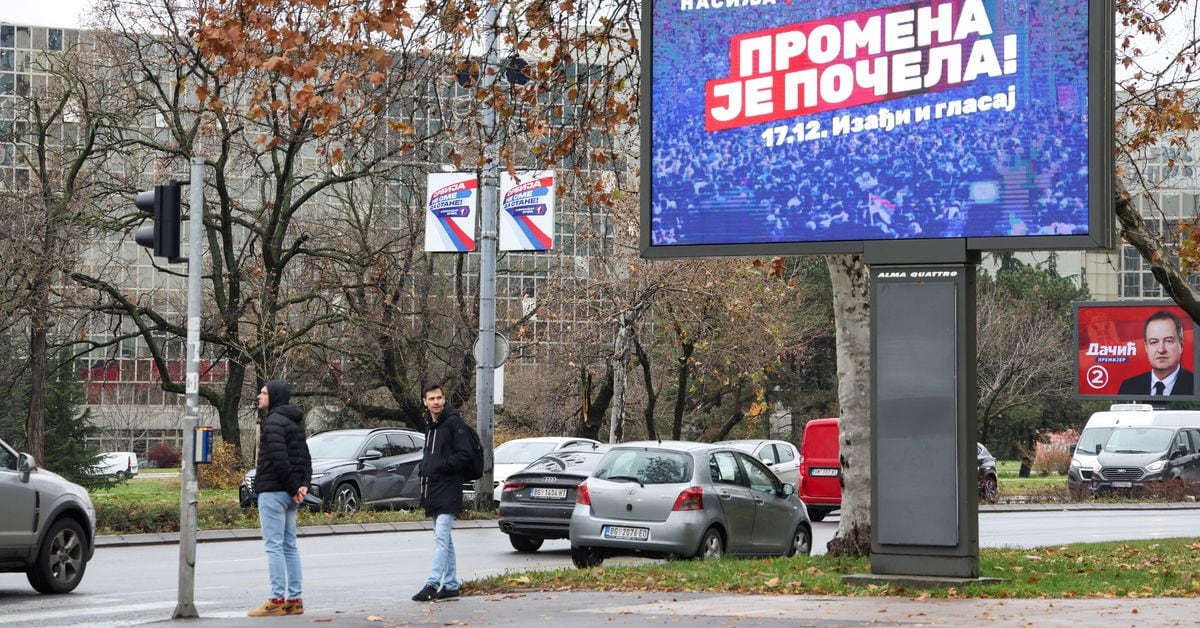
Serbian President Aleksandar Vucic's ruling Serbian Progressive Party (SNS) faces a snap election on Sunday following public outrage over mass shootings earlier this year. Vucic, seeking another term in power, has conducted a folksy campaign, visiting ordinary Serbs and engaging in various activities to shore up his party's popularity. Opposition parties accuse the SNS of pressuring and bribing voters, while also criticizing the party for stifling media freedoms, supporting violence against opponents, corruption, and ties with organized crime. Pre-election polls show the SNS as the frontrunners, but a significant change of government in Belgrade's municipal election is possible. Serbia aims to join the EU but must address issues such as normalizing relations with Kosovo, cracking down on corruption, and aligning its foreign policies with the EU.
Serbian President Aleksandar Vucic is relying on his rural and impoverished base to secure another election win, using tactics such as cash handouts, pension increases, and extensive coverage on state-backed media. This strategy has garnered support from individuals like Jovanka Cvejic, an 81-year-old pensioner from Belgrade, who has struggled financially on her limited pension.