
Tanker strike in Hormuz clashes with Trump's 'functioning strait' claim as diplomacy stalls
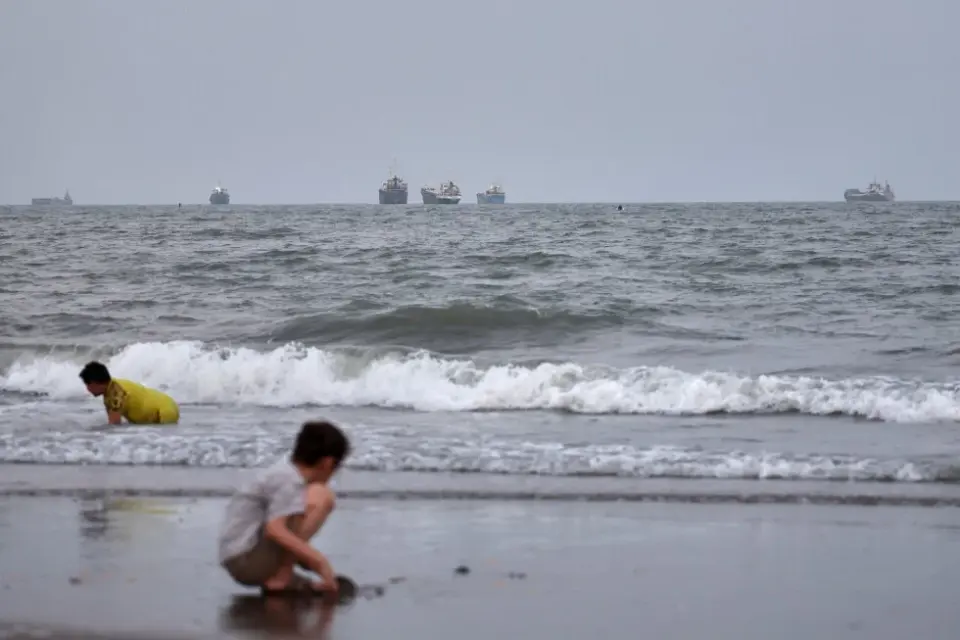
An oil tanker was struck by an unidentified projectile in the Strait of Hormuz on Tuesday, causing a fire that was extinguished with no casualties. This incident contradicts President Trump's recent assertion that the waterway is fully cleared of mines and functioning normally. While regional powers like Pakistan and Qatar are pushing for de-escalation, the U.S. has intensified economic sanctions, which Iran has condemned as 'economic terrorism.' Meanwhile, Israeli strikes in Gaza continue despite a fragile ceasefire, and the Netherlands has had its diplomats removed from a key coordination center.
Key points
- UK Maritime Trade Operations reported a tanker hit by a projectile in the Strait of Hormuz on Tuesday; the fire was extinguished, and all crew were safe.
- Shipping traffic in the strait has dropped to five confirmed crossings per day, down from over 130 before the war began in February.
- President Trump told Al Jazeera he has no timeline for ending the six-month conflict, claiming the U.S. is 'winning very big' despite ongoing attacks.
- U.S. allies have expressed skepticism regarding Trump's claim that Iran's mines have been fully cleared, citing continued sporadic attacks.
- Iran's Deputy Foreign Minister warned that the strait will not fully reopen until the U.S. fulfills commitments under a lapsed June peace deal.
- The U.S. launched a new wave of sanctions against entities with economic ties to Iran, which Tehran called 'economic terrorism.'
Background
The conflict in the Strait of Hormuz has been ongoing since the U.S. and Israel launched a war against Iran on February 28, 2026. Previous diplomatic efforts, including a memorandum in June, have stalled, with both sides accusing each other of violations. The U.S. has maintained a naval blockade and used the southern Omani lane to escort vessels, while Iran has targeted Gulf states with missiles and drones. Earlier reports indicated that Iran was pursuing control of the strait and that global oil markets had spiked due to shipping disruptions.
How outlets are covering it
AP News and The Jerusalem Post confirmed the tanker attack and the subsequent fire, noting that all crew members were safe. CNBC highlighted the discrepancy between Trump's claim that the strait is 'functioning' and the reality of sporadic attacks, noting that U.S. allies are skeptical of the mine-clearing claims. AP reported that Iran's foreign ministry called U.S. sanctions a 'pure parody' and thanked China for rejecting them, while CNBC noted that the sanctions have scuttled peace talk prospects. On the Gaza front, AP reported that Nickolay Mladenov, head of Trump's Board of Peace, criticized Israeli strikes as a risk to the peace process, while The Jerusalem Post noted that Israel's deputy UN ambassador insisted Hamas disarmament must precede reconstruction. All sources agree that the situation remains volatile, with no clear path to de-escalation.
Why it matters
The continued attacks in the Strait of Hormuz threaten global energy supplies and disrupt shipping routes, impacting oil prices and international trade. The failure of diplomatic efforts and the escalation of U.S. sanctions risk prolonging the conflict and destabilizing the broader Middle East. The removal of Dutch diplomats from Gaza coordination centers signals a breakdown in international cooperation, potentially hindering humanitarian efforts and ceasefire enforcement. These developments underscore the complex interplay between military, economic, and diplomatic strategies in the region.
What to watch
Regional powers, including Pakistan and Qatar, are expected to continue diplomatic outreach to de-escalate tensions. Qatar's Sheikh Mohammed bin Abdulrahman Al Thani is scheduled to visit Tehran for talks on de-escalation. The U.S. may further escalate economic pressure, while Iran could respond with additional strikes or sanctions. In Gaza, the situation remains uncertain, with potential for further Israeli strikes and continued UN criticism. The outcome of these diplomatic efforts will determine whether the conflict escalates or moves toward a resolution.
- Regional powers seek off-ramp from Iran war, and other Middle East developments AP News
- Qatari PM heads to Iran to 'de-escalate tensions' as tanker attack tests Trump’s Hormuz claim CNBC
- New Tanker Strike in Hormuz as Iran Vows Retaliation for U.S. Economic Offensive WSJ
- Live Updates: Latest from Israel, Iran, and the Middle East The Jerusalem Post
- 20 dead in 68 incidents near Hormuz over six months of war, maritime agency says The Times of Israel
Want the full story? Read the original reporting
Read on AP News