
Swedish Election: Center-Left Holds Narrow Lead as Far-Right Stumbles
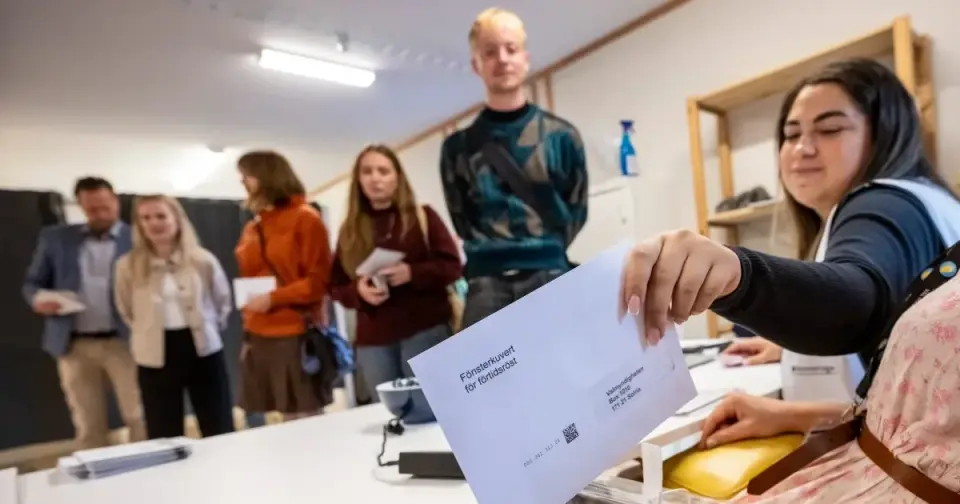
Preliminary results from Sweden’s 2026 general election show the center-left bloc led by Magdalena Andersson holding a narrow three-seat advantage over the ruling right-wing coalition. While the center-left is projected to win 176 of 349 parliamentary seats, the margin is razor-thin, with the far-right Sweden Democrats suffering their first electoral decline since 2010. Final results are pending, but the outcome may prevent the far-right from entering the cabinet for the first time in the current political era.
Key points
- The center-left bloc is projected to win 176 seats in the 349-seat Riksdag, compared to 173 for the right-wing bloc, based on 94% of votes counted.
- The Sweden Democrats, which have neo-Nazi roots, lost approximately 11 seats, marking the first time their vote share has declined in a parliamentary election since 2010.
- Prime Minister Ulf Kristersson stated it remains an 'open question' who will govern, refusing to concede despite the preliminary deficit.
- The center-left bloc is projected to win 51.3% of the vote, while the right-wing bloc is at 46.8%, according to SVT exit polls.
- Coalition formation will be complex, as Andersson must unite fragmented left-wing parties, including the Center Party, which opposes a billionaires' tax.
Background
Sweden’s 2026 election follows a period where the center-left had a comfortable lead that collapsed in the final weeks of the campaign. The 2022 election saw the right-wing coalition win despite exit polls favoring the left, highlighting the volatility of Swedish voting patterns. The current contest is set against a backdrop of rising far-right influence across Europe, including recent gains by the AfD in Germany.
How outlets are covering it
Al Jazeera and CNN emphasize the potential for a center-left victory and the decline of the far-right Sweden Democrats, noting that the party’s loss may be due to tactical voting rather than a permanent shift. BBC highlights the 'too close to call' nature of the race, noting that the Social Democrats are on track for their worst result in over a century, while other left-wing parties have gained support. POLITICO focuses on the structural challenges of coalition formation, noting that the left bloc is fragmented and that a 70% probability of a left-wing win is still far from certain. All sources agree that the Sweden Democrats’ decline is significant but may not signal a long-term high-water mark for the far-right in Europe.
Why it matters
The outcome will determine whether Sweden’s far-right Sweden Democrats enter the cabinet for the first time, a move that would mark a significant shift in European politics. A center-left victory could provide respite for left-leaning parties across Europe, where right-wing and far-right parties have been gaining ground. The election also has implications for Sweden’s pro-Western and pro-Ukraine stance, as both blocs support continued support for Ukraine, but differ on immigration and welfare policies.
What to watch
Final results are expected by Wednesday, September 16, as counting continues for overseas and late-arriving votes. Coalition talks will likely take weeks, with Andersson needing to unite fragmented left-wing parties. If the parliament cannot agree on a new prime minister, a fresh election could be called. The Sweden Democrats may still seek to influence policy from outside the cabinet if they do not enter government.
- Centre-left opposition bloc leads in Swedish vote, poll shows Al Jazeera
- Swedish polls close in election deciding fate of far-right CNN
- Election in Sweden Is Too Close to Call The New York Times
- Swedish party blocs tied after Sunday vote, projections say bbc.com
- How to watch Sweden’s election like a pro politico.eu
Want the full story? Read the original reporting
Read on Al Jazeera