
Jordan Strikes Syria After Church Attack, Killing Seven Civilians
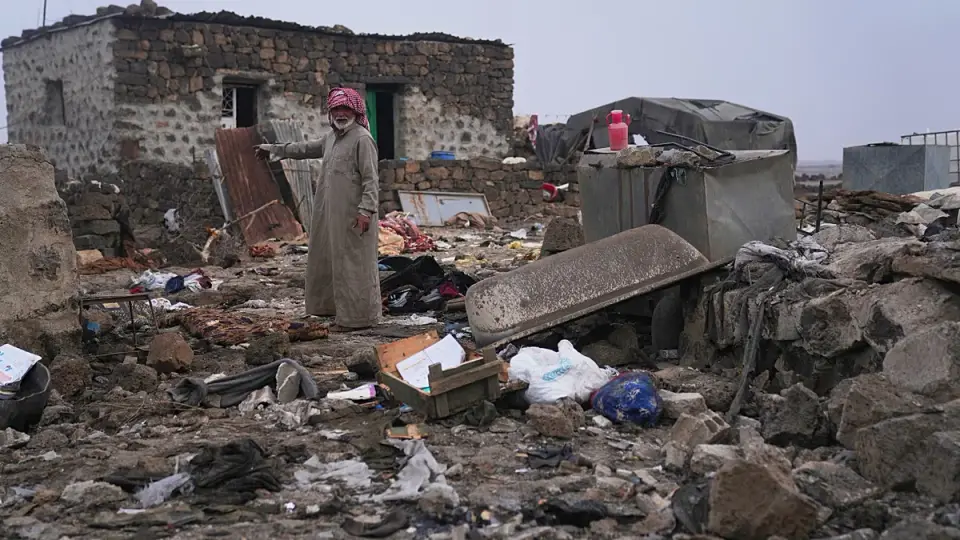
Jordan launched airstrikes in southern Syria, killing at least seven civilians, in retaliation for a deadly attack on a Greek Orthodox church in Karak. Damascus condemned the strikes as a violation of sovereignty and closed the Nasib border crossing, while Amman claimed it targeted Islamic State hideouts and coordinated with Syrian authorities, a claim Syria denied.
Key points
- Jordanian forces struck targets in Daraa and Suwayda provinces, killing at least seven people, including three children, an 80-year-old man, and a 60-year-old woman.
- The strikes were framed as retaliation for a Friday attack on the Hamoud Greek Orthodox church in Karak, which killed nine people and wounded dozens.
- Jordanian officials claimed the operation targeted 'hideouts of terrorist organizations' and killed over 20 Islamic State operatives, while stating they avoided civilian sites.
- Syria condemned the strikes as an 'unacceptable violation' of its airspace and denied any prior coordination with Jordan, leading to the closure of the Nasib border crossing.
- Jordanian authorities arrested three suspects linked to the church attack, identifying them as Ahmad Sami Hussein, Mish’al Zaidan Muhammad, and Hazza’ Zaidan Muhammad.
Background
This incident follows a deadly attack on a Greek Orthodox church in Karak, Jordan, which killed nine people and wounded dozens. The attack occurred during a funeral procession, with gunmen opening fire at the entrance before storming the building. Jordanian officials described the perpetrators as 'takfiri' extremists, while no group has formally claimed responsibility. The subsequent airstrikes in Syria have escalated tensions between the two neighboring countries, marking a significant diplomatic rupture.
How outlets are covering it
Outlets differ on the casualty figures and the nature of the operation. Euronews and Vatican News report that at least seven civilians were killed, including children, based on Syrian civil defence data. The Washington Post initially reported five dead but aligns with the higher toll in subsequent reporting. Jordanian officials, cited by Euronews, claim the strikes killed over 20 Islamic State militants and assert the operation was coordinated with Syria, a claim Damascus explicitly denied. While Euronews highlights Jordan's regret over 'unintended casualties,' Vatican News emphasizes the closure of the Nasib border crossing as a major diplomatic consequence. The Washington Post provides specific details on the arrest of three suspects, linking them directly to the church attack, whereas other sources focus more on the military and diplomatic fallout.
Why it matters
The strikes represent a rare instance of Jordan conducting military operations on Syrian soil, highlighting the spillover effects of regional instability. The closure of the Nasib border crossing, a key trade route, could have significant economic implications for both countries. The incident also underscores the ongoing threat posed by extremist groups in the region and the challenges of cross-border security cooperation.
What to watch
Syria is expected to maintain its diplomatic protest and potentially keep the Nasib border crossing closed. Jordan may continue to monitor the situation for further security threats, while international observers will watch for any escalation in tensions between the two nations. The investigation into the church attack suspects may lead to further legal proceedings in Jordan.
- 'Unacceptable violation': Syria condemns Jordan airstrikes Euronews.com
- Church leaders offer sympathy after shooting in Jordan Church News
- Syria says five killed after Jordan retaliates for church attack with airstrikes The Washington Post
- Jordan acknowledges civilian casualties in Syria airstrike against 'Islamic State' DW.com
- Jordanian airstrikes in southern Syria kill at least 7, including children Vatican News
Want the full story? Read the original reporting
Read on Euronews.com