
Israel Election Deadlock: Netanyahu Leads but Lacks Majority as Coalition Talks Loom
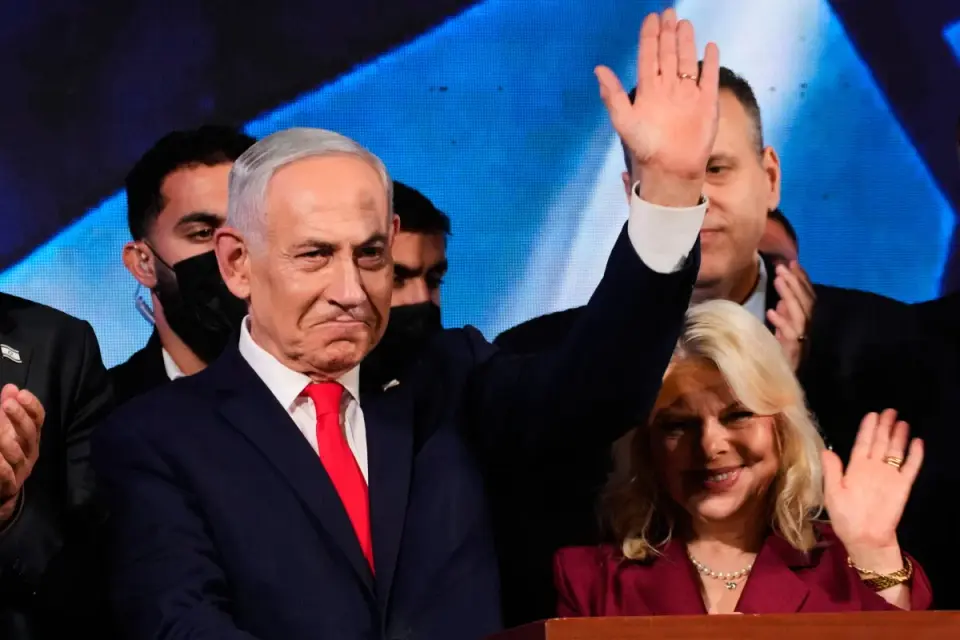
Israel’s 2026 parliamentary election has produced no clear winner, with exit polls and partial counts showing a fragmented Knesset. Prime Minister Benjamin Netanyahu’s Likud party leads with the most votes, but his right-wing bloc falls short of the 61-seat majority needed to govern. Rival Gadi Eisenkot’s opposition also lacks a majority, leaving the outcome dependent on coalition negotiations, potentially involving Arab-led parties. Netanyahu remains caretaker prime minister while President Isaac Herzog decides who to task with forming a government. The stalemate follows a record-turnout election viewed as a referendum on Netanyahu’s leadership since the 2023 Hamas attack.
Key points
- With approximately 60-70% of votes counted, Netanyahu’s Likud party leads with 21.4-27% of the vote, but his broader right-wing bloc holds only 54 seats, short of the 61 needed for a majority.
- Eisenkot’s Yashar party holds 16.2-20% of the vote, and his opposition bloc has 47 seats, also failing to secure a majority.
- Arab-led parties, including the Joint List and Ra’am, hold 19 seats, making them potential kingmakers in coalition formation.
- Netanyahu and Eisenkot both claimed victory in early speeches, but neither can form a government without additional partners, leading to weeks of potential negotiations.
- President Isaac Herzog will decide who to task with forming a government, with final results expected by November 4.
- Netanyahu warned against forming a government reliant on Arab parties, while some opposition figures, like Yair Golan, called for including them, highlighting internal divisions in the opposition.
Background
This election follows the October 7, 2023, Hamas attack and subsequent regional conflicts, with voters viewing it as a referendum on Netanyahu’s leadership. Previous archive coverage noted a 77% turnout and 600,000 absentee ballots, delaying final results. The fragmented result reflects deep divisions over Netanyahu’s policies and the role of Arab parties in government formation.
How outlets are covering it
AP News emphasizes the lack of a clear winner and the potential for weeks of coalition wrangling, noting mixed reactions in the West Bank and concerns about Arab party inclusion. Fox News highlights Netanyahu’s stronger-than-expected performance, attributing it to Trump’s endorsement, and details the three possible paths to forming a government, including the role of Arab parties as kingmakers. Both sources agree on the deadlock but differ in emphasis: AP focuses on the uncertainty and societal divisions, while Fox underscores Netanyahu’s resilience and the political battle ahead.
Why it matters
The outcome will shape Israel’s government for the next four years, affecting regional stability, relations with Iran, and the status of Arab citizens. A deadlock could lead to a second election or a fragile coalition, impacting policies on the West Bank, Iran, and domestic unity. The strong showing by Arab parties may force a reevaluation of coalition norms, potentially altering Israel’s political landscape.
What to watch
Final results are expected by November 4, after which President Herzog will select a candidate to form a government. The candidate will have 28 days to negotiate a coalition, with a possible 14-day extension. If no government is formed, Israel may face another election. Coalition talks will focus on whether to include Arab parties, with Netanyahu opposing and some opposition figures supporting their inclusion.
- The Latest: As votes are counted, no clear winner emerges in Israel’s election AP News
- Netanyahu survives another day with unexpectedly clear backing of Israeli Jews Reuters
- For Israel’s Arab Minority, a Historic Show of Strength The New York Times
- Israelis await final election results as Netanyahu remains far from defeated AP News
- Netanyahu defies exit polls as vote shifts in his favor, but majority remains elusive Fox News
Want the full story? Read the original reporting
Read on AP News