
Ukraine’s Drone Campaign Halves Russian Refining Capacity, Inflicting $23.2 Billion in Damage
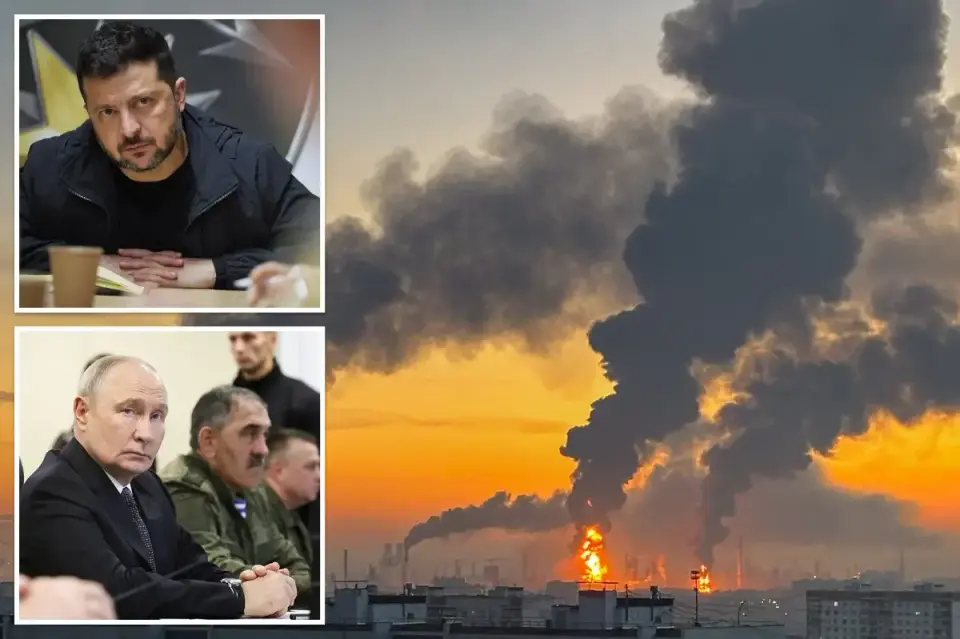
Ukrainian military intelligence reports that precision drone strikes have disabled 15 of Russia’s 38 major oil refineries, causing $23.2 billion in economic damage and cutting processing volumes by 55.4%. The attacks, which include recent hits on the Ryazan refinery and a Wildberries logistics hub, have forced Moscow to import fuel and halt aviation exports. While Ukraine offers a ceasefire if Russia stops targeting energy infrastructure, Moscow continues missile attacks on Ukrainian power plants.
Key points
- Ukraine’s Defence Intelligence (DIU) states 15 of 38 major Russian refineries are inoperable, with 12 others running at reduced capacity.
- The strikes have reduced Russia’s total oil refining volumes by 55.4% compared to the start of 2026, causing $23.2 billion in damage.
- Recent attacks targeted the Ryazan Oil Refinery and a Wildberries logistics center, causing fires, power outages, and one injury.
- Russia is now importing fuel via 'grey schemes' to bypass sanctions and has halted aviation fuel exports due to shortages.
- Zelensky reiterated that Ukraine will pause strikes only if Russia stops attacking Ukrainian energy infrastructure, a condition Moscow has rejected.
Background
This escalation follows a brief pause in Ukrainian strikes in October, which occurred amid US pressure to lower global fuel prices. After Zelensky ended the ceasefire in mid-October, Ukraine resumed targeting refineries in Nizhny Novgorod, Ufa, and Ryazan. Earlier reports in November highlighted that these shortages forced Russia to use substandard imported fuel, leading to a fighter jet crash in Astrakhan.
How outlets are covering it
The New York Post and Ukrainska Pravda emphasize the macroeconomic impact, citing DIU figures that $23.2 billion in damage nearly equals Russia’s entire 2025 oil sector revenue. The Daily Beast focuses on the immediate tactical blow, highlighting the simultaneous strike on the Ryazan refinery and the Wildberries logistics hub, noting that this disrupts both military fuel supply and civilian commerce. Ukrinform provides granular details on the Ryazan incident, confirming the refinery’s role in supplying military aviation kerosene, while noting that OSINT analysts could not fully verify all eyewitness photos of the logistics center fire. All sources agree that the strikes have caused domestic fuel shortages and inflation in Russia, but they differ in emphasis: Western outlets focus on the economic hemorrhage, while Ukrainian sources highlight the strategic inability of Moscow to meet export commitments.
Why it matters
The collapse of Russian refining capacity threatens to starve the Kremlin’s war machine of fuel while simultaneously destabilizing the domestic economy. By forcing Russia to import fuel through illicit channels, Ukraine is undermining Moscow’s financial leverage and exposing its vulnerability to supply chain disruptions, potentially altering the trajectory of the conflict and global energy markets.
What to watch
Analysts expect Ukraine to continue targeting refineries in remote regions if Moscow does not halt attacks on Ukrainian power plants. Russia may accelerate fuel imports from India and Egypt, but logistical bottlenecks from a shortage of railway rolling stock and road tankers may limit the effectiveness of these substitutions in 2027.
- Ukraine knocks out 15 Russian oil refineries, causing $23.2 billion in damage: officials New York Post
- Renewed refinery attacks deplete Russian diesel supply as US deal in focus Reuters
- Putin Humiliated With Explosive Double Blow The Daily Beast
- Ryazan under massive drone attack: Fire breaks out at one of Russia's largest oil refineries, Wildberries Ukrinform
- Ukrainian forces have rendered 15 of 38 main Russian oil refineries inoperable Українська правда
Want the full story? Read the original reporting
Read on New York Post