
Takaichi avoids Yasukuni Shrine but sends offering, drawing sharp rebukes from Beijing and Seoul
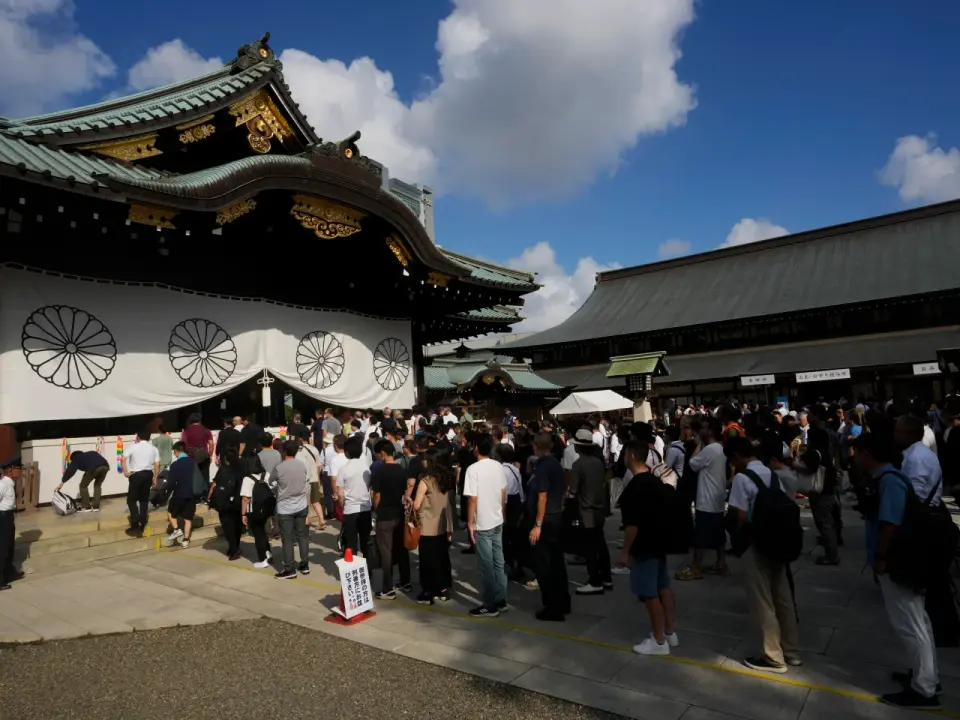
On the 81st anniversary of Japan’s World War II surrender, Prime Minister Sanae Takaichi avoided a direct visit to the controversial Yasukuni Shrine but sent an offering through her party secretary, while Defense Minister Shinjiro Koizumi and other officials visited the site. Beijing and Seoul condemned the actions as a failure to atone for wartime atrocities, though Takaichi’s speech at a nearby venue focused on peace without acknowledging Japan’s colonial past.
Key points
- Takaichi did not visit Yasukuni Shrine but sent an offering via LDP Secretary General Shunichi Suzuki, who prayed on her behalf.
- Defense Minister Shinjiro Koizumi and three other Cabinet ministers visited the shrine, reaffirming Japan’s postwar pacifist path.
- China’s Foreign Ministry 'strongly condemned' the visits, accusing Japan of distorting history and pursuing militarization.
- South Korea’s Foreign Ministry called the actions 'anachronistic' and urged Japan to show 'humble reflection and sincere remorse.'
- Takaichi’s speech at Nippon Budokan mourned war victims but did not mention Japan’s wartime aggression or express remorse, a stance critics note aligns with her denial of forced labor and 'comfort women' coercion.
- The shrine enshrines approximately 2.5 million war dead, including 14 convicted Class A war criminals, a point of contention for China and South Korea since 1978.
Background
This incident follows a pattern of diplomatic friction over Yasukuni Shrine, which has been a flashpoint since 1978 when 14 convicted war criminals were enshrined. Previous prime ministers, including Shinzo Abe in 2013, have visited the site, often provoking strong reactions from Asian neighbors. Takaichi, who took office in October 2025, has previously resisted acknowledging wartime aggression and has been linked to efforts to remove 'comfort women' references from school textbooks. The current tensions are compounded by broader regional disputes, including Japan’s recent confrontation with China over Taiwan and its territorial dispute with Russia over the Kuril Islands.
How outlets are covering it
Al Jazeera frames the event as a symbol of Japan’s unresolved colonial-era atrocities, emphasizing the shrine’s role as a marker of Tokyo’s failure to atone. It highlights the diplomatic fallout, noting that Takaichi’s offering and Koizumi’s visit provoked 'strong condemnation' from Beijing and 'deep regret' from Seoul. Politico, however, focuses on Takaichi’s strategic avoidance of the shrine to prevent further strains with China and South Korea, while noting her speech’s omission of wartime remorse. It also contrasts Takaichi’s stance with Emperor Naruhito’s expression of 'deep remorse' and South Korean President Lee Jae Myung’s call for 'pragmatic diplomacy' and cooperation. Both outlets agree that the shrine remains a contentious symbol, but Al Jazeera emphasizes the historical grievances, while Politico highlights the diplomatic calculations and Takaichi’s revisionist stance.
Why it matters
The Yasukuni Shrine controversy underscores the enduring impact of World War II on East Asian relations, particularly between Japan, China, and South Korea. Takaichi’s decision to send an offering while avoiding a direct visit reflects a delicate balance between domestic expectations and diplomatic sensitivities. The sharp rebukes from Beijing and Seoul signal that unresolved historical grievances continue to strain regional relations, potentially complicating security and economic cooperation. The incident also highlights the tension between Japan’s postwar pacifist identity and its historical revisionism, a dynamic that could influence future diplomatic and security policies in the Asia-Pacific region.
What to watch
Japan may face continued diplomatic pressure from China and South Korea over historical issues, potentially affecting trade and security cooperation. Takaichi’s government may need to navigate between domestic nationalist expectations and regional diplomatic needs. The incident could also influence future discussions on historical reconciliation in East Asia, with neighboring countries likely to demand more explicit acknowledgments of wartime atrocities from Japanese leaders.
- What is Tokyo’s Yasukuni Shrine, linked to Japan’s wartime atrocities? Al Jazeera
- Japan defence minister visits contentious Yasukuni Shrine to war dead Reuters
- Takaichi skips controversial shrine on 81st anniversary of Japan's World War II surrender Politico
- Takaichi drops ‘remorse’ in her first war memorial address The Japan Times
- China Protests Japan PM, Defense Minister’s Yasukuni Actions bloomberg.com
Want the full story? Read the original reporting
Read on Al Jazeera