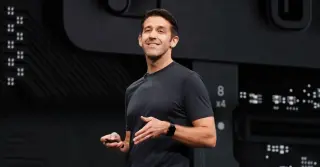
Apple is reportedly accelerating its shift toward an agentic AI assistant for Siri, with CEO John Ternus urging software chief Craig Federighi to speed up development. While Bloomberg reports internal frustration over slow progress, AppleInsider argues the company’s local-first strategy remains sound despite external rumors of chaos.
President Donald Trump accepted responsibility for the Republican Party’s historic midterm defeat, attributing the loss to the Iran war, rising gas prices, and unpopular immigration enforcement. In a reflective interview, he acknowledged his deportation policies were 'too tough' and expressed willingness to negotiate with the new Democratic majority, though he simultaneously appointed the architect of those policies, Stephen Miller, as his new chief of staff.
Apple posted record Q4 revenue of $114.5 billion, but its stock fell nearly 5% after hours as CEO John Ternus's cautious, scripted earnings call failed to reassure investors about margin pressures and AI strategy.
Starbucks reported a fiscal fourth-quarter earnings beat, with adjusted EPS of $0.80 exceeding the $0.71 estimate. CEO Brian Niccol declared the company's turnaround complete, shifting focus to growth. Global comparable-store sales rose 7.2%, driven by a 7.7% increase in US same-store sales. However, net revenue fell 4% to $9.14 billion due to the transition of the China business to a joint venture model. International sales lagged expectations, rising only 0.9% against a 3.2% forecast. The company guided fiscal 2027 adjusted EPS between $3.15 and $3.25, while anticipating a 1% revenue decline, which is weaker than analyst expectations of 1.4% growth. Niccol highlighted plans to revamp drive-thrus with AI, introduce caffeine-free afternoon beverages, and launch new portable food items. The company also confirmed it is closing approximately 250 North American locations, or 1% of its footprint, as part of its strategic restructuring.
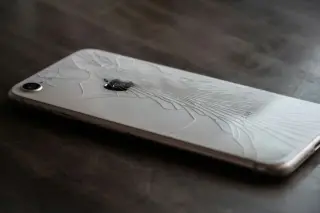
Apple is facing criticism for launching a foldable iPhone with visible cracks and a touch-screen laptop, moves that contradict past design philosophies. Under CEO John Ternus, the company is pivoting toward AI and conventional hardware features, leading to concerns about a loss of innovation. Recent workforce cuts and a shelved plan to replace support staff with AI highlight the transition from Tim Cook’s era.
Charles Lamanna, Microsoft’s new head of Copilot and Office, is restructuring his division by flattening management layers and requiring senior staff to work in offices four days a week. These moves align with CEO Satya Nadella’s broader push to adapt the company for the AI era, following the departure of previous leaders.
Apple CEO John Ternus has emphasized that user experience and design remain the company's primary focus, even as competitors prioritize artificial intelligence. In a recent interview, Ternus stated that Apple aims to create products that are beneficial and enjoyable, rather than merely showcasing advanced technology. This approach is evident in the development of the iPhone Duo, which features a nearly invisible crease and a custom surface material. Ternus also highlighted the importance of personalized experiences, leveraging information from the user's device to provide unique services. The company's strategy reflects a shift towards a more design-centric culture, with Ternus spending significant time in the design studio.
Apple CEO John Ternus reaffirms the company's design-first culture in a new interview, emphasizing that user-centric hardware remains 'job one' despite the industry's focus on artificial intelligence. The discussion highlights the iPhone Duo, which ships on October 23, and addresses Apple's deliberate avoidance of frontier AI models in favor of privacy-focused tools.
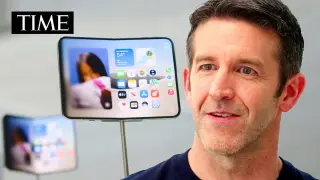
Apple CEO John Ternus has reaffirmed the company's core identity by emphasizing that design remains central to its operations, even as he navigates the transition from Tim Cook. In a recent interview with TIME, Ternus highlighted his continued hands-on involvement with industrial design teams, stressing that engineers and designers collaborate from the start rather than working in silos. This focus on hardware and user experience coincides with the launch of the iPhone Duo, a foldable device priced at $1,999, which Ternus describes as a culmination of 15 years of development. While competitors like Microsoft and Google have aggressively pursued frontier AI models, Apple is maintaining a more conservative approach, focusing on privacy-preserving, personalized AI features. Ternus argues that physical devices will remain essential for human interaction, even if AI technology advances. The new CEO’s leadership style is characterized by a return to Apple’s hardware roots, prioritizing meticulous product engineering over rapid AI expansion, a strategy that has drawn mixed reactions from critics and analysts alike.
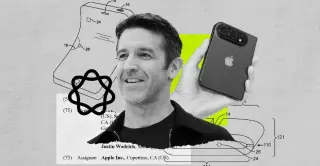
Apple CEO John Ternus has launched the iPhone Duo, a foldable device priced at $1,999, marking his first major move as leader. While competitors focus on large-scale AI, Ternus emphasizes privacy and hardware innovation, leveraging Google's Gemini for Siri while maintaining Apple's on-device processing model.
Apple has officially surpassed a $5 trillion market capitalization, marking a significant milestone for the tech giant. This achievement follows the recent leadership transition from Tim Cook to John Ternus and coincides with a broader market pullback where the Nasdaq Composite dropped 1.88%. While the primary source text is truncated, the headline confirms the valuation breakthrough, highlighting the company's continued growth despite recent hardware and software developments.
Microsoft shares rose 3.66% to close at $516.17, reaching a 10-month high, after Oppenheimer raised its price target to $570. The move reflects investor confidence in Microsoft's pivot toward enterprise AI, specifically the launch of a unified Copilot 'super app' that consolidates chat, coding, and autonomous agents. While the S&P 500 and Nasdaq posted modest gains, the market saw mixed performance with Zscaler dropping 10% and PayPal rising nearly 5%.
Meta introduced Jolly, a cheerful mascot for its Muse AI assistant, at Meta Connect on Sept. 23. The character serves as the default avatar for the Muse Charm, a handheld device designed to make AI interaction feel more like a personal companion. By adopting a friendly face, Meta hopes to reduce user anxiety about handing over personal tasks to an AI, following a trend seen with other tech brands.
Apple CEO John Ternus launched the iPhone Duo, a foldable smartphone, at his first major event, signaling a shift toward AI-centric hardware. Bloomberg's Mark Gurman reports that Apple is delaying in-house AI model development in favor of Google partnerships, while a massive executive turnover reshapes the company's leadership structure.
Disney has appointed Karandeep Anand, the former CEO of Character.AI, as its first-ever Chief Technology Officer, effective October 2, 2026. Anand will report directly to CEO Josh D'Amaro and oversee enterprise technology, infrastructure, data, AI platforms, product, and engineering across the company. The hire signals a major strategic shift for the media giant toward integrating advanced technology with its storytelling and streaming operations, particularly following the collapse of its partnership with OpenAI. Notably, this appointment comes just one year after Disney sent Character.AI a cease-and-desist letter over copyright infringement, highlighting a rapid pivot from litigation to collaboration. Anand brings extensive experience from Microsoft, Meta, and Brex, and is expected to lead a team that includes several technical staff members from Character.AI.