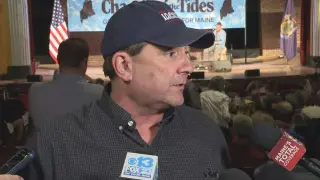
The Maine Secretary of State’s Office says it will not weigh in on whether Troy Jackson is eligible under the sore-loser law, leaving the issue to the parties; Jackson remains on the ballot for now, with opponents arguing the law could bar him after losing the gubernatorial primary, pending possible court action.
A Florida circuit judge dismissed a lawsuit aiming to remove Rep. Cory Mills from the Aug. 18 primary ballot, ruling that the new ballot-eligibility law focuses on qualifications (such as age and residency) rather than the filing process, and noting that state officials had already accepted Mills’s paperwork; the challenger may appeal the decision.
An Alaska election official ruled that a US Senate candidate who shares the same name and party as incumbent Dan Sullivan is ineligible to appear on the August primary ballot, saying the declaration was filed to confuse voters. The challenger can appeal, and Sullivan’s race against Mary Peltola remains a focal point in the 2026 elections.
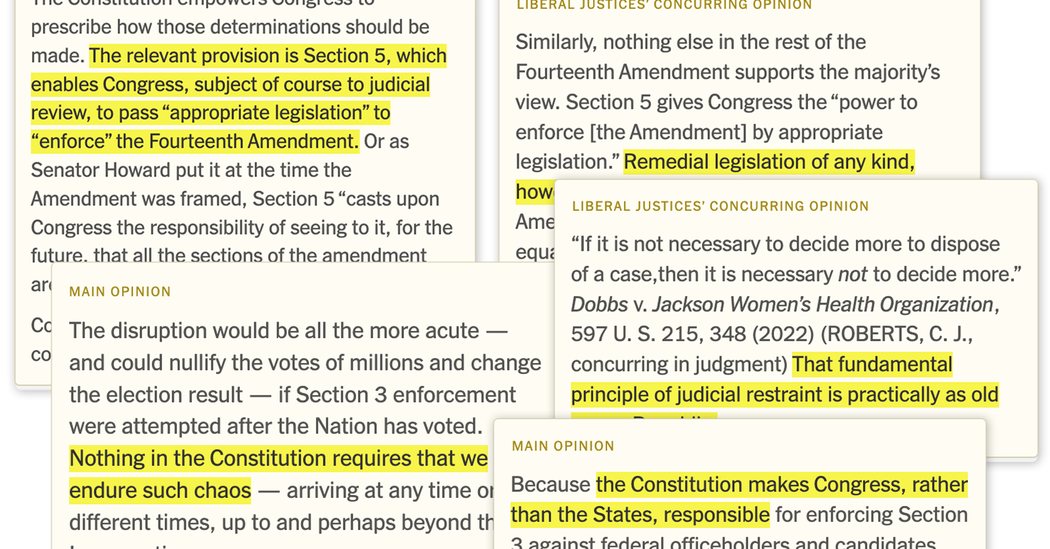
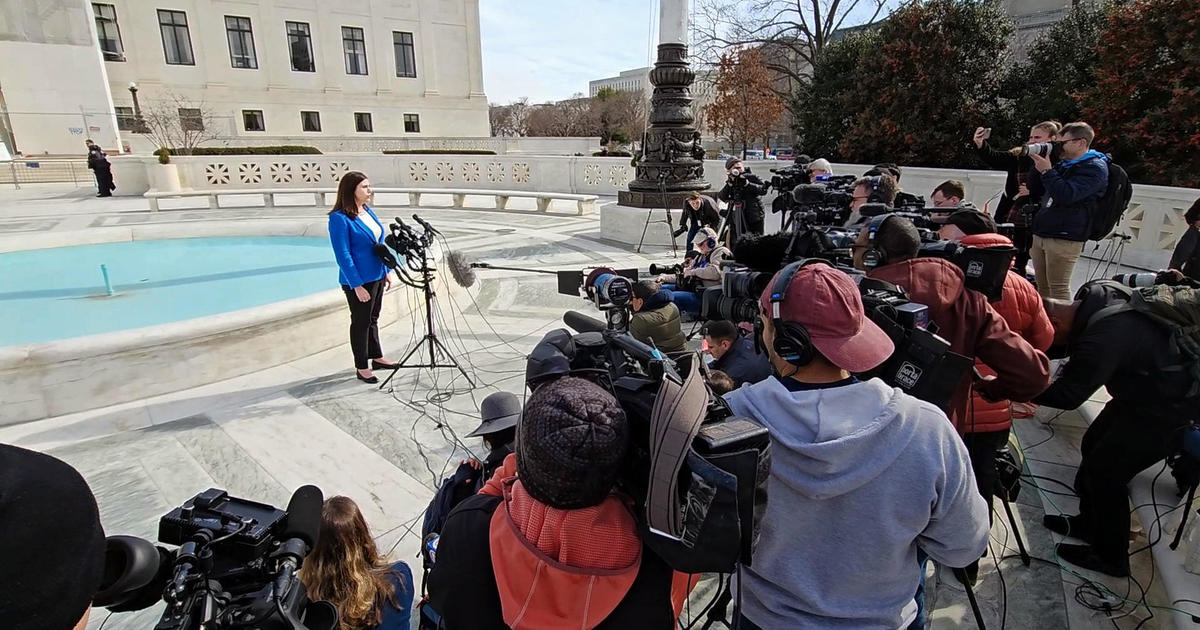
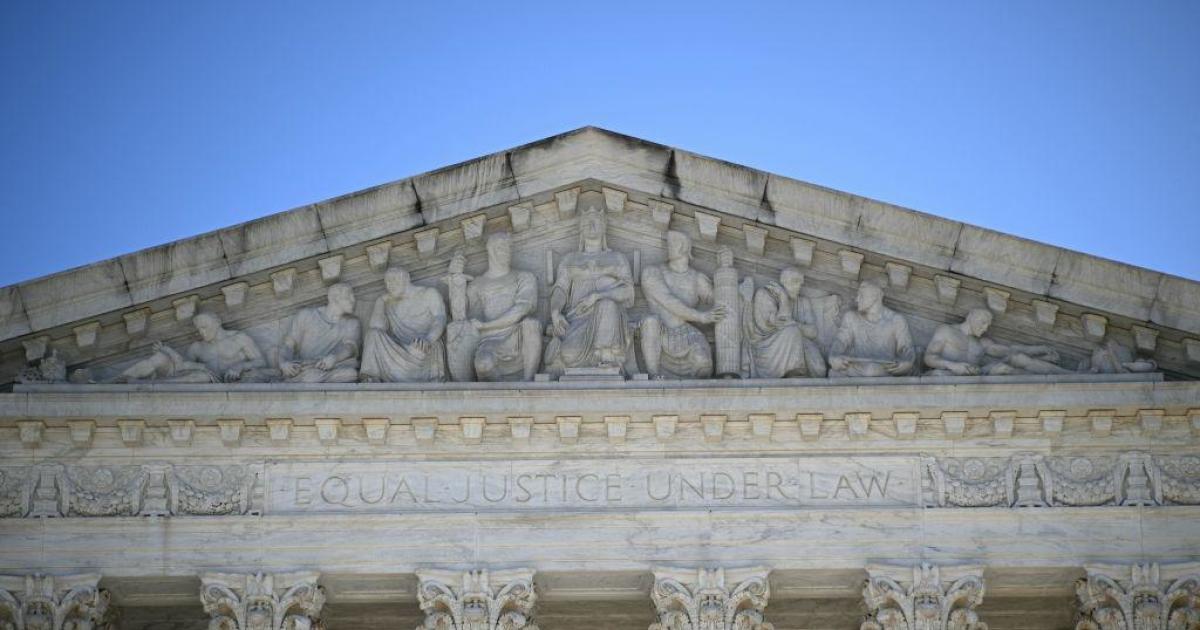
The Supreme Court overturned a Colorado court ruling that disqualified former President Donald J. Trump from the state’s primary ballot, stating that states cannot use the 14th Amendment to bar presidential candidates from seeking office. The justices unanimously agreed that states cannot enforce Section 3 of the amendment, but split over how the federal government may do so. The ruling did not address whether Trump engaged in insurrection. The main opinion, filed "per curiam," emphasized that Congress, not the states, is responsible for enforcing Section 3 against federal officeholders and candidates. Liberal justices expressed concern over the majority's decision to limit federal enforcement of Section 3, protesting the effort to define the limits of federal enforcement in this case.
The Supreme Court is expected to decide on Monday whether former President Donald Trump can appear on state ballots for the 2024 election, following a case from Colorado that challenges his eligibility due to efforts to overturn the 2020 election. The decision, anticipated a day before Super Tuesday contests, could clarify the uncertainty surrounding Trump's candidacy. Additionally, the court's recent agreement to hear arguments on whether Trump can be criminally prosecuted for election interference charges raises questions about potential trials before the November election.
The Supreme Court could issue a decision as soon as Monday on whether former President Donald Trump can be barred from the 2024 ballot due to his efforts to overturn the 2020 election. The case revolves around a Colorado Supreme Court ruling disqualifying Trump from the state's primary, citing a post-Civil War constitutional provision. The decision, expected a day before Super Tuesday contests, could impact Trump's candidacy and the upcoming election. Additionally, the Supreme Court has agreed to hear arguments in late April on whether Trump can be criminally prosecuted for election interference, raising questions about potential trials before the November election.
The Supreme Court has yet to issue a decision on whether votes for Trump will count in Colorado and Maine, where his ballot eligibility is being challenged. Experts speculate that the delay may be due to the justices reaching common ground on overturning Colorado's ruling or needing time for multiple opinions. Despite the uncertainty, early voters in Colorado have already cast their ballots, and the secretary of state reassures that voters will still have the power to make their voices heard in the November election, regardless of the Supreme Court's decision.
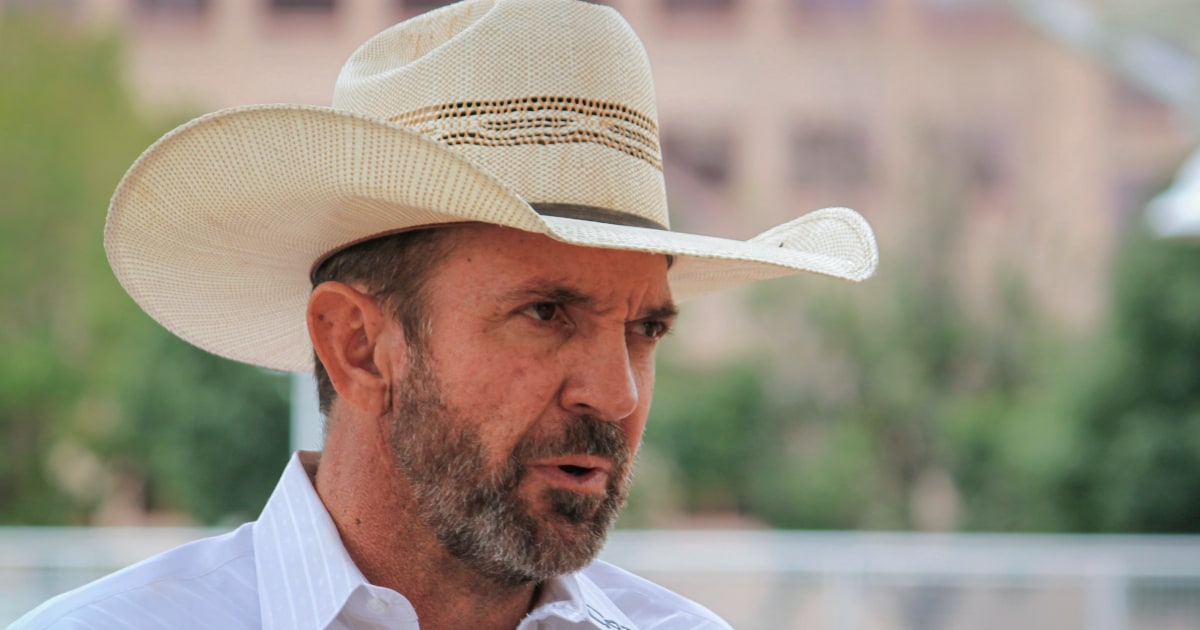
Couy Griffin, a founder of "Cowboys for Trump" and a fervent supporter of Donald Trump, is hoping that a Supreme Court ruling allowing Trump to stay on the ballot in Colorado will benefit him as well. Griffin was criminally convicted for his involvement in the Jan. 6 Capitol attack and subsequently removed from his elected position in New Mexico based on the same 14th Amendment section cited in Trump's case. The Supreme Court's decision in Trump's case could impact Griffin's appeal, but legal experts suggest that even if the ruling favors Trump, Griffin may still face obstacles in holding any government position, including appointed ones.
Colorado Secretary of State Jena Griswold expresses hope that the U.S. Supreme Court will hold former President Donald Trump accountable for his conduct related to the events of January 6, 2021, following the conclusion of the Trump v. Anderson hearing. Griswold emphasizes the importance of protecting democracy and argues that states have the authority to regulate who appears on their ballots, including keeping ineligible candidates off. Trump's legal team is contending that the events of January 6 do not constitute an insurrection.
The Supreme Court is facing key questions in the legal battle over Trump's eligibility to appear on the ballot, including whether the events of Jan. 6 constitute an insurrection, whether Trump engaged in insurrection, the need for Congress to pass a law on disqualification, the potential abridgment of free speech, and the interpretation of the 14th Amendment in relation to the Civil War and Trump's efforts to overturn the 2020 election.
Senator Dick Durbin has called for Supreme Court Justice Clarence Thomas to recuse himself from cases related to the 2020 election, including one concerning the eligibility of former President Donald Trump to appear on the ballot in 2024. Durbin's request comes after reports that Thomas' wife, Ginni Thomas, had urged the Trump White House to overturn the election results.
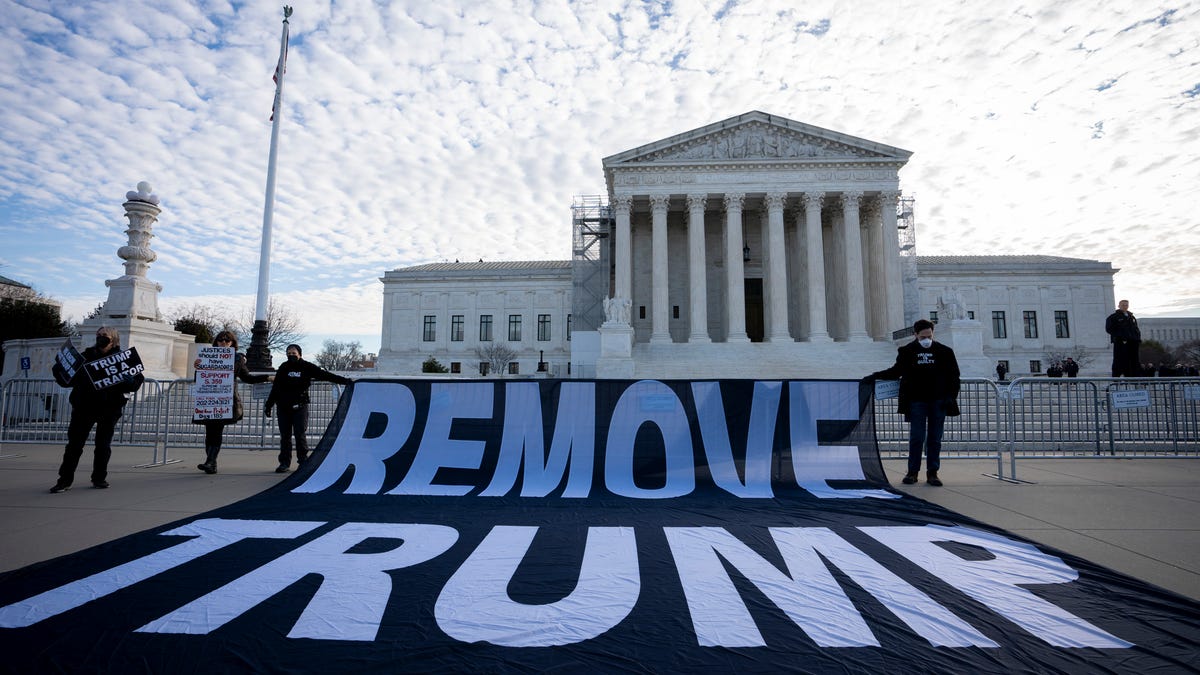
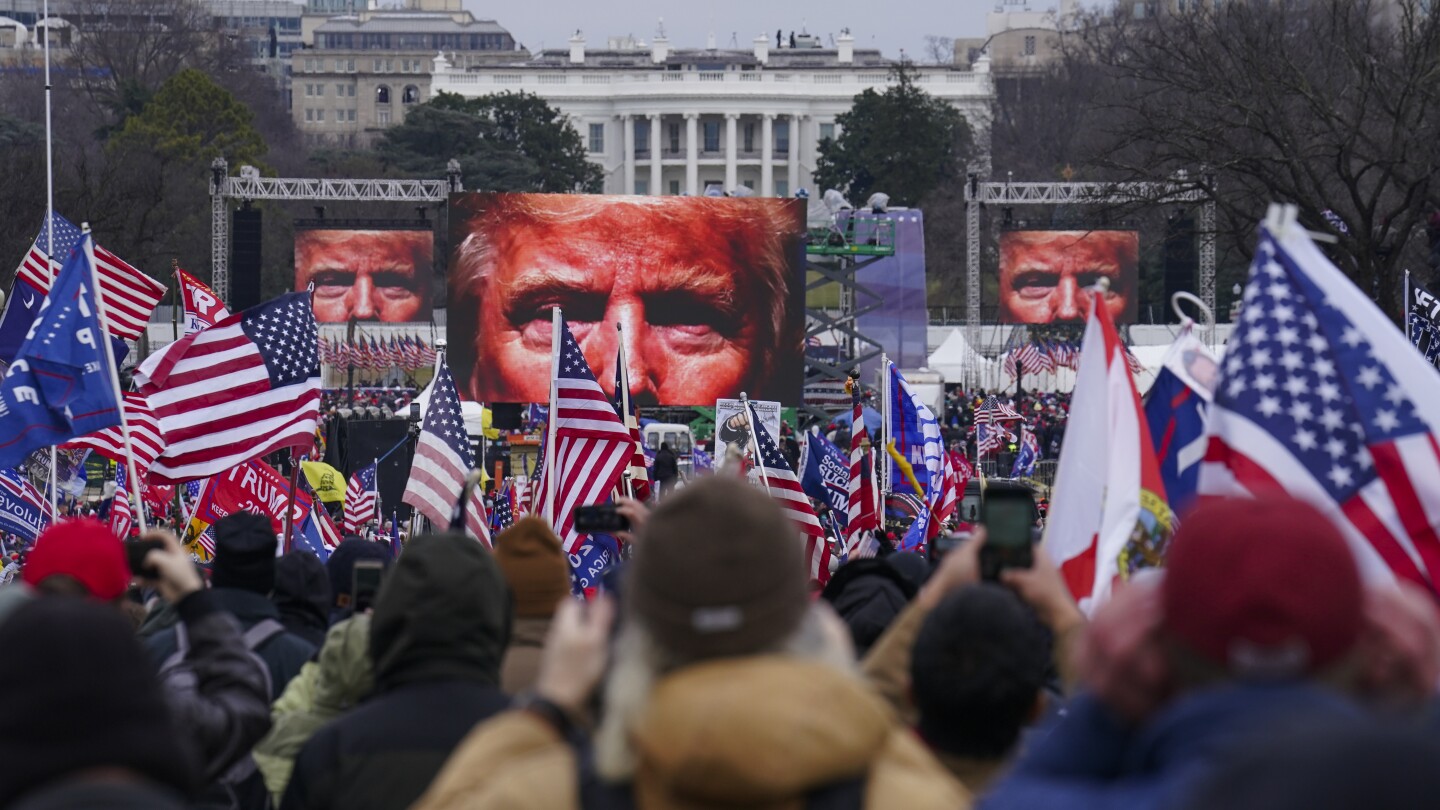
The Supreme Court is set to hear arguments on whether Donald Trump can be kept off the ballot and is ineligible to be president again due to his involvement in the Capitol attack, based on a section of the 14th amendment. This case marks the first time the court will consider Section 3 of the 14th amendment, known as the insurrection clause. The dispute has prompted calls for Justice Clarence Thomas to recuse himself, and the parties involved do not align along predictable partisan lines. Trump is represented by lawyer Jonathan Mitchell, while the Biden administration's chief Supreme Court lawyer, Elizabeth Prelogar, is sitting out the case.
Donald Trump is not expected to attend the Supreme Court arguments over his ballot eligibility, opting to campaign in Nevada instead, as his legal team carefully handles the case before the conservative-majority bench. Trump's past court appearances turned into campaign stops, and his team believes his presence could be disruptive. Despite his absence, Trump will be represented by an experienced legal team, including former Texas Solicitor General Jonathan Mitchell, who will argue the case.
Concerned voters, including lawyers and individuals, have submitted "amicus curiae" briefs to the U.S. Supreme Court regarding the dispute over whether former President Donald Trump can serve a second term, citing Section 3 of the 14th Amendment. Some argue that it's too soon to decide Section 3's application, while others express concerns about fair elections and voting rights. The Supreme Court is set to hear arguments in the case, which could determine whether Trump's name can be listed on ballots nationwide for the primary and general elections.
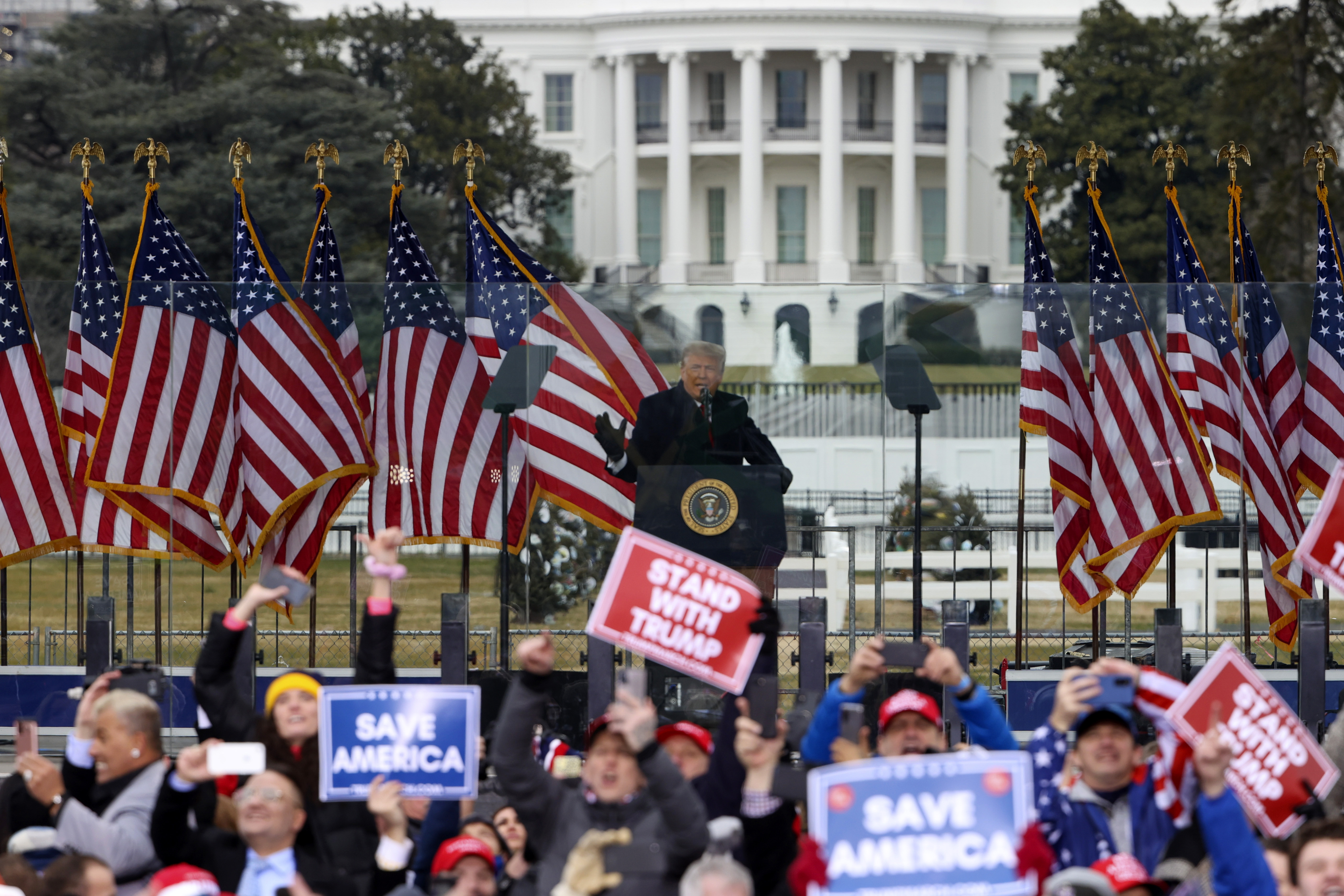
Former President Donald Trump urges the Supreme Court to keep his name on Colorado’s ballot, arguing that the American people, not courts or election officials, should choose the next President of the United States. The Supreme Court will hear arguments in a challenge to Trump’s ballot eligibility due to his role in the events leading to the January 6, 2021, attack on the US Capitol. Trump faces multiple legal entanglements as he campaigns for another term, including a trial in an election subversion case and a dispute over the interpretation of Section 3 of the 14th Amendment.