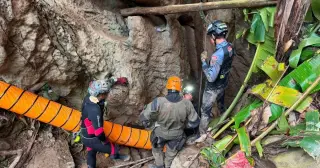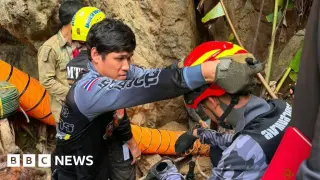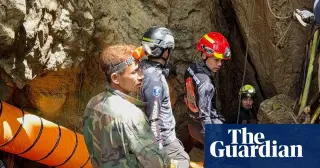
Rescuers have located five of seven people trapped for a week in a flooded cave in Laos; two remain missing as teams navigate narrow, water-filled passages amid persistent rains, with extraction still to come.
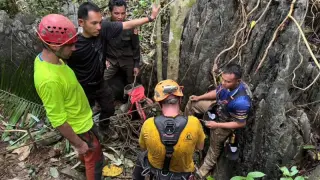
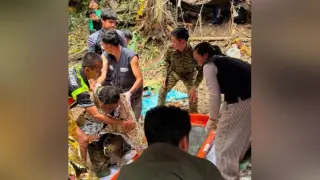
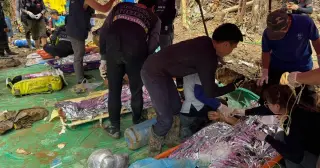
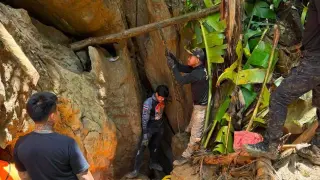
Five of seven villagers trapped for more than a week in a flooded cave in Laos were found alive, while two others remain missing as rescuers press on. Heavy rains triggered flash floods that blocked the exit after they entered the cave on May 19. Lao and Thai rescue teams, with international divers, are navigating rugged terrain to reach the missing pair. The cave is in Xaisomboun province, about 75 miles north of Vientiane; authorities have not confirmed why the villagers entered, though some locals say they were searching for gold.
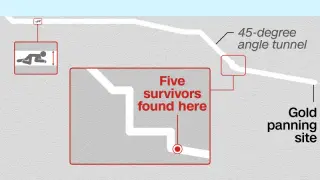
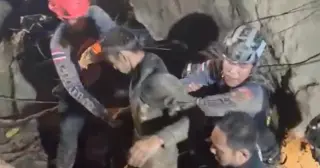
Rescue teams in Laos have found five villagers alive after they were trapped for a week inside a flooded cave while searching for gold and wildlife; two others remain missing as divers navigate narrow, water-filled passages.
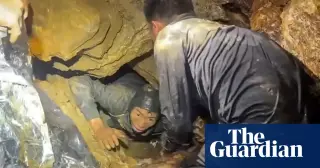
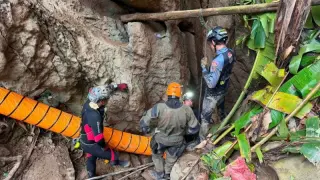
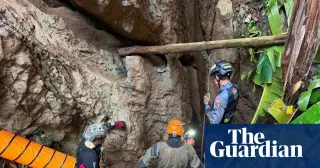
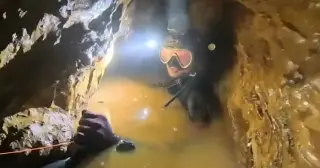
Thai divers who helped in the 2018 Tham Luang rescue have joined the effort to free seven people trapped for five days in a flooded cave in Laos; rescuers must navigate tiny, mud-filled passages (about 60 cm tall tunnels and 50 cm gaps), pump out water, and lay ropes as persistent rain and sediment hinder progress, with a location roughly 40 metres in above water, while authorities weigh possible links to artisanal gold mining in Laos’s booming alluvial mining sector, which faces environmental concerns and a government ban on new mining permits.
In Laos, seven artisanal miners trapped for a week are being rescued by divers led by Mikko Paasi—the diver who helped save Thailand’s 2018 soccer-team cave rescue—with the operation moving slowly through tight, water-filled passages and high collapse risks; Paasi says there is hope they’re alive, but extracting any survivors could be dangerous if they’re incapacitated.
Rescuers in Laos continue to search for seven villagers trapped inside a flooded cave in Xaisomboun province after heavy rains on May 19 blocked the exit; no contact has been established with the group. Thai rescue teams have arrived and divers have penetrated about 100 meters into the cave, while workers pump water out and explore air shafts for potential access points. The rugged, water-filled passages and ongoing rain hinder efforts, and authorities have not confirmed why the villagers entered the cave, though some accounts say they were seeking gold.
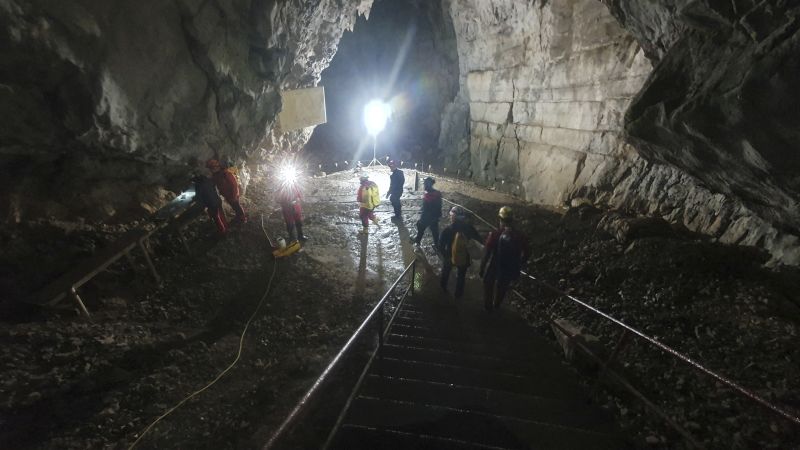
Five people, including two guides and three tourists, were successfully rescued from the Križna Jama cave in Slovenia after being trapped for two days due to high water levels. The European Cave Rescue Association praised the operation as excellent and stated that the group was in good physical and mental condition. The cave, a popular tourist destination, had experienced high water levels that initially blocked safe passages, but decreased water levels allowed rescuers to navigate a boat and successfully retrieve the trapped individuals.
Five people, including a 22-year-old man, his parents, and two guides, became trapped in Slovenia's Krizna Jama cave due to rising water levels caused by heavy rains. Rescue efforts are underway, with divers locating the group and providing them with food, water, and warm clothes. The trapped individuals are in good condition, and rescuers are optimistic about getting them out on Monday despite contending with low visibility and near-freezing water temperatures inside the cave.
American cave explorer Mark Dickey, who was rescued from a Turkish cave after being trapped for over a week, revealed that he feared he wouldn't make it out alive. Dickey suffered from gastrointestinal bleeding and was unable to exit the cave on his own. His fiancée, Jessica Van Ord, aided in his rescue by climbing nearly 3,300 feet to retrieve necessary fluids. The operation involved over 150 rescuers and was described as one of the largest and most complex cave rescues in the world. Dickey is now recovering in a hospital and feeling much better.
An American caver, Mark Dickey, has been rescued by emergency workers in southern Turkey after being trapped for several days in a cave. The rescue operation involved at least 200 aid workers from different countries, including the United States, Hungary, Poland, Romania, Ukraine, and Turkey. Dickey had been suffering from suspected gastrointestinal bleeding while inside the 1,276-meter-deep Morca Sinkhole. The rescue teams successfully retrieved him from the cave, and he is now being transported to a hospital for further treatment.
Mark Dickey, a US citizen and experienced caver, has been successfully rescued after being trapped in Turkey's Morca Cave for over a week due to stomach problems. The complex underground rescue operation involved over 150 people and was one of the largest ever mounted. Dickey's condition worsened during his ordeal, but he was given a blood transfusion and slowly carried out of the cave on a stretcher. His parents expressed their gratitude to the international caving community for their support. Dickey credited the quick response of the Turkish government for saving his life.
Rescue teams in Turkey successfully brought an American researcher, Mark Dickey, up from a depth of 1,040 meters to the 700-meter mark in the Morca cave, where he will rest before continuing the journey to the surface. Dickey fell ill due to stomach bleeding while on an expedition in one of the world's deepest caves. The rescue operation involves personnel from eight countries and is expected to take up to 10 days.
A rescue operation is underway to extract an American researcher, Mark Dickey, who fell ill while 3,000 feet deep inside a cave in Turkey. Dickey began vomiting due to stomach bleeding and was unable to leave on his own. International help was sought, and 190 people from 8 countries, including doctors and paramedics, have come to assist. Dickey's health has improved, and he is now able to walk on his own. However, if his condition worsens, the rescue teams may need to bring him up on a stretcher, which could take up to 10 days.
Turkish officials have launched a rescue operation to retrieve a US researcher, Mark Dickey, who fell ill and became trapped 3,000 feet inside the Morca cave in southern Turkey. Dickey, suffering from gastrointestinal bleeding, has been unable to leave the cave since Thursday. More than 150 Turkish and international cave rescue experts, including teams from Italy, Hungary, Croatia, Bulgaria, and Poland, are involved in the effort. The rescue operation, which includes widening the cave's narrow passages, could take up to ten days to complete.
Rescuers are working to save an American man, Mark Dickey, who fell ill while exploring the third-deepest cave in Turkey. Dickey is currently at a depth of 1,120 meters and is being observed at the cave base camp. The rescue operation, involving 150 rescuers from various countries, is expected to take days due to the cave's narrow passages. Dickey's condition is stable, and he is able to walk on his own. The European Cave Rescue Association describes the mission as "very rare" and "extremely difficult."