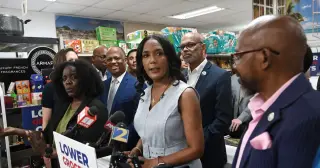
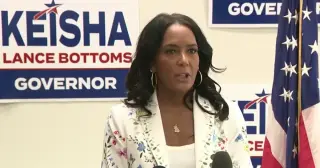
Following the sole gubernatorial debate, Democratic nominee Keisha Lance Bottoms personally addressed reporters to counter criticism, while her opponent Rick Jackson focused on job training for workers affected by federal cuts.
Democratic nominee Keisha Lance Bottoms secured endorsements from 32 current and former Georgia law enforcement officials, including former Atlanta Police Chief Rodney Bryant, while Republican rival Rick Jackson previously claimed support from 104 sheriffs. The voter registration deadline passed on October 5, with early voting scheduled from October 13 to 30 ahead of the November 3 general election.
Former Atlanta mayor Keisha Lance Bottoms rolled out a statewide Voting Rights Act plan just as Gov. Brian Kemp announced a special session to redraw maps ahead of 2028, giving her campaign fresh momentum by casting voting access as a state‑level battle. Her proposals include an independent voting rights commission, a revamped election board, clearer penalties for threats to poll workers, expanded early voting, and a state Election Day holiday, with potential executive actions while seeking legislative support. Republicans pushed back, but the timing ties redistricting to the governor’s race, potentially elevating voting rights as a central campaign issue.
The 2020 tumultuous events, including the COVID-19 pandemic, racial justice protests, and the election controversy involving Donald Trump, have significantly influenced the political trajectories of several Georgia gubernatorial candidates for 2026, shaping their campaigns and public perceptions.
Former Lt. Gov. Geoff Duncan, known for his opposition to Trump’s claims after the 2020 election, has switched from the Republican to the Democratic Party and is running for Georgia governor in 2024, joining a competitive Democratic field while Republicans prepare their own primary.