
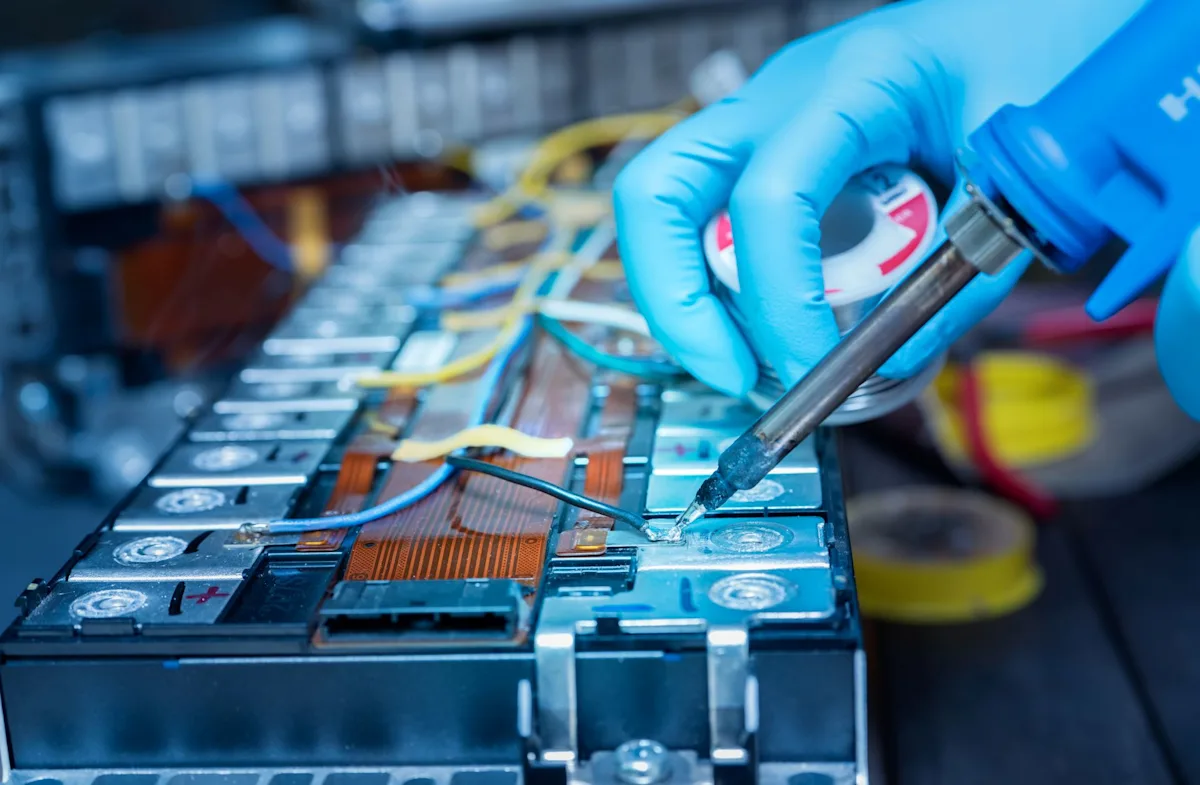
Breakthrough Battery Coating Promises Cheaper Electric Cars and Extended Battery Life
Scientists at Lawrence Berkeley National Laboratory have developed a new polymer coating called HOS-PFM that conducts both electrons and lithium ions simultaneously, potentially making electric car batteries cheaper and longer-lasting. The coating works well with aluminum and silicon electrodes, which are cheaper but wear out more quickly than graphite electrodes. The new coating could extend the average lifetime of a lithium-ion battery from 10 to 15 years and enable the production of more affordable EV models. This breakthrough, along with other advancements in sodium-ion batteries and lithium recycling, could revolutionize the way batteries are made and reduce the environmental impact of lithium mining.