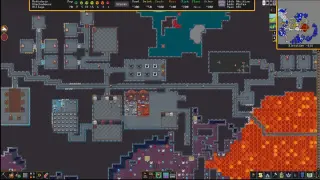
Dwarf Fortress creator Tarn Adams criticizes the tech industry’s push to rely on AI for coding, arguing bosses pressure teams to use genAI at the expense of solid, testable software, which could lead to buggy results and a looming reckoning unless practices change.
Astrophysicist Paul Sutter recounts presenting a faster AI-assisted update for identifying galaxy voids, only to discover minutes into the talk that the AI’s handling of survey edges was subtly wrong. The cringe-worthy episode underscores AI’s ability to produce convincing but incorrect results and highlights the need for rigorous auditing and skepticism in AI-assisted scientific work.
Cloudflare has open-sourced Cloudflare OS, its internal vibe-coding workspace that lets non-developers describe tasks in natural language and have AI agents generate apps. It uses fast, memory-efficient V8 isolates for per-task sandboxes, enforces strict permissions and disabled outbound networking, and runs client code in a browser sandbox. The platform supports multiple AI models, deterministic workflows to limit resource use, and admin controls for budgets. Cloudflare also published an Engineering Codex to uphold standards. Thousands of employees use it daily for docs, automation, and data visuals. Open sourcing is available on GitHub, but backend deployment requires a Workers Paid plan, and security researchers caution that sandboxing is not foolproof.
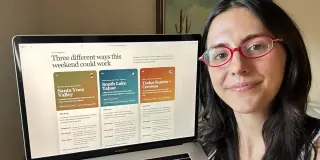
A writer follows Sam Altman’s exact ChatGPT prompt to plan a long weekend and ends up building a fully functional, shareable trip-planning site without writing any code. ChatGPT generates the app, guides the user through setup steps (including terminal commands and hosting), and even suggests hosting via the new Sites feature, resulting in a three-destination plan and an email draft in under two hours. The experiment showcases how “vibe coding” can empower non‑coders to create practical apps using natural-language prompts.
A Kotaku piece covers DK64: Recompiled, a fan-made PC port by the DK64 Radomizer team using Wiseguy’s N64 recomp tool, offering widescreen, higher framerates, 4K options, low input delay and mod support, and explicitly avoiding AI “vibe coding.” The developers criticize a rival project that uses AI assistance as low quality, stressing traditional recomp work, while noting PCGamingWiki has banned similar vibe-coded recompilations for reliability concerns.
Vibe coding—building private AI-powered apps—presents serious security risks, from hidden vulnerabilities and data leakage to weak authentication when apps move from local to cloud. The Verge urges upfront security prompts, regular code reviews, and guardrails to prevent exposing sensitive information as the DIY software movement grows.
An AI startup founder is attempting to vibe-code a GTA VI‑caliber open-world game using Claude, posting daily progress and a GitHub repo as he aims to beat Rockstar to the release; early builds show a basic movement system, a city-like environment, NPCs, and vehicles, though the project is still far from finished.
Andrej Karpathy, who coined vibe coding, now deems it obsolete and champions 'agentic engineering'—AI systems that write, test, debug, and ship code with human direction—after joining Anthropic. The shift speeds development, expands what one person can build, and is already influencing industries (including regulated banking). Founders are urged to direct AI agents on projects, learn from tool limitations, and prioritize the underlying AI model’s quality to ship complex solutions faster.
Vibe coding lets non-coders use AI to generate small, working apps for specific daily problems—think wedding seating planners or hair-wash routines—without needing a full development team. The trend emerged around late 2025 as coding-focused AI models improved at writing, running, and debugging code, enabling ordinary people to prototype tools, learn new skills, and keep software bespoke and accessible, while not promising world-changing tech.
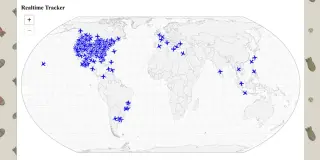
Los Angeles artist Kyle McDonald created the Apocalypse Early Warning System, a live jet-tracking project that maps private and charter aircraft and assigns an “emergency level” by comparing current jet activity to historical norms. Using radio-based flight data and AI-assisted coding, the project explores who gets information, who controls it, and why elites might know first, while stopping short of predicting catastrophe. McDonald funds his practice through consulting and exhibitions, and monetizes a small alert service with thousands of subscribers as a conceptual art intervention.
Scott Klipper, a 39-year-old hedge-fund managing director and busy dad, vibe coded Trot My Tot—a NYC-area on-demand platform that connects families with short-term trotters (nannies or college students) for quick gigs like school pickups. Using no-code tools like Lovable, Cursor, and Replit, he built profiles, booking, and Stripe payments, plus vetting steps (SSN verification, photos, driver’s license, CPR); the service has about 600 users and 149 trots completed, with trotters’ charges capped at $25 and optional paid tiers. Klipper calls it a prototype, not a money-maker, and plans to expand to other caregiving tasks while tightening screening.
AI-enabled vibe coding lowers the bar to building apps, driving a surge of new releases (about 414,000 iOS/Android apps in Q1 2026, up 115% year over year) and faster iteration. Yet true profitability remains scarce: only a tiny fraction reach high traction, meaning market saturation, distribution, and effective marketing still decide who turns ideas into sustainable businesses. The trend is democratizing creation but not erasing the brutal realities of execution and competition for Silicon Valley veterans and first-time founders alike.
PCWorld shows how AI tools (like ChatGPT) can generate AutoHotkey v2 scripts to customize Windows 11, enabling non-programmers to automate tasks such as hotkeys, scrolling, and text expansion. The process involves ideating a simple automation, confirming AHK can do it, prompting the AI to produce an AHK v2 script, iterating to refine it, saving the code as an .ahk file, and running it with AutoHotkey (reloads needed after edits). Simpler automations work best, while more complex ideas require more back-and-forth. The guide emphasizes testing, startup deployment options, and the potential of AI-assisted vibe coding to change Windows behavior without coding experience.
Apple has pulled the AI-driven vibe-coding app Anything from the App Store, saying it violated Guideline 2.5.2 on code execution; Apple had already started blocking updates to vibe-coding apps and has previously targeted Vibecode and Replit. Anything, which lets users generate and preview apps via natural-language prompts, had raised $11 million and was valued at $100 million, but it can no longer operate on iOS under Apple’s enforcement.
AI-enabled 'vibe coding' has spurred a surge of iOS apps, with January US releases up 54.8% year-over-year and weekly submissions topping 200,000. Apple says 90% of submissions are reviewed within 48 hours and the average review time is 1.5 days, but some developers report six-week delays. Analysts expect Apple to shift from artisanal gatekeeping to scalable, curated review to curb low-quality AI apps while maintaining scrutiny.