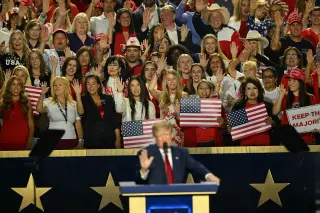
In Virginia’s referendum on redrawing its congressional map, a GOP-aligned group runs ads using Klansmen imagery to warn Black voters, while others claim that quotes attributed to Barack Obama and to Gov. Abigail Spanberger are being used to sway turnout. Civil rights groups and Democrats say the tactics amount to disinformation meant to suppress votes in a high-stakes, nationwide contest over control of the U.S. House.
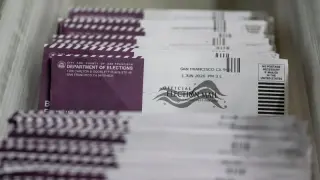
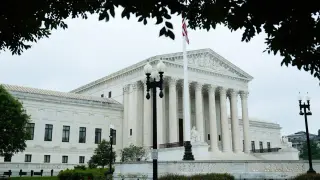
The Supreme Court is considering whether states may end grace periods that allow late-arriving mail ballots to be counted after Election Day, potentially reducing which ballots are counted and impacting election outcomes in affected states.
Georgia lawmakers failed to fund or finalize a plan to remove barcodes from ballots by July, leaving the state on pace to use Dominion touch-screen machines for the November election. Proposals to switch to hand-marked paper ballots by 2028 and to fund new equipment are moving slowly, with potential Senate resistance and concerns about disrupting ballots and audits. Local officials have favored delaying action to avoid chaos, while the broader push to change Georgia's voting system remains unresolved.
Florida lawmakers advanced HB 991 to require citizenship verification for all registered voters by cross-checking the voter file with DMV citizenship records and to restrict acceptable forms of ID at the polls, excluding student IDs and retirement-center IDs; drivers licenses, state IDs, military IDs, and concealed-weapons licenses would remain valid. The measure would take effect after this year’s midterm elections. It passed both chambers and will go to Gov. DeSantis. Supporters call it election safeguards; opponents warn it could disenfranchise students and seniors and create bureaucratic confusion.
Florida’s GOP-led Legislature approved a state version of the SAVE America Act to require proof of citizenship, but the new rules won’t take effect until January after the midterms and no changes were made to mail-in voting. Supporters say it would bolster election integrity; critics warn it could disenfranchise thousands and invite legal challenges, as DeSantis backs the measure and Democrats promise potential litigation.
An anonymous voter shares their 2026 Oscar ballot, revealing a mix of strong preferences and abstentions across categories. The voter lists Best Picture contenders with Hamnet at the top and notes other titles such as One Battle After Another, Train Dreams, Sinners, Frankenstein, and Marty Supreme, while admitting they abstained in several categories after not seeing all nominees. They name Best Director as Chloe Zhao; Best Actress Jessie Buckley; and Best Actor as Michael B. Jordan (even as they praised Timothée Chalamet’s dedication). The piece also references unconventional entries like Bugonia, The Secret Agent, Sentimental Value, and F1, and emphasizes these ballots reflect only a fraction of the 11,000+ voters. It discusses the impact of partial viewings and the shift away from big-screen screenings, and closes by noting the voter's producer’s-branch status and promoting a final Oscar predictions podcast and upcoming dates.
An anonymous ballot excerpt for the 98th Academy Awards reveals a single voter's picks: One Battle After Another is favored for Best Picture and cited in multiple craft categories (Best Director for Paul Thomas Anderson; Best Cinematography, Best Film Editing, Best Original Score for Jonny Greenwood; Best Makeup/Costume/Production Design for Frankenstein). Jessie Buckley is named Best Actress and Leonardo DiCaprio Best Actor, with Amy Madigan praised in Supporting Actress and a strong endorsement for Sean in Supporting Actor. Other notable choices include The Secret Agent for International Feature, and an abstention in Animated Feature and Documentary Feature; Visual Effects goes to Avatar: Fire and Ash. The entry emphasizes this reflects one voter's view among 11,000+ Academy members and should be read as a snapshot rather than a definitive forecast, with a note that the voter abstained in the Shorts category due to time constraints.
As Oscar voting closes, Variety highlights how anonymous ballots reveal a razor-thin Best Picture race between Sinners and One Battle After Another, with voters split between purity favorites and strategic choices. The feature details how watching all nominees now factors into decisions, notes demographic trends among voters, and flags late momentum shifts in the Supporting Actor category, suggesting a photo-finish outcome and ongoing uncertainty until envelopes are opened.
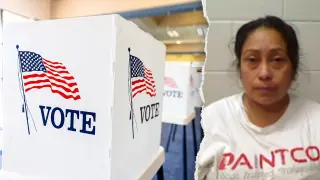
Dallas County voters were perplexed on primary day after Republicans ended countywide vote centers and Democrats followed suit, returning to precinct-based polling; despite efforts by election navigators and warnings, many went to the wrong polling sites. Democrats briefly won a court-ordered extension of voting hours, though the order was later stayed by the Texas Supreme Court. Similar shifts occurred in Williamson and Eastland counties, illustrating ongoing tensions over election administration and voter access.
The Texas Supreme Court ordered ballots cast by voters who were still in line after 7 p.m. to be separated amid mass confusion over polling locations on primary day in Dallas County, where a county website crashed. Dallas County Judge Staci Williams extended polling hours to 9 p.m. to reduce disruption. Voters were redirected to correct precincts by election navigators, and some locations had party-specific rules in place. By 1 p.m. nearly 50,000 votes had been counted, with thousands turned away or redirected as the court intervened to clarify the process.
A change to Texas primary rules caused polling-place confusion, with voters turned away in two counties and comments from a Dallas-area congresswoman amid ID checks and wait times at voting centers during the March 2026 primaries.
The Senate is poised to vote on a Democratic-backed war-powers resolution to end U.S. involvement in the Iran conflict and require congressional approval before future actions; Republicans argue Trump already has authorization, making passage unlikely, and even if both chambers pass it, a presidential veto could block it, while a House version also faces opposition.
North Carolina’s State Board of Elections extended voting at Halifax County’s Littleton precinct to 8:30 p.m. after a morning delay caused by electronic poll book synchronization. Under state law, extensions are allowed for disruptions; votes cast after 7:30 p.m. will be provisional, and unofficial statewide results will not be released until all polls are closed, with results expected around 8:30 p.m. via the Election Results Dashboard.
Hundreds of voters in the Dallas area were turned away from polling locations on Election Day amid confusion over new rules that require ballots to be cast at assigned precincts. Dallas County extended voting hours by two hours after a court order, with Democratic precincts staying open until 10 p.m. ET, while most of Texas closes earlier. Officials urged voters to verify their polling location before heading out, as lawmakers and candidates criticized the changes and warned the disruption could affect the election outcome.
Democratic voters in Dallas and Williamson Counties faced confusion after Republicans refused to hold a joint primary, forcing a switch from countywide to precinct-only voting and sending voters to specific polling places where many were turned away. Democrats and candidates criticized the change as suppressive and called for extended voting hours, with a district judge ordering Dallas County’s Democratic primary to run until 9 p.m.