
Apple Hits $5 Trillion as AI Reshapes Tech and Security
By tl;dr Editorial Team · Published
Listen to this briefing · 6 min
Podcast feedYesterday marked a pivotal moment for the technology sector, defined by record valuations, aggressive AI integration, and emerging security threats. While Apple celebrated a historic market milestone, the broader landscape was shaped by rapid advancements in artificial intelligence and a surge in cybersecurity vulnerabilities. From consumer electronics to global security, the day highlighted how AI is now central to both commercial strategy and national defense.
Markets and Tech Giants
Apple achieved a historic milestone, becoming the second company in history to close a trading day with a market capitalization exceeding $5 trillion. The stock finished at $342.96, valuing the company at $5.01 trillion, a feat it had not achieved earlier in the year. This performance stood out during a broader tech sector sell-off, where peers like NVIDIA and Meta saw significant declines. The milestone follows a leadership transition to CEO John Ternus and strong demand for the iPhone 18 Pro, signaling sustained investor confidence in Apple’s hardware and services ecosystem despite supply chain challenges.
In a related move, Apple launched a new suite of smart home devices aimed at reviving a stagnant market. The lineup includes the $299 HomeView smart display, which features AI-powered Siri to simplify device coordination, alongside a refreshed HomePod mini 2 and an updated Apple TV 4K. Apple partnered with LG and Schneider Electric to create accessories that work seamlessly through the Home app. Analysts remain cautious, noting that the success of this strategy depends on whether consumers value dedicated AI devices over their existing smartphones, especially as smart speaker sales have recently declined.
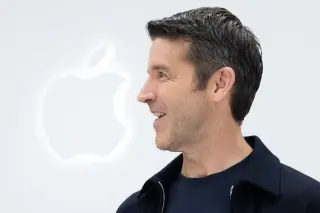
Apple closes above $5 trillion valuation for first time
Apple became the second company in history to close a trading day with a market capitalization exceeding $5 trillion on October 14, 2026. The stock finished at $342.96, valuing the company at $5.01 trillion, despite a broader tech sector sell-off. This milestone follows a leadership transition to CEO John Ternus and strong demand for the iPhone 18 Pro, though the company had previously dipped below this threshold earlier in the year.
Source: Yahoo Finance

Apple Launches AI-Driven Smart Home Lineup to Revive Stagnant Market
Apple unveiled a new suite of smart home devices on Tuesday, led by the $299 HomeView smart display, aiming to leverage AI to simplify setup and device coordination. The launch includes a refreshed HomePod mini 2 and an updated Apple TV 4K, alongside a new collection of accessories developed with partners like LG and Schneider Electric. While Apple bets that AI will solve the historical friction of smart home integration, market analysts remain cautious given recent declines in smart speaker sales and the availability of capable AI assistants on smartphones.
Source: Axios
AI and Gaming
The race for frontier AI capabilities intensified with the release of Google’s Gemini 4 Argon for paying subscribers. The model ranks first on the Vals Index for economic tasks and offers significant speed improvements for coding and scientific research. While it matches OpenAI’s GPT-6 Sol in general capability, independent tests show GPT-6 still leads in creative writing and concise summarization. The competition is now defined by specific task performance, forcing users to choose based on their primary needs, with API access available at introductory rates until November 30.
In the gaming sector, AI is accelerating development and exploitation. Epic Games released a preview of its new launcher, described as 'vibe coded' using AI to achieve faster performance than Valve’s Steam. The update introduces native Linux support and claims a 46% faster startup time. Meanwhile, the PlayStation 5 jailbreak scene has exploded, driven by AI-assisted decompilation. A jailbroken PS5 can now run a 27-billion-parameter LLM, though with quality trade-offs. New apps offering free games have prompted Sony to issue cease-and-desist letters, raising questions about digital ownership and hardware security.

Gemini 4 Argon Launches for Paying Users, Matching GPT-6 in Key Tests
Google has released its new frontier model, Gemini 4 Argon, to AI Pro and Ultra subscribers. The model ranks first on the Vals Index for economic tasks and offers significant speed improvements for coding and scientific research. While it matches OpenAI's GPT-6 Sol in general capability, independent tests show GPT-6 still leads in creative writing and concise summarization. API access is available at introductory rates until November 30.
Source: Lifehacker

Epic's AI-Generated Launcher Preview Debuts with Linux Support and Speed Claims
Epic Games has released a preview of its new Epic Games Launcher, explicitly described as 'vibe coded' using AI to achieve faster performance than Valve's Steam. The update introduces native Linux support and claims significantly faster startup times, though it currently lacks full feature parity with the legacy version.
Source: Ars Technica

PS5 Jailbreak Scene Explodes as AI Accelerates Exploits and Local AI Runs
The PlayStation 5 jailbreak scene has accelerated dramatically in 2026, driven by AI-assisted decompilation and new exploits. A jailbroken PS5 can now run a 27-billion-parameter LLM, though with significant quality trade-offs. Meanwhile, new apps like Overdrive offer free games, prompting Sony to issue cease-and-desist letters.
Source: Wccftech
Security and Global Threats
Microsoft released its October 2026 security update, patching a record 1,413 vulnerabilities, including two zero-days. The update fixes critical flaws in Windows Shell and .NET Framework, with one already exploited in the wild. The massive volume of fixes is attributed to AI-assisted scanning, though experts warn it strains corporate IT teams. This update is the final supported release for Windows 11 24H2 and the first for 26H2, forcing users to upgrade to continue receiving security updates.
On the global stage, UK intelligence chief Sir Ken McCallum warned that AI could lower barriers for developing bioweapons. In his annual threat assessment, McCallum highlighted a shift in Iranian tactics toward targeting military sites and noted that Russia remains the primary security threat. He announced the creation of a new MI5 threat center to address AI-driven risks, including the potential for AI to generate novel pathogens. While physical access to materials remains a hurdle, concerns are growing over AI chatbots providing dangerous information and the lack of formal government policies to regulate high-risk biological data.

Microsoft’s October Patch Tuesday Fixes 1,413 Flaws, Including Exploited Windows Shell Bug
Microsoft released its October 2026 security update on Tuesday, patching a record 1,413 vulnerabilities, including two zero-days. The update marks the final supported release for Windows 11 24H2 and the first for 26H2. It fixes critical flaws in Windows Shell and .NET Framework, with one already exploited in the wild. The massive volume of fixes is attributed to AI-assisted scanning, though experts warn it strains corporate IT teams. The update also resolves issues with File Explorer and Bluetooth.
Source: ZDNET

MI5 Chief Warns AI Could Lower Barriers for Bioweapons Amid Rising Hybrid Threats
Sir Ken McCallum, head of UK intelligence agency MI5, warned that artificial intelligence could significantly lower the barriers for developing bioweapons, potentially allowing unskilled actors to create dangerous pathogens. In his annual threat assessment, McCallum highlighted a shift in Iranian tactics toward targeting military sites and noted that Russia remains the primary security threat. He announced the creation of a new MI5 threat center to address AI-driven risks, including the potential for AI to generate novel pathogens or assist in chemical and radiological attacks. While experts note that physical access to materials and tacit expertise remain significant hurdles, concerns are growing over AI chatbots providing dangerous information and the lack of formal government policies to regulate high-risk biological data.
Source: The Guardian
Culture and Sports
In a cultural milestone, Canadian-born singer-songwriter Joni Mitchell was sworn in as a U.S. citizen after living in the country for 62 years. The 82-year-old artist shared a video of her ceremony on social media, ending a long period of residency without voting rights. The move allows her to participate in U.S. elections and resolves a previous controversy where she was excluded from lists of American songwriters due to her citizenship status.
In sports, Ukraine’s Shakhtar Donetsk is using its Champions League residency at Chelsea’s Stamford Bridge to project national resilience. Forced out of its home city by the 2022 invasion, the club now plays four home games in London this season. Club leaders are leveraging this platform to argue that Ukraine’s economic stability is vital for European security, countering Russian hybrid warfare. The club’s owner, Rinat Akhmetov’s SCM group, is launching an 'Invest in Ukraine' campaign, aiming to translate symbolic presence into tangible investment and sustained Western support.

Joni Mitchell Sworn In as U.S. Citizen After 62 Years
Canadian-born singer-songwriter Joni Mitchell has officially become a U.S. citizen after living in the country for 62 years. She announced the news on social media with a video of her swearing-in ceremony, ending a long period of residency without voting rights. The move allows her to participate in U.S. elections, a right she previously lacked despite decades of living in California.
Source: ABC News - Breaking News, Latest News and Videos

Shakhtar Donetsk’s London Exile: Football as a Frontline for Ukraine’s Survival
Ukraine’s Shakhtar Donetsk is using its Champions League residency at Chelsea’s Stamford Bridge to project national resilience and attract Western investment. Forced out of its home city in 2014 and displaced by the 2022 invasion, the club now plays four home games in London this season. While sporting success is secondary, club leaders and owner Rinat Akhmetov’s SCM group are leveraging the platform to argue that Ukraine’s economic stability is vital for European security, countering Russian hybrid warfare and corruption allegations.
Source: POLITICO.eu
Also in the news

As the tech sector navigates record valuations and rapid AI integration, the focus shifts to how these advancements impact security, consumer markets, and global stability. The day's events underscore a new normal where AI drives both innovation and risk, requiring robust safeguards and strategic adaptation from businesses and governments alike.