
MI5 Chief Warns AI Could Lower Barriers for Bioweapons Amid Rising Hybrid Threats
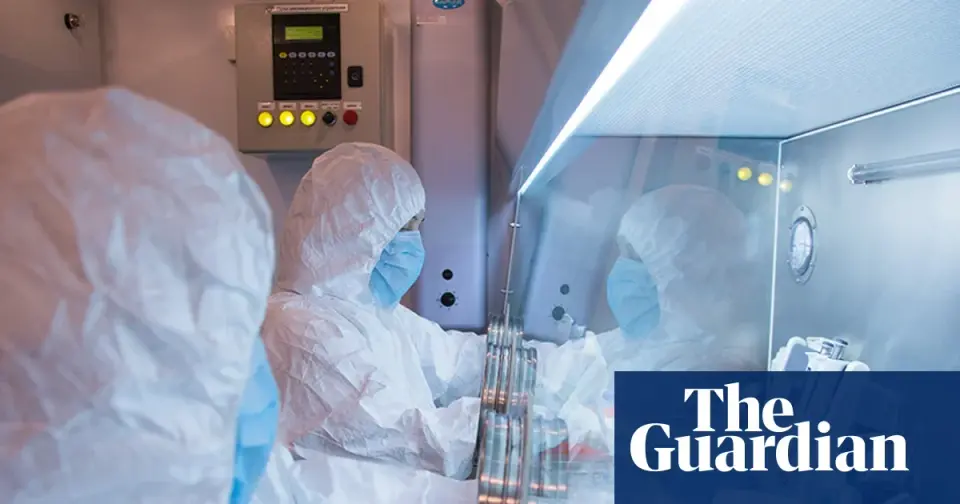
Sir Ken McCallum, head of UK intelligence agency MI5, warned that artificial intelligence could significantly lower the barriers for developing bioweapons, potentially allowing unskilled actors to create dangerous pathogens. In his annual threat assessment, McCallum highlighted a shift in Iranian tactics toward targeting military sites and noted that Russia remains the primary security threat. He announced the creation of a new MI5 threat center to address AI-driven risks, including the potential for AI to generate novel pathogens or assist in chemical and radiological attacks. While experts note that physical access to materials and tacit expertise remain significant hurdles, concerns are growing over AI chatbots providing dangerous information and the lack of formal government policies to regulate high-risk biological data.
Key points
- AI could help unskilled actors compile information and plan experiments for bioweapons, though physical access to materials remains a major barrier.
- Iran is shifting from low-level sabotage to targeting 'harder targets' like military sites, with over 50 arrests in the UK in the past year.
- Russia is identified as the 'number one' aggressor, using hybrid tactics that stay below the NATO Article 5 threshold.
- MI5 has established a new threat center to focus on AI-driven risks, including the spread of chemical and biological weapons.
- Anthropic reported five cases of scientists attempting to use its Claude chatbot for dangerous work on viruses or toxins.
Background
This warning follows earlier concerns raised in September 2026 about AI extinction fears and the potential for advanced systems to cause harm through bioweapons. It also occurs amidst heightened US-China tensions, where AI governance and competition were key topics at a recent Washington summit between Presidents Trump and Xi.
How outlets are covering it
The Guardian emphasizes the technical hurdles and the dual-use nature of AI in biological research, noting that while AI can provide information, it cannot replace tacit expertise or physical access to materials. CBS News and The Washington Post focus on the geopolitical shift, highlighting Iran's move toward targeting military sites and Russia's continued hybrid warfare tactics. The BBC summarizes the broader media reaction, noting that UK newspapers are leading with McCallum's warnings about Russia and AI, while also covering unrelated topics like tax reforms and a tiger attack.
Why it matters
The potential for AI to democratize the creation of bioweapons poses a significant global security risk, as it could enable unskilled actors or rogue states to develop dangerous pathogens. This could lead to increased instability and the potential for widespread harm, making it crucial for governments and AI companies to implement robust safeguards and regulations.
What to watch
Governments are expected to develop formal policies to regulate high-risk biological data and AI models. AI companies may increase their efforts to prevent the misuse of their tools for bioweapon development. Continued monitoring of hybrid warfare tactics by Russia and Iran will be essential to prevent escalation.
- Could AI ‘change the stakes’ in the development of bioweapons? The Guardian
- A look at the Iran and Russia-linked hybrid attacks the U.K. spy chief says are flourishing CBS News
- U.K. intelligence chief warns Iran is shifting plots to ‘harder targets’ The Washington Post
- Iran and Russia are stepping up hybrid campaigns in Britain, UK spy chief says Reuters
- 'Spy chief's grim warning' and 'tiger victim was child actor' BBC
Want the full story? Read the original reporting
Read on The Guardian