
Alphabet Crashes as AI Spending Fears Hit Search Revenue; Fed Holds Rates Amid Inflation
By tl;dr Editorial Team · Published
Listen to this briefing · 10 min
Podcast feedYesterday’s news cycle was dominated by the volatile intersection of artificial intelligence and financial markets, alongside significant developments in technology and domestic politics. The most striking event was a historic crash in Alphabet’s stock, which erased $500 billion in value as investors questioned the return on massive AI infrastructure spending. Simultaneously, the Federal Reserve maintained interest rates, citing strong economic growth and persistent inflation, while the US midterm election landscape faced scrutiny over the rising use of AI in campaigns. In the tech sector, Apple and Microsoft rolled out major updates, and a new open-weight AI model from Mistral challenged global competitors.
Markets and Economy
The financial markets experienced a dramatic shift as Alphabet shares fell 12.6% on Thursday, wiping out $500 billion in market value in its worst single-day performance since going public. The crash followed disappointing third-quarter results, where search advertising revenue missed estimates and the company reported its first negative free cash flow in 22 years. Investors are concerned that massive AI infrastructure spending is cannibalizing traditional search profits without yielding immediate returns. This event underscores the interconnectedness of the tech sector, as the selloff impacted suppliers and peers, indicating broader market instability.
In response to strong economic growth and inflation concerns, the Federal Reserve maintained its benchmark interest rate at 3.75%-4.0% on October 28, 2026. The decision, which followed a rate hike in September, was driven by a desire to gather more data before further action, with two committee members dissenting in favor of an immediate rate increase. US GDP growth accelerated to 3.4% annualized in Q3 2026, driven by consumer spending and a 19.4% surge in private investment, largely attributed to AI. However, inflation rose to 3.7% year-over-year in September, exceeding the Fed's 2% target, with energy prices from the Iran conflict contributing to the increase. The Fed's cautious approach may lead to further rate hikes in December, impacting financial markets and household budgets.
The semiconductor sector also saw significant movement as SK Hynix reported record quarterly revenues of 104.6 trillion won and operating profits of 83.3 trillion won, driven by surging demand for AI memory. The company confirmed that its DRAM and High Bandwidth Memory capacity is effectively sold out through 2029 via long-term agreements with 14 major customers. Executives project that supply will lag demand through 2030 due to the time required to build new facilities, despite plans to accelerate investment in new manufacturing capacity. This confirmed shortage signals that higher memory prices will likely persist, affecting the cost of AI infrastructure, consumer electronics, and data center operations.

Fed Holds Rates at 3.75% Amid Strong Growth and Inflation Concerns
The Federal Reserve maintained its benchmark interest rate at 3.75%-4.0% on October 28, 2026, despite inflation remaining above its 2% target. The decision, which followed a rate hike in September, was driven by strong economic growth and a desire to gather more data before further action. Two committee members dissented, favoring an immediate rate increase.
Source: BBC

Alphabet Wipes $500 Billion in Historic Crash as AI Spending Fears Hit Search Revenue
Alphabet shares fell 12.6% on Thursday, erasing $500 billion in market value in its worst single-day performance ever. The crash followed disappointing third-quarter results, where search advertising revenue missed estimates and the company reported its first negative free cash flow in 22 years. Investors are concerned that massive AI infrastructure spending is cannibalizing traditional search profits without yielding immediate returns.
Source: The Independent
SK Hynix Records Record Profits as Memory Shortage Extends to 2030
SK Hynix reported record quarterly revenues of 104.6 trillion won and operating profits of 83.3 trillion won, driven by surging demand for AI memory. The company confirmed that its DRAM and High Bandwidth Memory (HBM) capacity is effectively sold out through 2029 via long-term agreements with 14 major customers. Executives project that supply will lag demand through 2030 due to the time required to build new facilities, despite plans to accelerate investment in new manufacturing capacity.
Source: PCMag
Technology and AI
The AI landscape saw a pivotal moment with the release of Mistral Large 4, nicknamed 'Le Chonk,' a 1-trillion-parameter model. Mistral released the full weights for this model on October 29, 2026, claiming it is now the world's best open-weight model for coding and cybersecurity. After three weeks of additional reinforcement learning, the model significantly outperformed its preview version, matching or surpassing leading Chinese models from DeepSeek and Z.ai. Mistral argues that open-weight models are essential for Western sovereignty and cybersecurity, offering a reliable alternative to proprietary systems that can be remotely disabled. The release follows recent AI-driven security breaches, highlighting the need for accessible, controllable AI tools for enterprises and governments.
In consumer technology, Apple released iOS 27.2 this week, introducing expanded Siri AI capabilities, a new Apple Music logo, and context-aware Messages suggestions. The update adds an 'Excluded Apps' setting, letting users restrict which apps Siri and Search can access, alongside SynthID watermarking support in Photos. Siri AI now supports French, Japanese, Korean, Portuguese, and Spanish, though it remains unavailable in the EU and mainland China. The next update, iOS 27.3, is expected to enter beta testing around November 2, 2026, with a public release targeted for mid-December. This timeline follows Apple’s historical patterns for x.2 updates, adjusted because iOS 27.1 was exclusively for the iPhone Duo foldable, shifting the numbering for all other devices.
Microsoft also rolled out the optional KB5127936 update for Windows 11 25H2 and 26H2, introducing a customizable right-click menu, new cloud-based recovery options, and improved File Explorer features. The update is rolling out gradually and will be mandatory for all users on November 10. A new 'Cloud Rebuild' feature enables reinstalling Windows and drivers from Microsoft servers without USB media, even if the PC cannot boot. The update addresses significant user frustrations regarding the Windows 11 interface, particularly the context menu, while enhancing system recovery capabilities.
In the gaming sector, tri-Ace released an Enhanced Remaster DLC for Resonance of Fate 4K/HD Edition, adding native 4K, HDR, 120 FPS support, upscaled textures, and a 2x speed mode. The update is available on Steam and PS5, requiring ownership of the base game. Additionally, within days of the first software-only jailbreak, developers have successfully booted Nintendo Switch 2 exclusives on PC, Mac, and iPhones. Will Faust demonstrated Mario Kart World running on an iPhone 18 Pro using a private fork, while others achieved booting Splatoon Raiders and Donkey Kong Bananza on PC. The rapid progress stems from a firmware dump enabled by a webkit exploit, though the jailbreak remains tethered and lacks full kernel access.

Mistral’s ‘Le Chonk’ Sets New Standard for Western Open-Weight AI in Coding and Cybersecurity
Mistral has released the full weights for its 1-trillion-parameter model, Mistral Large 4 (nicknamed 'Le Chonk'), claiming it is now the world's best open-weight model for coding and cybersecurity. After three weeks of additional reinforcement learning, the model significantly outperformed its preview version, matching or surpassing leading Chinese models from DeepSeek and Z.ai. Mistral argues that open-weight models are essential for Western sovereignty and cybersecurity, offering a reliable alternative to proprietary systems that can be remotely disabled. The release follows recent AI-driven security breaches, highlighting the need for accessible, controllable AI tools for enterprises and governments.
Source: WIRED

iOS 27.3 beta expected early November, public launch mid-December
Apple released iOS 27.2 this week, introducing expanded Siri AI capabilities, a new Apple Music logo, and context-aware Messages suggestions. The next update, iOS 27.3, is expected to enter beta testing around November 2, 2026, with a public release targeted for mid-December. This timeline follows Apple’s historical patterns for x.2 updates, adjusted because iOS 27.1 was exclusively for the iPhone Duo foldable, shifting the numbering for all other devices.
Source: 9to5Mac

Windows 11 October Update Enables Customizable Context Menus and Cloud Recovery
Microsoft released the optional KB5127936 update for Windows 11 25H2 and 26H2, introducing a customizable right-click menu, new cloud-based recovery options, and improved File Explorer features. The update is rolling out gradually and will be mandatory for all users on November 10.
Source: Windows Latest
Tri-Ace Releases Paid Enhanced Remaster DLC for Resonance of Fate
tri-Ace has released an Enhanced Remaster DLC for Resonance of Fate 4K/HD Edition, adding native 4K, HDR, 120 FPS support, upscaled textures, and a 2x speed mode. The update is available on Steam and PS5, requiring ownership of the base game.
Source: RPG Site

Switch 2 Emulation Emerges Days After Jailbreak, Running Mario Kart World on PC and iPhone
Within days of the first software-only jailbreak, developers have successfully booted Nintendo Switch 2 exclusives on PC, Mac, and iPhones. Will Faust demonstrated Mario Kart World running on an iPhone 18 Pro using a private fork, while others achieved booting Splatoon Raiders and Donkey Kong Bananza on PC. The rapid progress stems from a firmware dump enabled by a webkit exploit, though the jailbreak remains tethered and lacks full kernel access. Nintendo has delisted the vulnerable game SmileBASIC 4, but alternative exploit methods may still exist.
Source: TwistedVoxel
Politics and Society
As the 2026 US midterms approach, artificial intelligence is increasingly shaping the electoral landscape through candidate websites, political advertising, and social media disinformation. Analysis by The New York Times reveals that many congressional candidates use AI chatbots to draft biographies and policy positions, sometimes resulting in errors or internal notes leaking onto public sites. In Pennsylvania, Republican gubernatorial candidate Stacy Garrity has deployed AI-generated ads featuring a digital facsimile of Governor Josh Shapiro, sparking debates over authenticity and disclosure. Meanwhile, The Washington Post found that major AI chatbots produce inaccurate voter guides, while The Guardian reports a surge in AI-driven disinformation on social media, exacerbated by reduced content moderation. These developments highlight growing concerns about the reliability of information and the potential for AI to manipulate voter perceptions.
In entertainment news, Amanda Batula reacted to her ex-husband Kyle Cooke’s public attack on her boyfriend West Wilson by posting a bullseye emoji on X. Cooke had previously deleted a comment calling Wilson a 'coke head' who ruined Batula’s career following her exit from 'In the City.' Batula exited 'In the City' Season 2, with sources citing conflicting reasons including salary disputes, timing, or network restrictions on Wilson. The incident highlights the ongoing tension between former 'Summer House' cast members and the impact of public disputes on reality TV careers.
AI Floods Midterm Campaigns: From Bot-Written Sites to Deepfake Ads
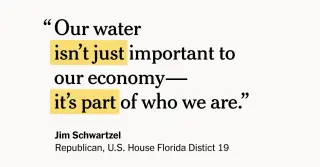
As the 2026 US midterms approach, artificial intelligence is increasingly shaping the electoral landscape through candidate websites, political advertising, and social media disinformation. Analysis by The New York Times reveals that many congressional candidates use AI chatbots to draft biographies and policy positions, sometimes resulting in errors or internal notes leaking onto public sites. In Pennsylvania, Republican gubernatorial candidate Stacy Garrity has deployed AI-generated ads featuring a digital facsimile of Governor Josh Shapiro, sparking debates over authenticity and disclosure. Meanwhile, The Washington Post found that major AI chatbots produce inaccurate voter guides, while The Guardian reports a surge in AI-driven disinformation on social media, exacerbated by reduced content moderation. These developments highlight growing concerns about the reliability of information and the potential for AI to manipulate voter perceptions.
Source: The New York Times

Batula Responds to Cooke’s ‘Coke Head’ Rant with Bullseye Emoji After ‘In the City’ Exit
Amanda Batula reacted to her ex-husband Kyle Cooke’s public attack on her boyfriend West Wilson by posting a bullseye emoji on X. Cooke had previously deleted a comment calling Wilson a 'coke head' who ruined Batula’s career following her exit from 'In the City.'
Source: Page Six
The day’s events underscore the rapid integration of AI into both the economy and daily life, from the financial markets to consumer devices and political campaigns. While the Alphabet crash raises questions about the sustainability of AI-driven growth, the release of open-weight models and new software updates suggest a continued push for innovation and control. As the midterm elections approach, the reliability of AI-generated information will be a critical issue for voters, while the persistent inflation and strong economic growth will shape the Federal Reserve's future decisions.