
AI Giants Face Market Reality as Europe Joins Ukraine Talks
By tl;dr Editorial Team · Published
Listen to this briefing · 7 min
Podcast feedYesterday’s news cycle was defined by the cooling of the artificial intelligence bubble, a pivotal shift in the geopolitical landscape regarding the war in Ukraine, and significant breakthroughs in quantum physics. While tech giants grappled with valuation adjustments and public backlash, diplomatic efforts in Abu Dhabi signaled a new era of European involvement in peace negotiations. Simultaneously, scientific advancements in room-temperature supersolids and the public debut of humanoid robotics marked a transition from theoretical concepts to practical, albeit contested, commercial realities.
The AI Market Cools
The artificial intelligence sector faced a significant reality check as major players adjusted their financial expectations. OpenAI closed the first part of a funding round for $11 billion at a valuation of $1.25 trillion, falling short of its initial $1.4 trillion target. Although CFO Sarah Friar noted 70% quarter-over-quarter business growth and 1.2 billion weekly ChatGpt users, the partial closure of the round, with up to $9 billion remaining unclosed, signals caution among investors. This development impacts key stakeholders like Microsoft and NVIDIA, whose financial stability is tied to OpenAI’s success. Concurrently, Anthropic is pressing ahead with its Nasdaq listing in mid-November, aiming to raise between $80 billion and $100 billion at a valuation between $1.25 trillion and $1.75 trillion. This move comes despite a steep drop in tech stocks and growing public backlash against AI infrastructure, highlighting the tension between technological advancement and societal concerns. The success of these listings will likely set benchmarks for future AI funding and public offerings, influencing broader market sentiment as investors reassess the financial health of leading labs.

OpenAI Secures $11 Billion at $1.25 Trillion Valuation, Missing Initial $1.4 Trillion Target
OpenAI closed the first part of a funding round for $11 billion at a $1.25 trillion valuation, falling short of its initial $1.4 trillion ask. CFO Sarah Friar confirmed the price, noting a 70% quarter-over-quarter business growth. The round remains partially unclosed, with potential additional capital up to $9 billion. This development impacts Microsoft and NVIDIA, which rely on OpenAI’s financial stability. Rival Anthropic is preparing a Nasdaq listing in mid-November, with valuations now estimated near $1.5 trillion, down from earlier expectations.
Source: 24/7 Wall St.

Anthropic Presses Ahead With IPO Amid Tech Selloff and Public Backlash
Anthropic is proceeding with its Nasdaq listing in mid-November despite a sharp tech market decline and reduced valuation targets. The company aims to raise $80 billion to $100 billion at a valuation between $1.25 trillion and $1.75 trillion, down from previous estimates. This move coincides with a broader public backlash against AI infrastructure, highlighted by recent midterm election results and a steep drop in tech stocks.
Source: Seeking Alpha
Geopolitics and Security
Diplomatic efforts to resolve the conflict in Ukraine gained momentum as European officials defied Moscow’s objections to join U.S.-brokered peace talks in Abu Dhabi. France’s foreign minister confirmed that Europe’s voice must be heard in discussions affecting the continent’s security, marking a shift from the previous U.S.-Russia-Ukraine trilateral format. The talks, involving envoys from the U.S., Ukraine, and Russia, come amid ongoing Russian strikes on Ukrainian infrastructure. While analysts remain skeptical of immediate progress, the inclusion of Europe raises questions about the future of NATO and European security architecture. In a related development, Russia’s Security Council urged the rapid expansion of its Rassvet satellite network to counter Elon Musk’s Starlink. Although Russia has launched only 32 satellites compared to Starlink’s 10,000, Ukraine’s intelligence confirms Moscow is already using the system for military communications. This move signals a strategic effort to reduce reliance on Western technology and enhance military capabilities, potentially shifting the balance in the conflict through real-time drone control and resistance to electronic warfare.

Europe defies Kremlin to join U.S.-brokered Ukraine peace talks in Abu Dhabi
European officials will participate in U.S.-mediated peace talks between Russia and Ukraine in Abu Dhabi on November 10-11, defying Moscow’s objections. While the U.S. and Ukraine focus on security guarantees, the Kremlin insists on territorial concessions and NATO changes. Recent Russian strikes on Ukrainian infrastructure and aid sites continue despite diplomatic efforts.
Source: NPR
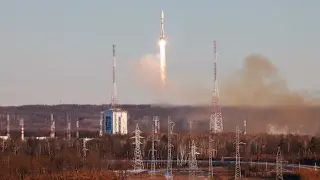
Russia Urges Rapid Expansion of Rassvet Satellites to Counter Starlink
Russia’s Security Council has called for the urgent mass production of its Rassvet satellite network to rival Elon Musk’s Starlink, citing risks of Western systems destabilizing sovereign states. While Russia has launched only 32 satellites so far, Ukraine’s intelligence confirms Moscow is already using the system for military communications, though coverage remains limited compared to Starlink’s 10,000 satellites.
Source: Financial Times
Tech and Science Breakthroughs
Innovation in robotics and quantum physics continued to push boundaries, though with mixed commercial and legal implications. Agility Robotics became the first U.S. company solely focused on humanoid robots to list on the Nasdaq, raising $465 million via a SPAC merger. Valued at $2.5 billion, the company secured a $300 million contract for 1,000 units of its Digit 5 model, which is designed to work alongside humans without safety barriers. This debut signals a shift from experimental pilots to commercial deployment, though the firm faces steep losses and intense competition from Tesla and others. In the realm of quantum physics, an international team observed a supersolid state of matter at room temperature, a breakthrough that eliminates the need for extreme cryogenic cooling. Published in Science Advances, the study demonstrates that this exotic quantum phase can be generated using liquid-crystal microcavities and organic semiconductors. This finding suggests new pathways for developing practical quantum photonic devices and sensors that operate under standard environmental conditions, potentially revolutionizing computing and sensing technologies.

Agility Robotics debuts on Nasdaq as first US pure-play humanoid firm, raising $465M
Agility Robotics became the first US company solely focused on humanoid robots to list on the Nasdaq, raising $465 million via a SPAC merger. Despite high valuations and a $300 million contract for 1,000 units, the firm faces steep losses and intense competition from Tesla and others.
Source: Seeking Alpha

European team observes room-temperature supersolid in light-matter condensate
An international research team has successfully observed a supersolid state of matter at room temperature, a breakthrough that eliminates the need for extreme cryogenic cooling. Published in Science Advances, the study demonstrates that this exotic quantum phase can be generated using liquid-crystal microcavities and organic semiconductors. The findings suggest new pathways for developing practical quantum photonic devices, sensors, and advanced computing systems that operate under standard environmental conditions.
Source: ScienceAlert
Regulation and Consumer Tech
Issues of regulatory enforcement and consumer technology strategy dominated the remaining news cycle. Investigations revealed that the U.S. Commerce Department approved Chinese firms with empty offices and ties to sanctioned entities to purchase Nvidia H200 AI chips. The New York Times reported that firms like New Matrix and Maginfra, linked to blacklisted entities, were cleared to buy chips, undermining the credibility of U.S. export controls. While Nvidia CEO Jensen Huang opposes total export bans, arguing that U.S. competitiveness requires global market participation, the lack of strict enforcement raises national security concerns and could allow China to narrow the technological gap. In the consumer tech space, Call of Duty: Warzone launched on the Nintendo Switch 2, coinciding with the end of support for PlayStation 4 and Xbox One. This move reflects the industry’s shift toward newer hardware, integrating Modern Warfare 4 into the battle royale with new maps and modes. Meanwhile, a developer released a native PC port of the newly launched Zelda: Ocarina of Time remake using static recompilation. While the port offers high-resolution support and uncapped frame rates, it requires users to dump the game from a jailbroken console, raising significant legal concerns regarding Nintendo’s aggressive anti-piracy stance.

US Export Controls Face Scrutiny as Empty Chinese Firms Cleared for Nvidia Chips
Investigations reveal that the US Commerce Department has approved Chinese firms with empty offices and ties to sanctioned entities to purchase Nvidia H200 AI chips. While Nvidia tightens tracking in Southeast Asia to prevent smuggling, CEO Jensen Huang opposes total export bans, arguing that US competitiveness requires global market participation despite security risks.
Source: The Verge
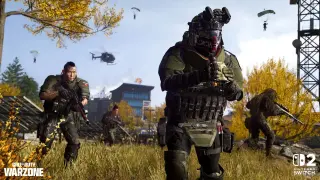
Warzone Launches on Switch 2 as PS4 and Xbox One Support Ends
Call of Duty: Warzone launched on Nintendo Switch 2 on November 6, 2026, coinciding with the end of support for PlayStation 4 and Xbox One. The update integrates Modern Warfare 4 into the battle royale, adding new maps and modes while retaining free-to-play access.
Source: TechPowerUp

Fan Port Brings Freshly Released Zelda Remake to PC via Static Recompilation
A developer has released NX2navi, a native Windows port of the newly launched Zelda: Ocarina of Time remake. The project uses static recompilation to convert Switch 2 code into x86-64, offering high-resolution support and uncapped frame rates. While technically advanced, the port requires users to dump the game from a jailbroken console, raising significant legal concerns regarding Nintendo's aggressive anti-piracy stance.
Source: TechPowerUp
Also in the news

The day’s events underscore a broader theme of transition: from speculative AI valuations to grounded market realities, from isolated diplomatic efforts to inclusive European participation, and from theoretical physics to practical applications. As the tech sector navigates public backlash and regulatory scrutiny, the focus shifts toward sustainable growth and secure infrastructure. For the reader, these developments suggest a future where technological innovation is increasingly intertwined with geopolitical stability and societal acceptance, requiring careful navigation of both commercial and ethical landscapes.