
Russia Urges Rapid Expansion of Rassvet Satellites to Counter Starlink
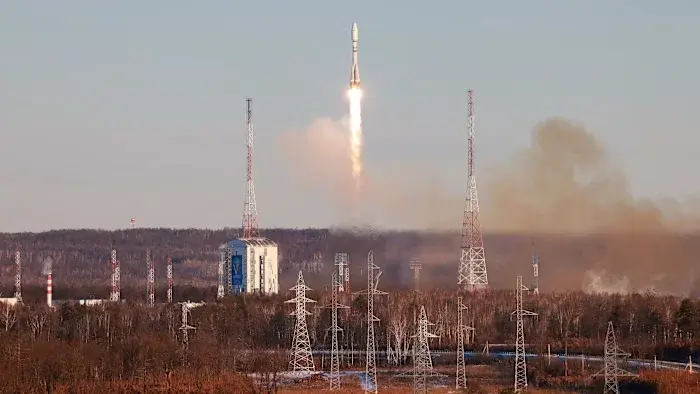
Russia’s Security Council has called for the urgent mass production of its Rassvet satellite network to rival Elon Musk’s Starlink, citing risks of Western systems destabilizing sovereign states. While Russia has launched only 32 satellites so far, Ukraine’s intelligence confirms Moscow is already using the system for military communications, though coverage remains limited compared to Starlink’s 10,000 satellites.
Key points
- Russia’s Security Council warned that Western satellite systems like Starlink and OneWeb pose risks to socio-political stability, demanding rapid scaling of the Rassvet network.
- Digital Development Minister Maksut Shadayev reported to President Vladimir Putin that Russia has launched just over 30 Rassvet satellites, a fraction of Starlink’s 10,000 active satellites.
- Ukraine’s Defense Intelligence Directorate confirmed Russia is already using Rassvet for military operations, though the network currently lacks continuous coverage over Ukraine.
- The Rassvet project, operated by Bureau 1440, is scheduled to begin commercial operations in 2027, with plans for additional launches before the end of 2026.
- Ukraine’s intelligence identified 49 Russian and Belarusian companies involved in Rassvet development, including 23 organizations not currently under international sanctions.
Background
The development of Rassvet follows years of Russian efforts to reduce dependence on Western technology amid the war in Ukraine. Starlink has been critical for Ukrainian military communications and drone operations, prompting Moscow to accelerate its own low-Earth orbit satellite program. Earlier in 2026, Russia launched Rassvet satellites in March and July, with plans to expand the constellation significantly by late 2026.
How outlets are covering it
The Moscow Times highlights the Security Council’s framing of Starlink as a destabilizing tool, noting Dmitry Medvedev’s criticism of Elon Musk for allowing Ukraine to use the network. UNITED24 Media emphasizes the military implications, citing Ukrainian intelligence that Rassvet is already being used for drone operations, though with limited coverage. The Financial Times, behind a paywall, likely focuses on the broader geopolitical and economic implications of Russia’s push for satellite independence, though specific details are unavailable. All sources agree on the stark gap between Rassvet’s current capacity and Starlink’s dominance, but differ in emphasis: Moscow Times focuses on political rhetoric, while UNITED24 highlights tactical military use.
Why it matters
Russia’s push to expand Rassvet signals a strategic effort to reduce reliance on Western technology and enhance military capabilities in Ukraine. If successful, the network could enable real-time drone control and resist electronic warfare, potentially shifting the balance in the conflict. The move also reflects broader tensions over space-based communications and sovereignty, with implications for global security and technology competition.
What to watch
Russia plans additional Rassvet satellite launches before the end of 2026 to improve coverage. Commercial operations are scheduled to begin in 2027. Ukraine and EU countries are identified as priority coverage areas, suggesting potential expansion beyond the conflict zone. Continued monitoring of satellite launches and military use will be critical to assessing the network’s impact.
- Russia races to build rival to Elon Musk’s Starlink Financial Times
- Russian Security Council Calls for Rapid Deployment of Starlink Rival Satellites The Moscow Times
- Russia Already Using Its Own Starlink Rival Over Ukraine, Kyiv Intelligence Says UNITED24 Media
- Russia using own version of Starlink for military comms over Ukraine, Kyiv says Military Times
- Defence Intelligence of Ukraine: Russia Already Using Rassvet Satellite Communication System Over Ukraine Мілітарний
Want the full story? Read the original reporting
Read on Financial Times