
Nvidia Scandal Triggers Chip Export Crackdown as AI Market Faces Volatility
By tl;dr Editorial Team · Published
Listen to this briefing · 6 min
Podcast feedThe resignation of Nvidia CEO Jensen Huang has become the central pivot for global technology policy, triggering a bipartisan legislative response to tighten chip export controls while the broader AI sector braces for market turbulence. Simultaneously, geopolitical tensions in the Middle East and domestic security incidents in New York underscore a week defined by instability across multiple fronts.
Washington and Tech Policy
The departure of Jensen Huang from Nvidia has accelerated a bipartisan push to close loopholes in US export controls. Lawmakers are moving to attach stricter oversight measures to the National Defense Authorization Act, including the Remote Access Security Act, which aims to prevent Chinese entities from remotely accessing restricted chips via cloud services. This legislative surge follows allegations that Huang’s relationship with a suspected Chinese spy linked to Megaspeed, a Singapore-based firm accused of smuggling technology, compromised national security. Commerce Secretary Howard Lutnick faces intense scrutiny for allegedly blocking the blacklisting of Megaspeed, with critics noting that his family’s financial firm, Cantor Fitzgerald, held significant Nvidia investments. While Lutnick has agreed to testify in December, the scandal has already wiped $1.5 trillion from Nvidia’s value, highlighting the economic impact of political interference in technology markets. These developments signal a potential shift in the relationship between tech corporations and the US government, with increased scrutiny of executive influence on policy.
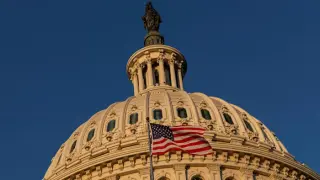
Nvidia Scandal Fuels Bipartisan Push to Tighten AI Chip Export Rules
Following the resignation of Nvidia CEO Jensen Huang amid a scandal involving a suspected Chinese spy, US lawmakers are accelerating efforts to restrict advanced AI chip exports to China. Bipartisan support has grown for bills that would give Congress greater oversight over chip sales and block remote access to restricted technology. These measures are likely to be attached to the annual National Defense Authorization Act, a must-pass bill that limits the president's ability to veto. While the scandal has intensified scrutiny of the Trump administration's export policies, some analysts doubt that comprehensive regulatory reform will be achieved before the current Congress ends.
Source: Financial Times
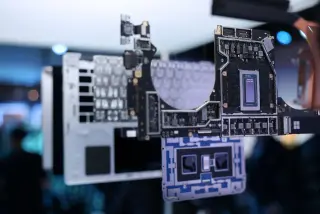
Nvidia Scandal Sparks Congressional Push to Close AI Chip Export Loopholes
Jensen Huang’s resignation has accelerated legislative efforts to tighten US export controls on advanced AI chips. Lawmakers are targeting loopholes that allow Chinese entities to access restricted semiconductors via intermediaries like Megaspeed, a Singapore-based firm suspected of smuggling technology to China. While the Trump administration delayed blacklisting Megaspeed, Congress is moving to attach stricter oversight measures to the National Defense Authorization Act.
Source: The Washington Post

Lutnick faces scrutiny over chip rules and family firm ties
Commerce Secretary Howard Lutnick faces intense scrutiny for allegedly weakening chip export rules that benefit his family’s financial firm, Cantor Fitzgerald. Critics accuse him of blocking the blacklisting of Megaspeed, a Singaporean firm suspected of funneling Nvidia chips to China, despite warnings from other agencies. Lutnick’s sons now lead Cantor, which holds significant Nvidia investments and financed deals for Nvidia partners. While President Trump defends Lutnick, Treasury Secretary Scott Bessent and congressional Republicans blame him for national security failures. Lutnick has agreed to testify before Congress in December.
Source: The New York Times
Markets and AI Infrastructure
The AI sector is testing its resilience amid leadership crises and supply constraints. Anthropic is set to price its initial public offering on November 18, valuing the company between $1.3 trillion and $1.45 trillion, a significant drop from earlier estimates. This IPO will serve as a critical test for market confidence, occurring alongside Nvidia’s earnings report under interim CEO Colette Kress. While analysts expect strong revenue for Nvidia due to locked-in sales, the broader market is watching for signs of stability. In the hardware space, supply issues persist; the GeForce RTX 5090 has returned to inventory at US retailers, but prices remain triple the official retail price due to silicon being prioritized for high-margin AI workstation cards. Meanwhile, Google has deployed Gemini 4 Hydrogen as the default model for Search, aiming to make advanced AI capabilities accessible to all users by improving speed and reducing hallucinations. These moves reflect a strategic shift toward efficiency and accessibility in a market under pressure from geopolitical and leadership risks.

Google Deploys Gemini 4 Hydrogen as Free Default for Search and Everyday AI Tasks
Google launched Gemini 4 Hydrogen on November 12, 2026, positioning it as the new default model for AI Mode in Search and a free-tier option in the Gemini app. Designed for speed and efficiency, Hydrogen outperforms its predecessor, Gemini 3.8 Flash, by 2.5x in speed and reduces hallucinations by over fivefold. While it trails the premium Carbon and Argon models in deep reasoning, Hydrogen surpasses Argon on the Artificial Analysis Intelligence Index at high settings. The model integrates with Gmail, Drive, and developer tools, offering improved document processing, email drafting, and code generation for both consumers and enterprises.
Source: Tom's Guide

Anthropic IPO and Nvidia Earnings Test AI Market Resilience Amid Leadership Crisis
Anthropic is set to price its initial public offering on November 18, with trading beginning on November 19 under the ticker ANT. The company expects to sell 825 million shares at $70 to $78, valuing it between $1.3 trillion and $1.45 trillion, a significant drop from earlier $2 trillion estimates. Simultaneously, Nvidia reports earnings on November 17 under interim CEO Colette Kress following the resignation of founder Jensen Huang. Huang stepped down on November 12 amid scandals involving relationships with a suspected Chinese spy and two employees. While Nvidia’s stock has fallen 12% this year, analysts expect strong revenue due to locked-in sales. The Federal Reserve’s October meeting minutes will also release on November 18, with traders pricing in a December rate hike due to recent inflation data.
Source: Financial Times
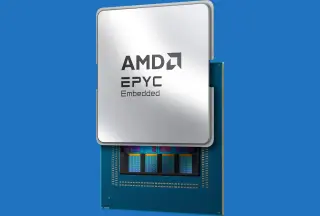
AMD EPYC Embedded 9006 Launches with Zen 6, Targeting AI Infrastructure and Long-Term Support
AMD has launched the EPYC Embedded 9006 series, its first embedded server chips based on the Zen 6 architecture. This release marks a strategic shift, as embedded processors now launch simultaneously with commercial server chips rather than trailing them. The new lineup, built on the SP7 platform, offers up to 256 cores, PCIe Gen 6 support, and long-term availability for markets like automatic test equipment, firewalls, and enterprise storage.
Source: ServeTheHome

RTX 5090 Restocks at US Retailers but Prices Remain Triple MSRP Amid Supply Constraints
NVIDIA’s GeForce RTX 5090 has returned to inventory at US retailer Newegg, but prices remain significantly inflated. The cheapest available model, the ASUS ROG Astral OC, is listed at $6,249.99, which is approximately 3.13 times the official $1,999 MSRP. Other models from GIGABYTE and MSI range from $6,599 to $7,349. This restock follows weeks of near-total unavailability and higher prices in September and October. While availability has improved, pricing remains far above suggested retail levels, with no evidence of a return to normal market conditions. The situation is exacerbated by reports of GB202 silicon being prioritized for high-margin AI workstation cards, such as the RTX PRO 5500, which uses the same core configuration but commands a much higher price.
Source: VideoCardz.com
World and Geopolitics
Tensions in the Middle East are escalating, with Iran resuming drone strikes on a US airbase in Bahrain, marking the second attack in three days. Regional neighbors condemned the strikes, which signal a potential return to full-scale conflict after a brief ceasefire. Simultaneously, Yemeni forces have retreated from the Bab al-Mandeb Strait to defend Aden, threatening critical oil shipping routes. In the Strait of Hormuz, Iran claims tankers were sunk by naval mines, but US analysts suspect deliberate attacks intended to undermine confidence in American naval escorts. These maritime incidents coincide with a nuclear crisis, as the IAEA has raised alarms over unverified enrichment facilities in Isfahan, where significant quantities of uranium may be buried in underground tunnels. President Trump has halted negotiations with Iran, citing effective economic pressure, while Iranian officials warn of potential withdrawal from the Nuclear Non-Proliferation Treaty. The combination of unverified nuclear material and escalating maritime attacks creates a dual crisis of potential proliferation and global energy supply disruption.
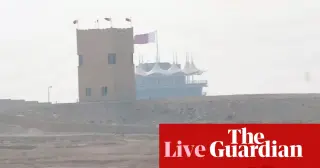
Iran resumes drone strikes on Bahrain as Yemeni forces retreat from Red Sea
Iran’s Islamic Revolutionary Guard Corps (IRGC) launched six drones at a US airbase in Bahrain on November 15, marking the second attack in three days. Bahrain’s air defenses intercepted the drones, and regional neighbors condemned the strikes. Simultaneously, Yemeni government forces withdrew from the Bab al-Mandeb Strait to defend Aden, while Iran claimed an oil tanker sank in the Strait of Hormuz.
Source: The Guardian

Analysts doubt Iran’s mine claims as UN flags missing uranium in Isfahan tunnels
Iran reports multiple tanker explosions in the Strait of Hormuz, attributing them to naval mines, but US analysts suspect deliberate attacks intended to undermine confidence in American naval escorts. Simultaneously, the IAEA has raised alarms over an unverified enrichment facility in Isfahan, where significant quantities of 60% enriched uranium may be buried in underground tunnels, complicating stalled diplomatic negotiations.
Source: Ynetnews
Nation and Public Safety
In New York City, a fatal police shooting on the Belt Parkway in Brooklyn has reignited debates over the use of force. A man in his thirties died after officers shot him during a high-speed chase that began with a 911 call regarding a suspected abduction. The driver refused to stop and rammed police and civilian vehicles before being fatally shot. Investigators believe the initial distress calls stemmed from a domestic dispute rather than an abduction, and no child was found in the van. The incident has prompted scrutiny from the NYPD Force Investigation Unit and the New York State Attorney General’s Office, highlighting the ongoing challenges in balancing public safety with the accuracy of emergency reports.

As the AI market navigates leadership changes and supply constraints, the geopolitical landscape remains volatile. The legislative response to the Nvidia scandal and the ongoing tensions in the Middle East suggest a period of heightened uncertainty for both technology policy and global security.